*** V6 Head Gasket Action Request ***

How does it run?
I got 150,000 miles on a V6 SR5 2005. Runs like new still.
No HG issues.
I'd use SteelSeal before barsleak.

I'm not certain you have a HG issue?
I get down some coolant occasionally. I'm in the Bahamas where its hot.

Chunks of HG coming out of radiator after drain and fill. - not a good sign. :crutch:

My 4runner was built in Japan - not USA.
 
Last edited:
How does it run?
I got 150,000 miles on a V6 SR5 2005. Runs like new still.
No HG issues.
I'd use bars leak before SteelSeal.

I'm not certain you have a HG issue?
I get down some coolant occasionally. I'm in the Bahamas where its hot.

Chunks of HG coming out of radiator after drain and fill. - not a good sign. :crutch:

When was yours built? Driver side door sill, for the info.
Seems like the change in these HG was mid 2005? No?
Mine runs real good too.
SteeSeal has a 99% happy consumer rate and money back guaranty.
Also no chunks in it to foul/clog up other non HG stuff.

Some theory as to HG fail.
1. The naming scheme "Lifetime" was a bad idea. Fools consumers into a false sense of complacency. Toyota used to avoid 'toxic waste' disposal tax...or some such BS.

2. Most drive 15k miles/year average these days, gasoline addicted society, 15k x 6years=90k, recommended change is 100k, first then every 50k after.
I think the longer it sits the more acidic it (antifreeze) becomes, bad for the early HG's.

Was like 10years of ownership before i thought i should look into this :der: and was prompted by a leaking water pump.

3. If the engine warms up (allowing for thermal expansion) before you punch the gas peddle may help reduce blow-by, spit-balling ideas here.
Warmer climate may help extend the HG life?

There are really not that many fails in the whole scheme of 4th gen HG fail per sales numbers, so Toyota corp dodged a bullet.
 
How does it run?
I got 150,000 miles on a V6 SR5 2005. Runs like new still.
No HG issues.
I'd use bars leak before SteelSeal.

I'm not certain you have a HG issue?
I get down some coolant occasionally. I'm in the Bahamas where its hot.

Chunks of HG coming out of radiator after drain and fill. - not a good sign. :crutch:

My 4runner was built in Japan - not USA.

Just an FYI...ALL 4Runners are made in Japan, none are made in the USA!

When was yours built? Driver side door sill, for the info.
Seems like the change in these HG was mid 2005? No?
Mine runs real good too.
SteeSeal has a 99% happy consumer rate and money back guaranty.
Also no chunks in it to foul/clog up other non HG stuff.

Some theory as to HG fail.
1. The naming scheme "Lifetime" was a bad idea. Fools consumers into a false sense of complacency. Toyota used to avoid 'toxic waste' disposal tax...or some such BS.

2. Most drive 15k miles/year average these days, gasoline addicted society, 15k x 6years=90k, recommended change is 100k, first then every 50k after.
I think the longer it sits the more acidic it (antifreeze) becomes, bad for the early HG's.

Was like 10years of ownership before i thought i should look into this :der: and was prompted by a leaking water pump.

3. If the engine warms up (allowing for thermal expansion) before you punch the gas peddle may help reduce blow-by, spit-balling ideas here.
Warmer climate may help extend the HG life?

There are really not that many fails in the whole scheme of 4th gen HG fail per sales numbers, so Toyota corp dodged a bullet.

All head gaskets on the V6 on or after 12/05 should be the new designed head gasket, so that build date or later is what one wants to see for their 4th Gen V6 T4R.
 
The frequency of HG failures is probably under 1% of the 4 runners on the road today.
Toyota builds about 100,000 4runners annually. Failures seem to occur on older models with 140,000 + miles.

There are well over 1M 4runners on the highway WW today.:lmao:

HG failures happen in Fords and all other makes and models too. No one is immune to having them IMO.:peace:
 
There are HG fails in pretty much all gen 4runners and tacomas. :rockthrow:
I had a 1992 dump its HG at about 90k. Dealer fixed that one.
 
I just bought a 2007 4.0L with 193k miles. Leak down test results 162-165 PSI, and the Toyota dealership says the test is run from 189 PSI (which I think is weird, but I don’t suspect them of lying to me). This nets a 12-14% loss in pressure.

I believe I understand that this isn’t perfect by any stretch of the imagination, but I should still have some life left in the old girl. Is that about right? Is there anything I can do to help limp her along in her golden years, aside from maintaining regular oil changes and not letting her overheat?
 
I just bought a 2007 4.0L with 193k miles. Leak down test results 162-165 PSI, and the Toyota dealership says the test is run from 189 PSI (which I think is weird, but I don’t suspect them of lying to me). This nets a 12-14% loss in pressure.

I believe I understand that this isn’t perfect by any stretch of the imagination, but I should still have some life left in the old girl. Is that about right? Is there anything I can do to help limp her along in her golden years, aside from maintaining regular oil changes and not letting her overheat?

A leak down test is a completely different test from a compression test and uses a separate set of gauges. It is represented as a percentage but it is not calculated by subtracting the recommend compression outlined in the service manual (189 psi or more) from your results. "Or more" is key - a typical healthy engine will usually show higher than 200 psi at sea level.

While your numbers seem a bit low, the important thing is that they're all fairly consistent across the cylinders. My guess is that they did not open the throttle plate while performing the compression test which will significantly lower your results.
 
I need some advice.

I have an '04 4.0 Sport, so this Head Gasket thing has always been in the back of my mind.

I have 230,000 miles and noticed something weird last week:

I have no could of smoke on startup. No waterfall sound. No CEL or codes.

What I do have is a black layer of crud that appeared of the inside of the overflow reservoir/tank of my radiator above the coolant, on the walls (probably 40k - 60k miles and 3.5-4 years on that radiator) I lost a little fluid in there, but it came back 2 days later. That was a week ago. I lost a little fluid again today. The black crud isn't in the fluid, only on the walls above the fluid. The fluid is 3.5-4 years old too, since the new radiator. I read that you should take the reservoir off, scrub it with dish soap, and replace it, and see if the black goo comes back. Only problem is that everyone that has a HG failure has the black goo in the fluid. This black crap looks terrible on the walls of the reservoir.

Should I get a hydrocarbon test? Oil is looking good on the dipstick, no condensation or anything on the cap. I just switched to synthetic 0w-20 on my last oil change, also.

Thoughts????

:shrug::shrug::shrug::shrug:

EDIT: I posted a new thread:

https://www.toyota-4runner.org/4th-gen-t4rs/279148-beginning-blown-hg-false-alarm.html#post3380302
 
Last edited:
A definitive TEST: How to check for a blown Head Gasket without any tools and zero costs...

I have a 2005 SR5 V6 with 150,000 miles. After reading all the HG threads full of HG failure paranoia, I did the following.

First. Checked the overfill canister and filled it up to the top "see through" line with fresh antifreeze. My canister was down 1/4 inch when I started this maintenance, and there were no coolant leaks.

Every day I open the hood and look at the coolant level to see if it has changed. I sometimes do this twice or three times a day.

Every day (after a 10 minute drive or a 2 hour drive) I check the overflow canister for a change in level, and not once has it moved up or down - and I've done this 30 times. AND.. I've never had to add coolant!

I also have had no overheats since I bought the car new in 2005. The gauge for temperature on the dash works fine, and I've concluded I do not have a blown HG (or any other coolant issues - thermostat, radiator, WP, hoses, etc., etc.).

Yes. Coolant leaking into your cylinders via the HG is a serious thing, but why worry about it if your coolant level is right where it's supposed to be (unchanged), the car doesn't miss at start up, doesn't smoke white water fumes out the tailpipe, and you get no "codes"?

BTW.. I changed the radiator cap with a new OEM cap about a week before I decided to run this "test". The original radiator cap was 14 years old. The old radiator cap was worn, and needed replacing.
:second:
Head Gasket Sealer | Head Gasket Sealant | BlueDevil

BTW Toyota 4runners on the road are upwards of 1 million or more, and probably less than 1% have a HG issue IMO.


UPDATE: Checked the coolant level in canister this Dec 6 2019 for any change. It has stayed exactly at the same height in the overflow canister. I tread the day I hear the gurgling behind the dash; a coolant level drop in the overfill canister, coolant smell out the exhaust, miss on startup. My 4runner has never had an overheat in 15 years and 145,000 miles.

 
Last edited:
My 4th gen 08 runner lost the hg at 270 000 miles. That car ran well for years and even with hg issue It still ran well. I replaced the motor with a low mileage motor for 3k. My son has got 3 more years of college and I'm sure it will continue to run just fine. After that he will get rid of it and probably get something else. 300k miles on the car is ok and has served the family well. My 3rd gen 96 has 314k miles and is used as a around the town car now. Toyotas are not immune to issues but considering how many miles it takes to get any serious issues I still say they are the best built vehicles
 
My 4th gen 08 runner lost the hg at 270 000 miles. That car ran well for years and even with hg issue It still ran well. I replaced the motor with a low mileage motor for 3k. My son has got 3 more years of college and I'm sure it will continue to run just fine. After that he will get rid of it and probably get something else. 300k miles on the car is ok and has served the family well. My 3rd gen 96 has 314k miles and is used as a around the town car now. Toyotas are not immune to issues but considering how many miles it takes to get any serious issues I still say they are the best built vehicles

Amazing.
Not unusual for a Ford Explorer to go through 3 transmissions in 200,000K.
 
My 4th gen 08 runner lost the hg at 270 000 miles. That car ran well for years and even with hg issue It still ran well. I replaced the motor with a low mileage motor for 3k. My son has got 3 more years of college and I'm sure it will continue to run just fine. After that he will get rid of it and probably get something else. 300k miles on the car is ok and has served the family well. My 3rd gen 96 has 314k miles and is used as a around the town car now. Toyotas are not immune to issues but considering how many miles it takes to get any serious issues I still say they are the best built vehicles

Amazing. not unusual for a Ford Explorer to go through 3 transmissions in 200,000 miles
 
A leak down test is a completely different test from a compression test and uses a separate set of gauges. It is represented as a percentage but it is not calculated by subtracting the recommend compression outlined in the service manual (189 psi or more) from your results.

I didn’t subtract it. Please look at the math. I measured it as a percentage which, to my knowledge, is the correct method of measuring leak down.

My guess is that they did not open the throttle plate while performing the compression test which will significantly lower your results.


I would love to know why you think this so that I can use this when discussing the results with the Toyota dealership.


Sent from my iPhone using Tapatalk
 
185k 2003 2wd..

so my story is that I originally noticed some coolant "leakage" from the upper radiator hose down my radiator. My overflow coolant level didn't drop so I didn't think much of it... fast forward to two weeks ago and I saw that the "leak" was a lot worse, so I try adjust the clamps of the hose with plans to replace the upper rad hose.

A couple days ago I replaced the upper rad hose and a lot of coolant was lost, after changing it - I filled the overflow tank as the levels decreased a bit.

Today during a cold start I heard the dreaded water trickle behind my steering wheel.... no rough idle or overheating today when I drove my hour long commute. When I get to work I notice my overflow tank is empty. No signs of leaking from the upper rad hose or anywhere else from a quick check. I ordered some Toyota 50/50 with anticipation I would have to use it, so I filled the overflow once again and wait until work is over.

I start my car to go home after work and hear the same water noise behind my steering wheel. Once I get home I see that the overflow coolant level has also decreased a little from where I filled it earlier in the day.

After much research, the first thing tomorrow morning Im going to try and burp my coolant system to get any air out

My questions is do you all think this water fall noise could be the result of a bad HG?? I had no problems with my car and no decrease in coolant until I replaced the upper rad hose.
 
185k 2003 2wd..


so my story is that I originally noticed some coolant "leakage" from the upper radiator hose down my radiator. My overflow coolant level didn't drop so I didn't think much of it... fast forward to two weeks ago and I saw that the "leak" was a lot worse, so I try adjust the clamps of the hose with plans to replace the upper rad hose.


A couple days ago I replaced the upper rad hose and a lot of coolant was lost, after changing it - I filled the overflow tank as the levels decreased a bit.


Today during a cold start I heard the dreaded water trickle behind my steering wheel.... no rough idle or overheating today when I drove my hour long commute. When I get to work I notice my overflow tank is empty. No signs of leaking from the upper rad hose or anywhere else from a quick check. I ordered some Toyota 50/50 with anticipation I would have to use it, so I filled the overflow once again and wait until work is over.


I start my car to go home after work and hear the same water noise behind my steering wheel. Once I get home I see that the overflow coolant level has also decreased a little from where I filled it earlier in the day.


After much research, the first thing tomorrow morning Im going to try and burp my coolant system to get any air out


My questions is do you all think this water fall noise could be the result of a bad HG?? I had no problems with my car and no decrease in coolant until I replaced the upper rad hose.


I had something very similar happen and it was because I didn’t burp the system properly. My overflow tank kept losing coolant. it slowly stopped after it worked the air bubbles out itself. I would still try the best you can to burp the system Because air creates a lot of pressure in the cooling system.
 
185k 2003 2wd..

so my story is that I originally noticed some coolant "leakage" from the upper radiator hose down my radiator. My overflow coolant level didn't drop so I didn't think much of it... fast forward to two weeks ago and I saw that the "leak" was a lot worse, so I try adjust the clamps of the hose with plans to replace the upper rad hose.

A couple days ago I replaced the upper rad hose and a lot of coolant was lost, after changing it - I filled the overflow tank as the levels decreased a bit.

Today during a cold start I heard the dreaded water trickle behind my steering wheel.... no rough idle or overheating today when I drove my hour long commute. When I get to work I notice my overflow tank is empty. No signs of leaking from the upper rad hose or anywhere else from a quick check. I ordered some Toyota 50/50 with anticipation I would have to use it, so I filled the overflow once again and wait until work is over.

I start my car to go home after work and hear the same water noise behind my steering wheel. Once I get home I see that the overflow coolant level has also decreased a little from where I filled it earlier in the day.

After much research, the first thing tomorrow morning Im going to try and burp my coolant system to get any air out

My questions is do you all think this water fall noise could be the result of a bad HG?? I had no problems with my car and no decrease in coolant until I replaced the upper rad hose.

The waterfall sound that's related to a bad head gasket is usually heard coming from behind the glove box not the steering wheel, so I think you most likely have trapped air in the cooling system.
 
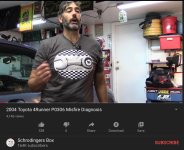
Look up this video that was just posted on YouTube.
Food for thought...
 

Attachments

  • 5DC3755F-0F4E-4AEB-A181-E8C0CDD37503.jpg
    5DC3755F-0F4E-4AEB-A181-E8C0CDD37503.jpg
    117.8 KB · Views: 640
Look up this video that was just posted on YouTube.
Food for thought...

While I like his diagnosis process, I would have loved to see a follow up confirming the intake coolant leak by fixing the issue, because a bad head gasket could produce coolant in that cylinder so there would be the same results he came too with the coolant system pressure test.
 
Look up this video that was just posted on YouTube.
Food for thought...

Complete rubbish. How does coolant leak past the intake manifold when there are no coolant jackets in the intake manifold?

"It's 100% definitely not a head gasket". Well then, how does coolant get into cylinder? Either a blown head gasket, cracked head or block.
 

Members online

No members online now.

Forum statistics

Threads
278,310
Messages
3,554,080
Members
248,016
Latest member
Advally Service

Trending content

Back
Top