

mom
Banned
you need guide plates to allow the tire to set in a neutral position.
Do you mean something like the leveled greased or talcum lubricated linoleum tiles or these more professional turnplates?
Lubricated tiles:

Professional turnplates:

as well as a way to properly connect the caster/camber gauge to the wheel
I was wondering about which attachment type to get.
Many camber gauges seem to be magnetic:

Others, as you say, seem to be clamped or bolted to the wheel ... but many of the DIY caster gauges appear to simply be hand held against the wheel.

for the price of the correct tools, you would be able to purchase a dozen alignments.
Hmmm.... here in the Silicon Valley, a dozen alignments would be about $88 · 12 ~= $1,000 (as described already).
Assume two cars in the family. How often do you check alignment? Assume, oh, say, every three years? So, over your sixty-year driving life, that's about 40 alignments.
At $88 per alignment, that's about $3,500 for alignments in our lifetime.
say you have a 1/4" difference and a 16 inch rim you can solve for the angle with some basic trig.
Now that is a very interesting idea! Remember SohCahToa?
Plenty used strings, but most were horizontal, like this:

Or like this:
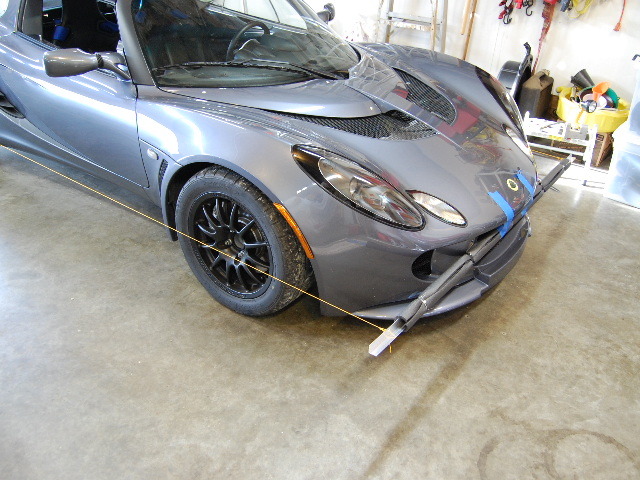
But lots of people built vertical devices that were held against the wheel to measure camber:

For example, in this home alignment DIY, the guy measured the distance of the top of the wheel and the bottom to a straight vertical pipe (akin to your straight string hanging from the ceiling) to calculate the camber.
Here is the straight bar (akin to your vertical string):
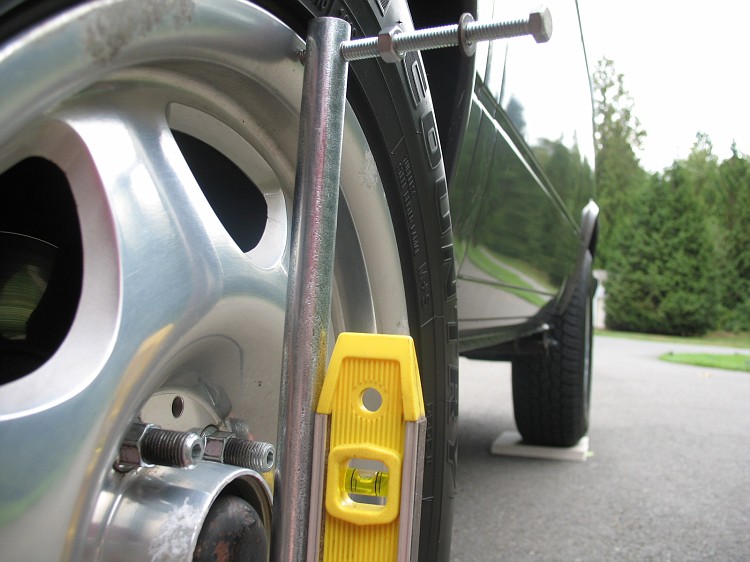
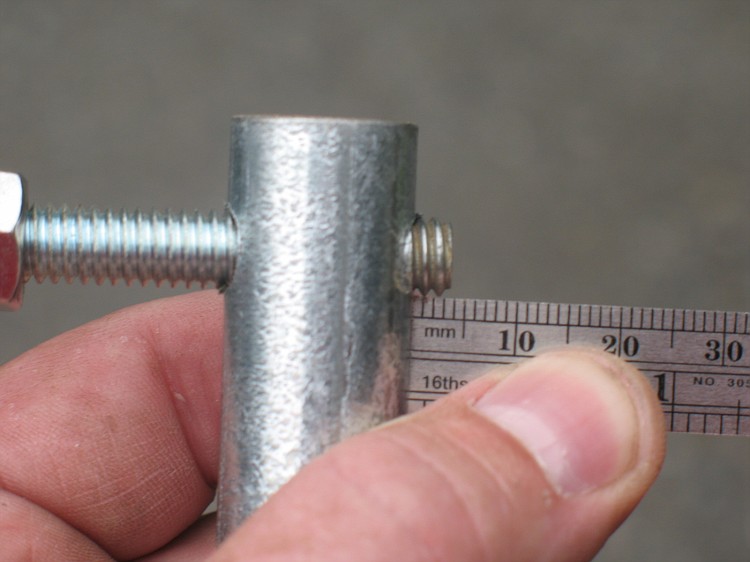
Then they simply measure the distance of the bolts, using our old friend SohCahToa, to calculate the angle in degrees!
And, this home alignment DIY uses the same method you did for measuring camber:
Camber
Hold a string with a weight on the bottom to droop down at the same outward distance as the string until it crosses it and forms a + at the wheel hub level. Usually you’ll want a buddy to help you hold it off the top of the tire for this part. You then measure to the top of the wheel and the bottom of the wheel and make your adjustments based on your measurements.
Last edited:


