1engineer
Moderator
Interesting, I hadn't realized the CAFE standards were so "Forgiving." I knew they factored by vehicle class/size; but I didn't realize they were so flexible. But my understanding was that in 2016 with the first batch of new standards, the CAFE rules were changing some from what it used to be currently to be more strict (I could be absolutely wrong about this though, it was something I have heard in passing.) [MENTION=66316]1engineer[/MENTION] I still think CAFE standards are a large factor in this as many of the "Gas Guzzlers" among many brands seem to be changing/disappearing at or very close to the 2016 deadline for the first batch of CAFE standards. That in itself is too large a coincidence to be ignored, not to mention Ford betting their golden goose on Aluminum body/framed F150's close to the 2016 deadline, something that seems to be pushed by a need to meet fuel economy standards more than a desire to be more environmentally friendly. I'm not saying that its all due to CAFE standards, but they are obviously playing a large factor in shrinking vehicles down and paring off the "gas guzzlers."
CAFE means Corporate Average Fuel Economy. For this purpose I will emphasize "Average" in the nomenclature.
This means if you manufacture 50 gas guzzlers and 500 hybrid two seaters then you are much better off CAFE wise than if you manufacture 500 gas guzzlers and 50 hybrids. Ford, GM, Chrysler (not as bad now that Fiat is bought into the mix) are much worse off than Toyota and Honda, for example. CAFE even takes into account vehicles sold overseas but the weighted average is less for these vehicles.
How does this fare for the 4Runner?
Here is an example of three Toyotas and three Fords. I tried to pick roughly the same comparative vehicles based on fuel economy:
Ford F150 to Toyota 4Runner
Ford Fiesta to Toyota Prius
Ford Focus to Toyota Corolla
These are ONLY North American Sales for 2014 YTD:
F150 - 720,000
Focus - 210,000
Fiesta - 64,000
4Runner - 61,000
Corolla - 320,000
Prius - 185,000
I picked the F150 to 4Runner as roughly 20 mpg equivalent. Sure, Ford makes some F150's that get better but the majority will end up at around 20-23 mpg. Not far off enough to matter for my example.
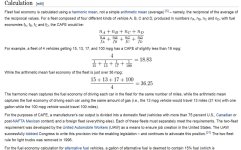
Based on the above numbers, who is in better shape with their CAFE numbers? Toyota by a long shot! Ford is in the hole here. Remember they OEM's AVERAGE all the models they sell. Below is an excerpt from Wikipedia, which say the same thing as the EPA.gov site only a bit clearer. Pay attention to the text more so than the formulas because it clearly states how the OEM's have to do this. Bottom line though that after everything is said and done, Toyota can produce a LOT more 4Runners and 5.7 Tundras and still be just fine, so CAFE is not an argument for discontinuing the 4Runner.