
You are using an out of date browser. It may not display this or other websites correctly.
You should upgrade or use an alternative browser.
You should upgrade or use an alternative browser.
AC cycling on and off, hot and cold
- Thread starter peixinho
- Start date

blackoutt
New member
I ordered the part number in this thread, and got a blue thermistor. I went to replace it and found a black wired one installed but no carrier to twist to remove. I wasn't sure how to uninstall it on a 2007 but I'm guessing they are different than the early 4th gen's in this thread because it looked nothing like described. I should have taken a picture to put up and will later on if anyone can tell me how I'm making this more difficult than it needs to be.
Yep, this only applies for 03-05 so I have one for sale OEM pn 8862535050 new in package if any needs one. Fits 03-05 only!
Yep, this only applies for 03-05 so I have one for sale OEM pn 8862535050 new in package if any needs one. Fits 03-05 only!
Last edited:
I ordered the part number in this thread, and got a blue thermistor. I went to replace it and found a black wired one installed but no carrier to twist to remove. I wasn't sure how to uninstall it on a 2007 but I'm guessing they are different than the early 4th gen's in this thread because it looked nothing like described. I should have taken a picture to put up and will later on if anyone can tell me how I'm making this more difficult than it needs to be.
Yep, this only applies for 03-05 so I have one for sale OEM pn 8862535050 new in package if any needs one. Fits 03-05 only!
would you want to ship to Canada?
chavo_93@rocketmai
New member
Hello,OK, I got this changed finally and it did solve the excessive cycling problem. The AC is colder than it has been in years, so the failure mode of this piece may be gradual.
The thermistor (thermal variable resistor) is used to tell the control unit that the evaporator is cold enough to cycle. Typically clutch cycling for temperature control is used in conjunction with a fixed orifice tube instead of an expansion valve.
The thermistor should be suspected if you have excessive cycling, but normal pressures as did the OP.
To test, remove the glove box and locate the connector on the left. It has two small wires. the wires to the thermistor are in a plastic sheath. On my subject vehicle the original sheath was green and the replacement was blue. If you disconnect the connector, the compressor won't run at all. If you jump the two wires, the clutch won't cycle and the AC will be too cold. If you can achieve cold air by jumping the wires, you probably have a bad thermistor.
The part # was 8862535050 and it listed for $16.39 at this time. Plugging the new part into the connector also made the AC run excessively, because the thermistor was not in position to sense evaporator temps.
To replace the part, Do NOT Pull on the wires! They will just ball up in the evaporator case and complicate things.
The thermistor is held into the evaporator case, and held in position by what I will call a Thermistor Carrier. I get to name it apparently, because Toyota does not list it in the parts diagram. It really should come with the new thermistor, but does not. The carrier is about 6 inches long and guides the thermistor to just the right spot inside the evaporator case.
From the outside, it looks like a black plastic plug right where the thermistor wire goes into the white evaporator case. It has two prongs that lock it into inside of the case. I don't know how it is supposed to come out, EDIT NOTE: Fuzzy fingers says to turn this carrier CCW 1/4 turn to release it.....but I just pried on this plug until one of the prongs finally broke.
Then I was able to snake out the carrier. The carrier has clips to hold the thermistor and wire in place and it will be obvious how it goes when you look at it. I put a wrap of electrical tape in a couple spots to make sure the thermistor stayed in place when reinstalling.
Sorry I did not get photos. If the OP wants to hit me up since we are locals maybe I can help you out and we can document better.
Can you please if possible send a picture of the thermistor and carrier. Also what did you use to remove it a 90degree or 45degree needle nose pliers?

toyo
Member
Very informative thread, thanks.
In the procedures for replacing the evaporator core in the FSM Toyota states NOT to re-install the Thermistor in the same location as it was. I have not had to replace my core or Thermistor I just remember reading this. Any clue as to why a different location?
In the procedures for replacing the evaporator core in the FSM Toyota states NOT to re-install the Thermistor in the same location as it was. I have not had to replace my core or Thermistor I just remember reading this. Any clue as to why a different location?
Forum won't let me create a new thread yet, so I will put this question here.
I am having a problem where whenever I am stuck in traffic or not moving very much, my A/C Compressor seems to cut off, and the cabin gets warm quite quickly. Is there anyway to override it so it will always stay running?
I am having a problem where whenever I am stuck in traffic or not moving very much, my A/C Compressor seems to cut off, and the cabin gets warm quite quickly. Is there anyway to override it so it will always stay running?
earthrealm
Senior Member
Forum won't let me create a new thread yet, so I will put this question here.
I am having a problem where whenever I am stuck in traffic or not moving very much, my A/C Compressor seems to cut off, and the cabin gets warm quite quickly. Is there anyway to override it so it will always stay running?
am not sure its ur comp that is cutting off, i had similar problem before...its a symptom of low gas.
though a dirty condenser can cause such probs too.
hook up guages on the low n high side n post the readings,...........my issue stopped after i topped up gas..my readings were 19psi lowside n 140hiside then....burped them to 45/220 n truck cools at idle now
AC cycling
2001 4runner sr5
AC cycling alot i put the low side guage on and have determined i only have the cycling when the "recycle air" button is pushed on.
Pressure i see is when button is not engaged AC turned on i have constant good pressure.
When recyle air button is pushed the pressure slowly drops til the pressure drops and AC compressure turns off.. then compressor turns back on for a few seconds and the pressure slowly drops til and it does it over again.
What does the recycle button do exactly that would cause the pressure to drop when its pushed??
Kirk
2001 4runner sr5
AC cycling alot i put the low side guage on and have determined i only have the cycling when the "recycle air" button is pushed on.
Pressure i see is when button is not engaged AC turned on i have constant good pressure.
When recyle air button is pushed the pressure slowly drops til the pressure drops and AC compressure turns off.. then compressor turns back on for a few seconds and the pressure slowly drops til and it does it over again.
What does the recycle button do exactly that would cause the pressure to drop when its pushed??
Kirk
itaintezbnrich
New member
Same issue
I am having this exact same cycling issue on my 06 V8 Limited. If someone see's this and can offer any assistance, please do. From what I have seen, I think it is the LPS. The air blows cold, but the constant cycling bogs down my engine while driving. Really would like to get this fixed. Am wondering if the 06's have a thermistor or a LPS.
TIA
I am having this exact same cycling issue on my 06 V8 Limited. If someone see's this and can offer any assistance, please do. From what I have seen, I think it is the LPS. The air blows cold, but the constant cycling bogs down my engine while driving. Really would like to get this fixed. Am wondering if the 06's have a thermistor or a LPS.
TIA
OK, I got this changed finally and it did solve the excessive cycling problem. The AC is colder than it has been in years, so the failure mode of this piece may be gradual.
The thermistor (thermal variable resistor) is used to tell the control unit that the evaporator is cold enough to cycle. Typically clutch cycling for temperature control is used in conjunction with a fixed orifice tube instead of an expansion valve.
The thermistor should be suspected if you have excessive cycling, but normal pressures as did the OP.
To test, remove the glove box and locate the connector on the left. It has two small wires. the wires to the thermistor are in a plastic sheath. On my subject vehicle the original sheath was green and the replacement was blue. If you disconnect the connector, the compressor won't run at all. If you jump the two wires, the clutch won't cycle and the AC will be too cold. If you can achieve cold air by jumping the wires, you probably have a bad thermistor.
The part # was 8862535050 and it listed for $16.39 at this time. Plugging the new part into the connector also made the AC run excessively, because the thermistor was not in position to sense evaporator temps.
To replace the part, Do NOT Pull on the wires! They will just ball up in the evaporator case and complicate things.
The thermistor is held into the evaporator case, and held in position by what I will call a Thermistor Carrier. I get to name it apparently, because Toyota does not list it in the parts diagram. It really should come with the new thermistor, but does not. The carrier is about 6 inches long and guides the thermistor to just the right spot inside the evaporator case.
From the outside, it looks like a black plastic plug right where the thermistor wire goes into the white evaporator case. It has two prongs that lock it into inside of the case. I don't know how it is supposed to come out, EDIT NOTE: Fuzzy fingers says to turn this carrier CCW 1/4 turn to release it.....but I just pried on this plug until one of the prongs finally broke.
Then I was able to snake out the carrier. The carrier has clips to hold the thermistor and wire in place and it will be obvious how it goes when you look at it. I put a wrap of electrical tape in a couple spots to make sure the thermistor stayed in place when reinstalling.
Sorry I did not get photos. If the OP wants to hit me up since we are locals maybe I can help you out and we can document better.
(Sorry, not enough posts to start a new topic...)
2006 V6 Sport 4WD here...
I ordered the A/C thermistor that corresponds to my model (88625-60190) in hopes of installing it this weekend.
However, it sounds like my thermistor is a different design. Perhaps Toyota changed designs at some point during the 4th-gen model years? My thermistor is a wire about 9-10 inches long with a right-angle nail-like spike at the end that gets jammed into the fins.
It's not immediately obvious to me how to remove the old one or install the new one without first removing the evaporator and opening the case. And, on the surface, that seems like a huge job.
Has anybody done this on a 2006 model?

Drcoffee
Senior Member
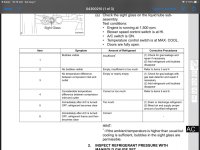
I recharged my ac last fall with the “correct” weight of 134a after replacing the condenser. I noticed my ac never cycled, just kept running. When I checked the sight glass, all I saw was a stream of bubbles, meaning Im low on 134a. If the compressor is continuously cycling, you could be over charged. Try this. Turn on the ac and watch the sight glass. Should be clear fluid filled. Have someone turn off the ac and watch for bubbles, and then clear. That is the correct amount of 134a. If you dont see bubbles right after turning it off, you have too much in it.
In my case I needed to add some 134a and now my compressor cycles as it should.
In my case I needed to add some 134a and now my compressor cycles as it should.
Attachments

averyislost
Member
It seems I have some AC issues with my new-to-me 2003 4Runner. Mine also seems to be short cycling where the compressor will kick in, the AC will be quite cold, and then it will cut off for long enough for the air to start warming up until it cuts on again.
Here are some temps I took this weekend:
71 ambient air temp, car had warmed up inside higher than ambient (forgot to take the inside-cabin air temp).
Compressor cycling on - 42 degrees
Compressor off cycle - 52 degrees
These temperatures would keep going back/forth during the course of a minute while the compressor cycled on and off. AC light does not blink.
Things I've tried to fix the issue:
- New AC relay from Autozone (original one was bad, had a blinking light)
- Removed/cleaned the inside temperature sensor near driver kick panel
- Had system vacuumed/recharged at Toyota dealership and filled with dye. They could not find any leaks, and I can't either with a UV light. Evaporator drain tube is not leaking dye, although I don't see it draining much at all.
- AC condenser does not have any caked-on grime
Do you guys have any suggestions? I've read through all of Fuzzy Finger's posts on his AC troubles with the same issue, and it looks like he replaced just about everything with no fix. I'm just not sure where to start at this point since I covered most of the easy fixes besides trying the thermistor.
Here are some temps I took this weekend:
71 ambient air temp, car had warmed up inside higher than ambient (forgot to take the inside-cabin air temp).
Compressor cycling on - 42 degrees
Compressor off cycle - 52 degrees
These temperatures would keep going back/forth during the course of a minute while the compressor cycled on and off. AC light does not blink.
Things I've tried to fix the issue:
- New AC relay from Autozone (original one was bad, had a blinking light)
- Removed/cleaned the inside temperature sensor near driver kick panel
- Had system vacuumed/recharged at Toyota dealership and filled with dye. They could not find any leaks, and I can't either with a UV light. Evaporator drain tube is not leaking dye, although I don't see it draining much at all.
- AC condenser does not have any caked-on grime
Do you guys have any suggestions? I've read through all of Fuzzy Finger's posts on his AC troubles with the same issue, and it looks like he replaced just about everything with no fix. I'm just not sure where to start at this point since I covered most of the easy fixes besides trying the thermistor.

AuSeeker
Elite Member
It seems I have some AC issues with my new-to-me 2003 4Runner. Mine also seems to be short cycling where the compressor will kick in, the AC will be quite cold, and then it will cut off for long enough for the air to start warming up until it cuts on again.
Here are some temps I took this weekend:
71 ambient air temp, car had warmed up inside higher than ambient (forgot to take the inside-cabin air temp).
Compressor cycling on - 42 degrees
Compressor off cycle - 52 degrees
These temperatures would keep going back/forth during the course of a minute while the compressor cycled on and off. AC light does not blink.
Things I've tried to fix the issue:
- New AC relay from Autozone (original one was bad, had a blinking light)
- Removed/cleaned the inside temperature sensor near driver kick panel
- Had system vacuumed/recharged at Toyota dealership and filled with dye. They could not find any leaks, and I can't either with a UV light. Evaporator drain tube is not leaking dye, although I don't see it draining much at all.
- AC condenser does not have any caked-on grime
Do you guys have any suggestions? I've read through all of Fuzzy Finger's posts on his AC troubles with the same issue, and it looks like he replaced just about everything with no fix. I'm just not sure where to start at this point since I covered most of the easy fixes besides trying the thermistor.
Did the Toyota dealer not find any issues, what did they say after charging the system?
If the Toyota dealer could find any issues, I'm not sure what to tell you, have you checked the AC compressor clutch, is the engaging and staying engaged?
My first thought when starting reading your post was a bad thermistor sensor, did the Toyota dealer not check it?
Also you said you cleaned the cabin temperature sensor but stated it was near the driver's kick panel, not sure what you're calling a kick panel but just so you know the sensor is right below the ignition switch behind the little slots in the plastic trim.
averyislost
Member
Did the Toyota dealer not find any issues, what did they say after charging the system?
If the Toyota dealer could find any issues, I'm not sure what to tell you, have you checked the AC compressor clutch, is the engaging and staying engaged?
My first thought when starting reading your post was a bad thermistor sensor, did the Toyota dealer not check it?
Also you said you cleaned the cabin temperature sensor but stated it was near the driver's kick panel, not sure what you're calling a kick panel but just so you know the sensor is right below the ignition switch behind the little slots in the plastic trim.
My terminology was a little off, yep that is the sensor I was talking about (the one below the ignition switch with the slots).
The first time it was at the dealer, they could not find anything wrong with it. So they did a drain and refill with some added UV dye, and sent me on my way to come back if it acted up again. The tech stated it "might be a bad expansion valve". As soon as I pulled out it was acting the same way, so it didn't seem to make a difference.
I just brought it back to the dealer earlier today, and was informed that they believe it's a bad evaporator, however... they confirmed that it's not leaking. The only information they could give me was "the technician is confident, he ran a series of tests and it looks like it's the evaporator that is failing, however it is not leaking at this time". They want $2,100 for the evaporator and labor.
I have it at another shop for a second diagnosis and quote at this time.
Drcoffee
Senior Member
Have checked the sight glass while its running? It sounds like the expansion valve the way it acts. Runs, freezes, thaws, runs again. Repeat. I assume toyota used gauges when they recharged it. But the manual clearly says to use the sight glass for an accurate fill. Over filled is just as bad as under filled.
averyislost
Member
Have checked the sight glass while its running? It sounds like the expansion valve the way it acts. Runs, freezes, thaws, runs again. Repeat. I assume toyota used gauges when they recharged it. But the manual clearly says to use the sight glass for an accurate fill. Over filled is just as bad as under filled.
I checked it this morning, but I'm not seeing any bubbles at all. None while it's running and none when it's shut off. This to me would indicate an overfilled scenario, but I can't imagine the dealership overfilled it. It acted the same both before and after they vacuumed it and replaced the charge.
I'm with you, I'm thinking the expansion valve as well. Just seems like the cycle is so fast for it to be that ,but I've never dealt with a bad one before. The compressor runs for maybe 10 seconds, then stays off for about 10 seconds I would guestimate. As soon as it cuts off, the air begins to warm up until it cuts back on again.
averyislost
Member
Do you see liquid? Or does it look empty? Shine a light into the sight glass with the AC off first, then on and note the difference. If its always liquid its over filled. A bad evaporator is a leaking one.
First time I checked it, it sure seemed to be empty. I couldn't see any liquid in there at all, or at least no signs of flowing liquid. When I checked it (after I had gotten it back from the dealership) I couldn't see any difference between the AC on/off other than after the AC was shut off, it seemed like the inside of the sight glass would fog up, or appear milky. I have not seen bubbles at all.
For whatever reason, this one is harder for me to read than my '99 is. The '99 always showed bubbles at the correct time when shutting off the AC, and it was easy to see the liquid flowing across with the AC running.
averyislost
Member
Well, got a call from the 2nd shop. Evaporator core IS leaking, so they're replacing it to the tune of $1,100.
Anything else they should do while they're in there to ensure my AC stays frosty? I've got them changing out the expansion valve as well, and checking the desiccant filter up front.
Anything else they should do while they're in there to ensure my AC stays frosty? I've got them changing out the expansion valve as well, and checking the desiccant filter up front.


