ATF Exchange (using the cooling line)

Maybe I missed something but for the hassle and mess of doing this why not just go get a BG flush done?? It's about $150 at my local shop including oil and its $90 if you bring your own oil, for the once every 50k or so this is a much better option and there is no way you are getting out as much oil as the pressurized flush machine. Also whoever on here thinks it is a good idea to flush a transmission with high mileage that has not been done before or is already having problems, doing this will almost definitely kill your transmission. How do I know this you ask, I used one of these machines for over ten years at the garage I worked at and I have seen several vehicles barely make it out of the parking lot (sometimes the garage) before failure, all of which the owners were warned to not go through with the flush.
 
Last edited:
Maybe I missed something but for the hassle and mess of doing this why not just go get a BG flush done?? It's about $150 at my local shop including oil and its $90 if you bring your own oil, for the once every 50k or so this is a much better option and there is no way you are getting out as much oil as the pressurized flush machine. Also whoever on here thinks it is a good idea to flush a transmission with high mileage that has not been done before or is already having problems, doing this will almost definitely kill your transmission. How do I know this you ask, I used one of these machines for over ten years at the garage I worked at and I have seen several vehicles barely make it out of the parking lot (sometimes the garage) before failure, all of which the owners were warned to not go through with the flush.

Transmission manufacturers generally don't recommend pressurized flushing any more. There are fluid exchange machines that replace old fluid with new fluid without much pressure, but it's not always clear what kind of machine a shop uses.

I paid about $140 for fluid alone (13 quarts at about $11 with tax), so no way the $150 flush at your shop uses Toyota fluid. There has been much debate about whether Toyota fluid is necessary, and we don't need to debate it any more, but to me the price of Toyota fluid is small compared to the cost of a transmission if anything were to happen as a result of using the wrong fluid. People have had good results with Valvoline Maxlife ATF ($18/gallon at Walmart), so you might consider that option.

It took me about 2 hours to do the exchange, so that's (just barely) worth the $90 savings on labor from a shop. And I know it's done right if I do it. Plus I like working on cars.
 
Not just the junk in the transmission (from worn friction surfaces), but too much pressure can kill lots of the servos and control sensors/diaphragms. No way to know what is too much pressure and how much the machine is using.
 
Maybe I missed something but for the hassle and mess of doing this why not just go get a BG flush done?? It's about $150 at my local shop including oil and its $90 if you bring your own oil, for the once every 50k or so this is a much better option and there is no way you are getting out as much oil as the pressurized flush machine. Also whoever on here thinks it is a good idea to flush a transmission with high mileage that has not been done before or is already having problems, doing this will almost definitely kill your transmission. How do I know this you ask, I used one of these machines for over ten years at the garage I worked at and I have seen several vehicles barely make it out of the parking lot (sometimes the garage) before failure, all of which the owners were warned to not go through with the flush.

i called my local dealership today. quoted 275+tax for the job using WS ATF. Any reason I should not consider this?
 
I finally got mine done at 139k miles. I have the external tranny cooler and used the lines to remove 3-4qts, then use the return line to pump in the same amount. Did this method with 16qts of Valvoline MaxLife ATF. Although the tranny was already pretty smooth, I noticed it shifted even smoother afterwards.
 
I used the Valvoline Maxlife and it shifted way smoother. Took my rumble strip issue away completely and made a noticeable difference in shifting.
2005 V6


Sent from my iPhone using Tapatalk

I'd like to post this to hopefully steer future Google search results in the right direction. The rumble strip issue on my 2008 4Runner 2WD limited V6 was solved by a full flush with Valvoline MaxLife Full-Synthetic. I'm very pleased with the product.

Followed the guide here exactly - https://www.tacomaworld.com/threads/diy-full-flush-for-automatic-transmission.68462/

The whole WS-only is world-standard CRAP. I don't believe it. I'll be going with Valvoline forever.
 
Last edited:
it seems there is something am missing.
the truck doesnt enter the AT temp check mode.
when i cycle through N to D as described, at the Last N, the AT Light comes on for 2 secs, then starts flashing every 1sec or so, i move it to park, it hold steady for abt 2 secs, and then starts flashing again.i let it idle for 10mins,...no change still the 1 sec flash. i thought maybe the tranny was too hot, aborted the ops, waited till the morning of the next day...and the same thing happens.

tried again today, same scenario, tranny pan tempreture was reading 43--47dec C when i checked, i opened the check valve, and about 1/5th of a quart poured out [meduim sized tea cup].
 
it seems there is something am missing.
the truck doesnt enter the AT temp check mode.
when i cycle through N to D as described, at the Last N, the AT Light comes on for 2 secs, then starts flashing every 1sec or so, i move it to park, it hold steady for abt 2 secs, and then starts flashing again.i let it idle for 10mins,...no change still the 1 sec flash. i thought maybe the tranny was too hot, aborted the ops, waited till the morning of the next day...and the same thing happens.

tried again today, same scenario, tranny pan tempreture was reading 43--47dec C when i checked, i opened the check valve, and about 1/5th of a quart poured out [meduim sized tea cup].

The temp gun is more than accurate enough.
 
it seems there is something am missing.
the truck doesnt enter the AT temp check mode.
when i cycle through N to D as described, at the Last N, the AT Light comes on for 2 secs, then starts flashing every 1sec or so, i move it to park, it hold steady for abt 2 secs, and then starts flashing again.i let it idle for 10mins,...no change still the 1 sec flash. i thought maybe the tranny was too hot, aborted the ops, waited till the morning of the next day...and the same thing happens.

tried again today, same scenario, tranny pan tempreture was reading 43--47dec C when i checked, i opened the check valve, and about 1/5th of a quart poured out [meduim sized tea cup].

https://www.tacomaworld.com/threads/how-to-drain-refill-automatic-transmission.63851/

Make sure you put the plug back in when the flow changes from a pour to a slow trickle.
 
The temp gun is more than accurate enough.

yeh, i used a laser temperature gun.

i thought the flashing AT light only happens if the fluid is hotter than range.
it still behaved like that early in the truck with the truck sitting for 8hrs
 
I finally got mine done at 139k miles. I have the external tranny cooler and used the lines to remove 3-4qts, then use the return line to pump in the same amount. Did this method with 16qts of Valvoline MaxLife ATF. Although the tranny was already pretty smooth, I noticed it shifted even smoother afterwards.

I have 167k and running just fine, but I will probably go this method in the next few months. Don't feel it will hurt anything! Thanks
 
The temp gun is more than accurate enough.
Respectfully,

"Are you sure the snows are over for the year and it's safe to cross the pass, Mr Donner?"
"No issue folks, push on"

I go for better safe than sorry. What's wrong with doing it right according to the factory proceedure? I'm sure they make them but I've never even seen a non-contact thermometer that was accurate within a few degrees. Couple that with the room for error trying to get a solid reading from the outside of the pan is a risk I'll avoid. Remember the repair bill is like 5k.
The FACTORY proceedure for checking the trans temp has been posted in many places here and on Taco World. Follow to the letter and it works. Your best bet is reading that long, long, post on Tacosma World mentioned above from beginning to end. Because there are a couple of mis-prints In some of the early factory bulletins on the proceedure. These had to due with the final gear lever position ( drive vrs neutral or vice-versa?) and disconnecting the jumper wire once the mode was reached to avoid "pulsations" in the fluid level.
I do think, however, non- contact thermometers are great for reading the approximate temps of machine parts or parts that are subject to temp extremes (like bearings or the outside of you exhaust system). They were invaluable to me back when I operated and maintained a coffee roasting facility but to check the critical temperature of a fluid from the outside of a vessel, Ill skip that.
 
Respectfully,

"Are you sure the snows are over for the year and it's safe to cross the pass, Mr Donner?"
"No issue folks, push on"

I go for better safe than sorry. What's wrong with doing it right according to the factory proceedure? I'm sure they make them but I've never even seen a non-contact thermometer that was accurate within a few degrees. Couple that with the room for error trying to get a solid reading from the outside of the pan is a risk I'll avoid. Remember the repair bill is like 5k.
The FACTORY proceedure for checking the trans temp has been posted in many places here and on Taco World. Follow to the letter and it works. Your best bet is reading that long, long, post on Tacosma World mentioned above from beginning to end. Because there are a couple of mis-prints In some of the early factory bulletins on the proceedure. These had to due with the final gear lever position ( drive vrs neutral or vice-versa?) and disconnecting the jumper wire once the mode was reached to avoid "pulsations" in the fluid level.
I do think, however, non- contact thermometers are great for reading the approximate temps of machine parts or parts that are subject to temp extremes (like bearings or the outside of you exhaust system). They were invaluable to me back when I operated and maintained a coffee roasting facility but to check the critical temperature of a fluid from the outside of a vessel, Ill skip that.

There is a member on here who verified the temperature of the pan was spot on with not only the temp check mode, but a scan gauge as well.
 
There is a member on here who verified the temperature of the pan was spot on with not only the temp check mode, but a scan gauge as well.

Too much room for error. There's also many party that made it safely over what is now know as the Donner Pass in the early days without resorting to eating each other before eventually dying of starvation and hypothermia.

Point is there's to little control. Meaning ambient temps, area scanned, oil cooler valve position, idling time, etc.

A seemingly small error will/could equall a big time "extremely bad day"

So once again, why not do it right? Do you really trust with applied intellect that "a member here" knows better than than Toyota or those Asian (excuse my spelling here I'm not going to look the company up at this moment but you know which manufacturer I mean, or should) guy who made the transmission.

One more "overly cautious nerdy thing" I'll add to dissuade the unwitting from take this (I'd like to use a different adjective here but out civility I'll refrain) iffy, hip shortcut is:

Other than downright abuse (such as overheating, poor fluid change practice: i.e.initroducing girt or foreign grime or wrong fluid, etc.) that I can recall being reported WOULD BE IMPROPER FLUID LEVEL. And there be a hell of a lot more of those again as I recall than "a member" reporting that his reading matched? Did he (excuse me could very well be a she?) ever state if and how his infer red thermometer was calibrated? For that matter is this trusted member still a member? Is the transmission "a member" serviced still going?

Of course this is just my opinion and would be my advice to the inexpienced and unwitting. But, what the hell next time I do I might use another meathod I've seen on here over at taco world. That being to drive it around the block a few times in order to warm it up and let it idle for a few minutes or some such bull. But I'll be sure to double check with my wiggle board or crystal ball too make certain is safe to proceed so I don't mess up. Lol...
 
Last edited:
How to use a drill pump to fill the transmission - w/ Pics & video

I used a universal electric fuel pump and it did work pretty good and was simple. You could also use a cheap drill powered plumbers pump.

I used a drill powered pump. It worked extremely well, and saved me a lot of time.

Here's what I used and how I set it up:

I bought a Milescraft Inc. 1314 Drill Pump 750 from Amazon for $12.99.
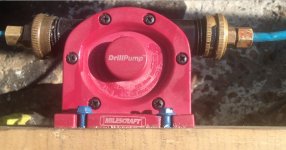
Untitled.jpg


and used four long screws to secure it to a 1x4 piece of wood about 4 feet long, so that I could run the pump with a drill,
and not have to keep the pump from spinning.
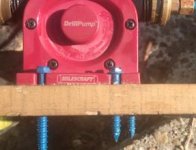
Untitled6.jpg

At home Depot I bought 2 garden hose to 1/4" compression adapters.
Then I used two pieces of 1/4 tubing. I ran one piece (about 6 feet long) to the fill hole on the transmission (after I removed the plug).
Having it this long made it easy to position the hose so that it would stay, while I could sit next to the truck as I worked.

The other piece of 1/4 hose I cut to about 8 inches long and put a longer piece (about 4' long) of 3/8" transmission hose over it and secured it with a clamp.
The 3/8" hose was needed to help the pump pick up enough fluid. I first tried using a longer piece 1/4" hose on pick up side, but the pump struggled.
There was just too much resistance from the long, small input hose.
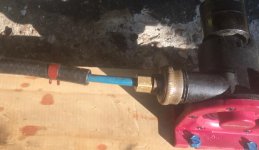
Untitled 3.jpg


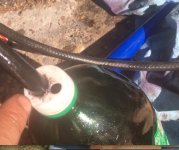
Lastly, I cleaned, dried and then used a 2 liter bottle to hold the fresh fluid.
Use a funnel to make it easier to fill the 2 liter bottle.
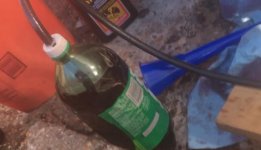
Untitled 6.jpg


I drilled two holes in the cap of the bottle.
One was sized so that the 3/8" hose could go through it, but make a tight fit. Push the hose in far enough so that it reaches the bottom of the 2 liter bottle,
this way it can easily pick up fluid when you run the pump.

I drilled a second vent hole about 1/4" in size.
The vent hole is needed so that air can enter the bottle
as you pump fluid out of it.
Untitled 5.jpg

Adding a drill to the pump (or in my case, a bit driver... it's what I had handy),
and I was good to go!
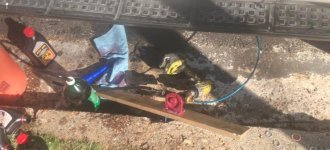
The whole setup made it easier for me to hold the fill hose in place while running the pump without having the pump spin,
and without having the new transmission fluid bottle tip over and spill.

I put the board flat on the ground, and that was enough to keep the pump from moving.
Untitled_7.jpg

I was able to pump 2 quarts of fluid into the transmission
in just under 2 minutes! (see youtube video)
, which saved me time over hand pumping,
given that I pumped a total of about 12 or 13 quarts during the whole process.

I hope this is helpful to someone doing this fluid replacement method.

I'd also like to give a big thanks to [MENTION=113703]46runner[/MENTION] for telling us about
this fluid replacement method and taking the time to document it with such a thorough write up.

My write up and photos are far from the same quality as his, but hopefully it helps someone out.

At the very least, it will remind me what I did the next time I replace my transmission fluid!!! :lmao: :lmao: :lmao:

-Phil

 

Attachments

  • Untitled 3.jpg
    Untitled 3.jpg
    62.8 KB · Views: 1,033
  • Untitled 5.jpg
    Untitled 5.jpg
    93.7 KB · Views: 1,072
  • Untitled6.jpg
    Untitled6.jpg
    17.9 KB · Views: 1,041
  • Untitled_7.jpg
    Untitled_7.jpg
    54.4 KB · Views: 1,034
  • Untitled.jpg
    Untitled.jpg
    72.4 KB · Views: 1,075
  • Untitled 6.jpg
    Untitled 6.jpg
    41 KB · Views: 1,037
Last edited:
I have a couple of questions

1) why pull the refill plug if you can service it through the cooler lines?

2) why pull the drain plug if you are draining it through the cooler lines?

Only plug that I see that needs to be pulled is the check plug for proper service

Sent from my Pixel using Tapatalk
 
I have a couple of questions

1) why pull the refill plug if you can service it through the cooler lines?

2) why pull the drain plug if you are draining it through the cooler lines?

Only plug that I see that needs to be pulled is the check plug for proper service

Sent from my Pixel using Tapatalk


The cooler line is where the old fluid exits the transmission. Instead of cycling through the transmission, it exits out of the cooler line. I guess technically you could also refill it through the other cooler line but that sounds more difficult if not impossible.

Pull the drain plug to first drain the fluid from the drain pan to get as much of the original fluid out before you start diluting the old with the new.
 
The cooler line is where the old fluid exits the transmission. Instead of cycling through the transmission, it exits out of the cooler line. I guess technically you could also refill it through the other cooler line but that sounds more difficult if not impossible.

Pull the drain plug to first drain the fluid from the drain pan to get as much of the original fluid out before you start diluting the old with the new.
I just did it and it was very easy IMO. Pumped in fluid using the top of the radiator. I drained the fluid out using the same hose. One line disconnected and the check plug is all that needed to be opened. Granted I was also installing a auxiliary cooler but if I ignore all that, that's all I would need to do. I only got under the vehicle for the fluid check.

3c89c3cd11c3d48d5713d431ea1b6585.jpg
 
The cooler line is where the old fluid exits the transmission. Instead of cycling through the transmission, it exits out of the cooler line. I guess technically you could also refill it through the other cooler line but that sounds more difficult if not impossible.

Pull the drain plug to first drain the fluid from the drain pan to get as much of the original fluid out before you start diluting the old with the new.

I just did this the other night. If you have the external cooler, it's right out in the open in front of the radiator when you raise the hood. I just took off the short rubber hose between the upper cooler output port and the steel line going back to the transmission. I then connected a piece of plastic hose to the cooler output and ran that into an old oil jug conveniently marked off in quarts. I connected another plastic hose from my cheap HF hand pump to the steel line going to the transmission. Took about 15 sec/qt to pump the fluid in. Much easier than laying under the truck pumping into the fill port.

I cycled about 2 qts out at a time and replaced them until I was done. Then I added about .5 qt extra and did the final level check and tweak at temperature. The whole process took about an hour, and 20 minutes of that were waiting for the tranny to come up to temp so I could check the level.
 

Members online

No members online now.

Forum statistics

Threads
278,310
Messages
3,554,080
Members
248,016
Latest member
Advally Service

Trending content

Back
Top





