Thanks Sam,
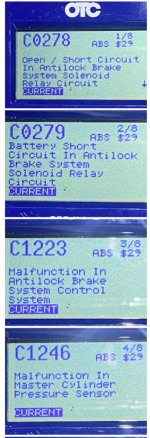
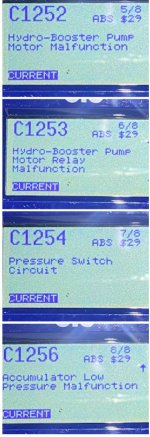
I ordered the code reader that does ABS codes as well. As soon as it is here I'll try and read ABS codes.
I honestly doubt having a wheel sensor problem. This would be a big coincidence. But everything is possible- Murphy's Law
Brief Brake History recap
The brake alarms started 1/2 year ago during an incidenr when I got stranded because of a rusted out rear brake line (left rear) that caused a fluid leak and then I got the full alarm (pump ran out of fluid) and had no brakes. I had to tow the car back home 30 miles.
After preplacing the boken brake line I could not get rid of the alarm and I installed an ebay rebuilt brake pump and accumulator kit (that unit was not rebuilt but simply from a junk yard).... replaced the brake motor/accumulator and could drive again (no alarm after I stalled the rebuilt kit) but the brake motor came one every second brake action. During heavier braking I got the brake alarm for 15 seconds and that sacred the hell out of me.... that incident happened more frequently from then on.
Also the brake power was never good, pedal always soft, no matter how much I bled the brakes. The brake motor then started running at every single brake action until I changed the accumulator (old accumulator had onlt 43bar of charge). With a new accumulator (75 bar) I had the constant brake alarm and I am stuck since then.
I don't have an explanation for this behavior, my logic can't follow and I am scrambling since then.
Here is a good description of the 'hydroboost' system, also stating there is no manual from Toyote and no good way to diagnose the system. Toyota wants customers to replace the entire unit.
The unit uses an Accumulator Pump to build up hydraulic pressure which is stored in the Accumulator Tank to be used by the ABS Solenoid Pack & Master Cylinder for braking assist when you press the pedal. This provides far better assisting force than a traditional vacuum booster and allowed Toyota to use the ABS/VSC/TRAC systems to provide some benefits off road (i.e. TRAC functionality.) As a result of the design, the unit is combined into one large all-in-one unit and is very costly to replace when it does go bad. The master cylinder is bolted directly to the ABS Solenoid pack with high pressure brake fluid being fed into the passages, its all one big maze that is controlled by electronic solenoids and valves; where as on most vehicles the ABS Solenoid pack is separate from the master cylinder.
Unfortunately aside from DTCs (Diagnostic Trouble Codes) and/or process of elimination, there is no really effective way to diagnose these units in terms of pressure testing/electrical testing/ect. Toyota hasn't released any diagnostic criteria beyond what I mentioned in the above post and when my own personal 4Runner's brake master cylinder failed; I was unable to determine any other ways to diagnose the units.
I have read some infromation about replacing the stop lamp switch as this switch can interfere with the ABS pak.... Why that switch would interefere is a riddle to me.
Martin