EVAP codes after replacing fuel pump

sunpunkT4R

New member
I originally posted in another thread "when its not the gas cap". No replies so here we go. I am not a mechanic but I'd like to try to avoid going to a shop if possible. I'm chasing codes 0441 incorrect purge flow, 0455 large leak, & 0456 very small leak. Check engine light, blinking VSC light, & traction lights on. Codes showed up immediately after replacing the fuel pump. I had ZERO evap issues/codes before fuel pump replacement. Replaced gas cap first with Toyota part. Didn't solve. Tried an extra o-ring under the cap hoping for tight seal. Lights back on in a few days. Took it to a shop for smoke test, they told me the dreaded canister was leaking. Replaced it, cleared codes, put it thru rigorous drive cycle, lights back on in a week. I got all but one monitor complete and truck inspected. All monitors now complete. Called the mech to see if he saw any other leaks or had ideas. He suggested I replace squeeze clips with hose clamps on vac lines before & after the tank vac purge. No good either. I can't help but wonder if it may be something with the lock ring for fuel pump? I never have pressure release when removing the gas cap. I'm pretty sure we did not replace a gasket when we replaced the fuel pump. Any thoughts or advice?
 
Register to hide this ad
Sounds like you have to smoke it again. you paid them for a diagnosis it was either wrong or incomplete go back.

but you also need to understand how it works. the VSV valve in the rear is suppose to isolate the purging system from the gas tank so you don't over draw a vacuum. You could have a leak in both places and the smoke might have never gotten to the other side of the system if the VSV was closed. Where did they smoke it? if they smoked it from the engine bay, and the valve was closed the smoke might have never made it to the gas tank. or the other way around.

is it an 01/02 where the canister is above the spare tire?
 
Sorry I neglected to include this - it's a 2008 v6 4wd. Canister is above spare at back. Sounds like a good idea to go back to the mech and ask about the previous smoke test. Thanks a lot for the input.
 
I need to drop my tank to replace my pump too. Can you give any tips on tank removal?

Thanks
 
I need to drop my tank to replace my pump too. Can you give any tips on tank removal?

Thanks

I'm not a tech but I was there to help. We used a floor jack to slowly lower it. First had to remove the protective plate which is beneath the tank. Believe it or not we had to disconnect drive shaft at front end to get to one of the bolts holding this plate on. Then ran the jack up under the tank & disconnected the 2 support straps holding the tank up. By the way it helps a LOT to have very little gas in the tank. Luckily I was under 1/4. Lower the tank slowly as there is a wiring harness & hoses to disconnect once you can access them (filler hose at back & some smaller lines at front). I was under the truck for this but cannot say exactly how each hose or line disconnects. Seems there were a couple of different types of clips/connectors used. The pump assembly is held down in the tank by a large lock ring on top of tank. There is a special tool to fit the teeth of this ring. We didn't have one but I'd get one if I had to do it over. Hope some of this helps.
 
If the only thing you did was remove the tank and replace the pump, i'd say its certainly something there that you are missing.

The air hose running into the tank (from cannister) has a little o-ring inside the fitting that can be replaced. That fitting also must be fully pressed onto the tank until it clicks. I had a mechanic remove my tank and he didnt fully click it back in place which caused the codes to pop up. It appeared in place but didnt fully click which caused the leak.

Its got to be from disrupting one of the connections or pump gasket on the tank.

I'd get the tank full, hook up a vacuum gauge to the hose that runs from the vapor cannister, and create some vacuum in the tank and you may be able to hear where its leaking.
 
.......the VSV valve in the rear is suppose to isolate the purging system from the gas tank so you don't over draw a vacuum. You could have a leak in both places and the smoke might have never gotten to the other side of the system if the VSV was closed. ......
is it an 01/02 where the canister is above the spare tire?


ahh its a bit different.. The VSV opens to let pressure release to the atmosphere if the system were to get over pressured. This is usually closed, and should be closed for a smoke test. It doesnt divide the system, it is simply a relief vent.


If you had a working system and opened a few connections, one of the connections you opened isnt closed back up correctly. start with the vapor cannister line as I mentioned, then the filler neck, then the pump cap. YOu can easilty test these yourself with a cheap vacuum gauge.
 
Excellent advice guys! This was my thinking as well, that it's related to something we disconnected & reconnected during fuel pump replacement.
 
ahh its a bit different.. The VSV opens to let pressure release to the atmosphere if the system were to get over pressured. This is usually closed, and should be closed for a smoke test. It doesnt divide the system, it is simply a relief vent.


If you had a working system and opened a few connections, one of the connections you opened isnt closed back up correctly. start with the vapor canister line as I mentioned, then the filler neck, then the pump cap. YOu can easily test these yourself with a cheap vacuum gauge.

when i was looking at my 02, a reference I read said something about dividing. Of course I could be wrong, i'm not expert, it is a bit complex system. but as far as I understood, to burn the hydrocarbons stored in the canister you need to cut gas tank, open the vsv valve to allow fresh air and and to open the valve to purge through trottle body. I could have all this backwards it was a few months ago. They mentioned the gas cap has safety feature is too much vacuum. I'm probably mixing up some key details .

I'm interested to know more though :)
 
Last edited:
when i was looking at my 02, a reference I read said something about dividing. Of course I could be wrong, i'm not expert, it is a bit complex system. but as far as I understood, to burn the hydrocarbons stored in the canister you need to cut gas tank, open the vsv valve to allow fresh air and and to open the valve to purge through trottle body. I could have all this backwards it was a few months ago. They mentioned the gas cap has safety feature is too much vacuum. I'm probably mixing up some key details

I'm interested to know more though :)


This is the best yet explanation I have found, and it was a great help diagnosing my problems. Its a great read, but takes a few reads to get it all :) We are talking 4th gen so your system may be different.

Be a Toyota leak detective - Automotive Service Professional

I also made a simplified diagram that helps to reference:

http://www.toyota-4runner.org/4th-gen-t4rs/223147-code-p0456-when-its-not-gas-cap.html
 
Last edited:
I'm not a tech but I was there to help. We used a floor jack to slowly lower it. First had to remove the protective plate which is beneath the tank. Believe it or not we had to disconnect drive shaft at front end to get to one of the bolts holding this plate on. Then ran the jack up under the tank & disconnected the 2 support straps holding the tank up. By the way it helps a LOT to have very little gas in the tank. Luckily I was under 1/4. Lower the tank slowly as there is a wiring harness & hoses to disconnect once you can access them (filler hose at back & some smaller lines at front). I was under the truck for this but cannot say exactly how each hose or line disconnects. Seems there were a couple of different types of clips/connectors used. The pump assembly is held down in the tank by a large lock ring on top of tank. There is a special tool to fit the teeth of this ring. We didn't have one but I'd get one if I had to do it over. Hope some of this helps.

Thanks for the insight! It certainly helps.
 
Did you ever figure your issue out?
I've been battling this exact same issue. I replaced the cap, VSV, and all rubber hoses and have it down to just the P0456 code now. Any ideas?
I have tried pulling vacuum on the whole system, but whenever the system (including the gas tank) gets up to 5 inHg the system vents and releases.
 
I'm having the same issues, I had a failing fuel pump which caused the truck to hesitate accelerating at time mostly uphill. Finally got the truck running great after replacing the fuel pump. It ran great for a month or so and now I'm getting EVAP codes. Ill have to check again to see exactly what codes they are.

I'm hoping it was just my mistake hooking up one of the hoses. Did any of you all figure out the problem?

Is there an inexpensive way I can smoke test myself at home. Can someone recommend a cheap smoke test kit?

Lastly I'm fairly certain i hooked up the 2 smaller hoses correctly. But just to be sure can someone confirm the order, which hose connects where with a pic or diagram?

Thanks
 
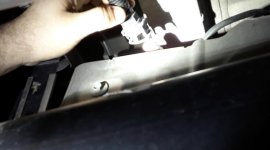
Forgot to update this. I could never find time to mess with this so I ended up going to a shop. They discovered that the main line going from top of tank to canister was disconnected from canister. We apparently did not get it fully reconnected. Well that sucks! Rough pic attached.
 

Attachments

  • EVAP line.jpg
    EVAP line.jpg
    30 KB · Views: 3,222
Forgot to update this. I could never find time to mess with this so I ended up going to a shop. They discovered that the main line going from top of tank to canister was disconnected from canister. We apparently did not get it fully reconnected. Well that sucks! Rough pic attached.

Did reconnecting it to the cannister fix the code issues?
 
Just thought I would post a solution here...

I had my evap codes come on around when I replaced my fuel pump. I was replacing the fuel pump in hopes of fixing a starting issue.... but it ended up being injectors. Anyway, replacing the evap canister fixed my issue! There was no external leak on the canister, but there was internally on the vapor valve.

If anyone has any questions about diagnosing evap issues feel free to message me.
 

Members online

Forum statistics

Threads
278,308
Messages
3,554,059
Members
248,016
Latest member
Advally Service

Trending content

Back
Top