Rear Axle Seals: The Ultimate Information and Replacement Thread (3rd gen)

I have the larger brakes on mine and the shoes from oreillys, brake best brand. No issues at all with them. I think they are 295mm diameter drums. Make sure you specify whatever size you have.
Why off topic on this thread but I have to ask now..... 3rd gen drum brakes came in different sizes?!?!??! Or are you saying, when O'Reilly gave you options you chose the best brand and they were (you think) 295mm?

Sent from my SM-G920I using Tapatalk
 
Why off topic on this thread but I have to ask now..... 3rd gen drum brakes came in different sizes?!?!??! Or are you saying, when O'Reilly gave you options you chose the best brand and they were (you think) 295mm?


Sent from my SM-G920I using Tapatalk

There are 2 different sizes of brake drums and 2 different sizes of brake rotors.
It's on topic because you should replace your shoes after your seals go south.
 
There are 2 different sizes of brake drums and 2 different sizes of brake rotors.
It's on topic because you should replace your shoes after your seals go south.
No no.... Front's have different size calipers and rotors (smaller) for the 15" trucks. Rear has a smaller wheel cylinder but the drums and shoes are the same between 15" and 16" trucks.

-Charlie
 
No no.... Front's have different size calipers and rotors (smaller) for the 15" trucks. Rear has a smaller wheel cylinder but the drums and shoes are the same between 15" and 16" trucks.

-Charlie

Are you sure? Not saying that's wrong, but I was able to find some shoes previously for like 199mm or 230 or something. I Could be wrong, wouldn't be the first time.
 
Are you sure? Not saying that's wrong, but I was able to find some shoes previously for like 199mm or 230 or something. I Could be wrong, wouldn't be the first time.
That's for the Tundra Brake Upgrade. That's on the front discs.

Edit..... damn I hate Tapatalk sometimes......

Those numbers sounds like the pad sizes for the Tundra Calipers. You have 190s and 230s.

Sent from my SM-G920I using Tapatalk
 
Last edited:
That's for the Tundra Brake Upgrade. That's on the front discs.

Edit..... damn I hate Tapatalk sometimes......

Those numbers sounds like the pad sizes for the Tundra Calipers. You have 190s and 230s.

Sent from my SM-G920I using Tapatalk

Yeah, I know they are different on the front. I have 317mm front rotors and 295mm rear drums. What I was thinking was that the Tacos have different sizes of drums. There is a 254mm drum and the 295mm drum.
 
Last edited:
Parts List

Thank you for this detailed and thorough write-up. I like to get things done right the first time.

Here is a parts list and shop pricing based on this thread and the following website: https://oemtoyotaparts.i-5toyota.com/

Rear Axle Leak - Replacement Parts
#Name Part #
(2) O-Rings 90301-88077 ($7.18)
(2) Inner Seals 90310-50006 ($10.34)
(2) Rear Wheel Bearings 90363-40020-77 ($132.92)
(2) Retainers 42423-20010 ($30.52)
(2) Skid Control Rotors 43517-35010 ($83.14)
(2) Snap Rings 90520-36045 ($3.18) *Optional
(2) Outer Shaft Oil Seal 90313-48001 ($9.54) *Optional
(2) Rear Brake Shoes 04495-35230 ($76.92)
75W90 Gear Oil

:bump:
 
The pictures in this write-up have all been restored. Big thanks go out to [MENTION=65101]BrianSD_42[/MENTION] for re-hosting the pics, and to [MENTION=84643]JBurt[/MENTION] for his willingness to help out as well.
 
On my '98, I changed passenger side last October (10,000mi ago). Now driver side out, will change next. Should I go ahead and change passenger side brake shoes as well as driver side. I changed both last fall.
 
Looks like my 4runner experience is just not going to be complete unless I have to deal with this. Was hoping I might get out of it, but no such luck.

Many thanks to the OP for the information, just what I needed to assess what I need to do and will come back to reference as I fix it.

Bought my runner with 239k miles on it, inspected this area and no visible leaks when I bought it back in January. 247k now, I have been driving the snot out of it. Was washing it yesterday, started scrubbing the rear passenger wheel and noticed I struck oil, knew immediately what it was. Given the level of crud it's been leaking a little while.

I suppose it's due. From what records I have of it's life with the previous owner, I found no mention of any seals replaced, and this guy seemed pretty good about keeping receipts.
 
Looks like my 4runner experience is just not going to be complete unless I have to deal with this. Was hoping I might get out of it, but no such luck.

Many thanks to the OP for the information, just what I needed to assess what I need to do and will come back to reference as I fix it.

Bought my runner with 239k miles on it, inspected this area and no visible leaks when I bought it back in January. 247k now, I have been driving the snot out of it. Was washing it yesterday, started scrubbing the rear passenger wheel and noticed I struck oil, knew immediately what it was. Given the level of crud it's been leaking a little while.

I suppose it's due. From what records I have of it's life with the previous owner, I found no mention of any seals replaced, and this guy seemed pretty good about keeping receipts.

Check out Page #28 of this thread for a couple videos [MENTION=102606]infamousRNR[/MENTION] and I made for this repair (ABS and Non-ABS rearends).

You can do what the OP did and take your axles to a shop to the do the press work for you but our videos take it to the next level and show you how to do the press work yourself with a Harbor Freight press, an axle tool made by Durasolid, a bearing splitter you can buy wherever, and maybe a press sleeve but you can get around the press sleeve by using a piece of pipe with the correct diameter if you do the press work exactly how we describe it. Also, the press sleeve isn't necessary if you disassemble the brakes and remove the bellcrank.

Depending on how much your local machine shops or automotive shops quote you for this job, you might want to do the whole job yourself and use the money you save on shop fees and invest that in some tools for yourself that can be used on other projects. A press is a handy tool to have and they are very affordable at Harbor Freight. The axle tool is very specific and may be a one time use but you could always help out another 3rd Gen buddy in your area like we have. We've now done rear axle seal job on 3 different 3rd Gens.
[MENTION=102606]infamousRNR[/MENTION] and I have a video coming out soon related to this repair, Drum Brake Job. If your brakes are contaminated with gear oil, it's usually a good idea to renew the shoes when you do this job.

Good luck.
 
I wanted to add some tips and tricks to this informative thread. I did the driver's side seal a week or two ago and heard that the bearing grease gets washed out by the gear lube so I did not drive the vehicle in fear the bearing would wear out. I recently saw a video on how to pack an engine pulley bearing and decided why not do that with the 4runner axle bearing and maybe extend it's life? So I headed to Harbor Freight and picked up some tools.

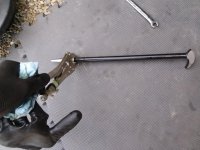
The first picture is my custom seal puller. It's just a pry bar and locking pliers. I used a hammer to tap against the pliers and it popped the seal right out.

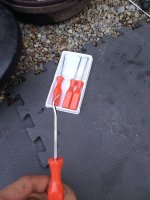
The second picture is a set of picks I picked up at Advance Auto. These are used to carefully pry off the side cover on the bearing.

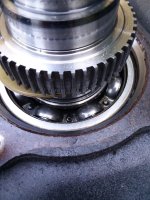
The third picture shows the side cover off the bearing and you can see that the grease has been cleaned out by the lube.

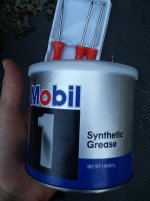
The last picture is synthetic bearing grease from Mobil 1. I packed the bearing using my pinky finger to squish it in between the ball bearings then inserted the side cover back on the bearing.

Hopefully this helps those who still have a good bearing.
 

Attachments

  • 20170919_180945.jpg
    20170919_180945.jpg
    138.3 KB · Views: 650
  • 20170919_182748.jpg
    20170919_182748.jpg
    138.2 KB · Views: 576
  • 20170919_182921.jpg
    20170919_182921.jpg
    136 KB · Views: 637
  • 20170919_182926.jpg
    20170919_182926.jpg
    117.7 KB · Views: 591
I've been skimming through a lot of these kinds of threads on here and at Yotatech, as I'm faced with dealing with this same issue on my new-to-me '01 4runner. I have a buddy that his wife is a service writer at a local stealership, so she offered to get the parts for me under her account (employ-ee discount)

Parts were ordered per my VIN. Local automotive machine shop had a shop made version of the bearing removal tool, I gladly paid them the $40 to take it all apart. Today I got to start reassembling and immediately had an issue with the new axle shaft "dust shields" not wanting to pop back into the bearing housings. A few measurements and a visual comparison to the old parts showed me that the old parts were different. ( Something to do with type "A" and type "B" versions). A call to a closer dealerships parts dept told me that they had the other type of seal, so I go there and ask them to verify that if the new seal is different from what I took apart, what else might be different.

Turns out that the old dust seal, bearing and bearing housing are supposedly different and that they are the "old design", meaning that the axle under my '01 is from a '95- early '00. The "correct" bearing per my VIN has an extended shoulder on the lower race, the bearings that came out of the axle shafts had no such extended lower shoulder. I was told from the parts person that the difference is either an ABS or non ABS axle housing, and that the old bearing that I had is for a non-ABS axle. Well, my housing is in-fact an ABS axle, I took the sensors out myself.

As I go through all of these rear axle bearing threads, I see absolutely no mention of different bearings, depending on ABS or non-ABS or by an "early" design or a later "updated" design. Can anyone verify which bearing is used, and more importantly, if the bearing with the shoulder on the lower race is the one that gets used, does that shoulder face towards the wheel flange or inboard towards the diffy? When I eye-balled that bearing on my axle shaft it just doesn't seem like that extended shoulder will work correctly on the axle shaft, it will cause the inner retainer ring to block the groove for the snap ring.

I got absolutely no help from the dealership that I got the parts from, they have the attitude that if the parts that were ordered per my VIN don't match, then I must have an aftermarket axle shaft and I'll need to figure out where to get parts from on my own or buy all new Toyota parts. ( i.e.- axle ahaft, bearing, seals housing, ect..) Seriously, that's the level of competence at a dealership that you have to deal with.

 
Last edited:
I wanted to add some tips and tricks to this informative thread. I did the driver's side seal a week or two ago and heard that the bearing grease gets washed out by the gear lube so I did not drive the vehicle in fear the bearing would wear out. I recently saw a video on how to pack an engine pulley bearing and decided why not do that with the 4runner axle bearing and maybe extend it's life? So I headed to Harbor Freight and picked up some tools.

The first picture is my custom seal puller. It's just a pry bar and locking pliers. I used a hammer to tap against the pliers and it popped the seal right out.

The second picture is a set of picks I picked up at Advance Auto. These are used to carefully pry off the side cover on the bearing.

The third picture shows the side cover off the bearing and you can see that the grease has been cleaned out by the lube.

The last picture is synthetic bearing grease from Mobil 1. I packed the bearing using my pinky finger to squish it in between the ball bearings then inserted the side cover back on the bearing.

Hopefully this helps those who still have a good bearing.

That's useful to know. Could you reuse the seal? If you didn't what part number was your replacement?
 
I've been skimming through a lot of these kinds of threads on here and at Yotatech, as I'm faced with dealing with this same issue on my new-to-me '01 4runner. I have a buddy that his wife is a service writer at a local stealership, so she offered to get the parts for me under her account (employ-ee discount)

Parts were ordered per my VIN. Local automotive machine shop had a shop made version of the bearing removal tool, I gladly paid them the $40 to take it all apart. Today I got to start reassembling and immediately had an issue with the new axle shaft "dust shields" not wanting to pop back into the bearing housings. A few measurements and a visual comparison to the old parts showed me that the old parts were different. ( Something to do with type "A" and type "B" versions). A call to a closer dealerships parts dept told me that they had the other type of seal, so I go there and ask them to verify that if the new seal is different from what I took apart, what else might be different.

Turns out that the old dust seal, bearing and bearing housing are supposedly different and that they are the "old design", meaning that the axle under my '01 is from a '95- early '00. The "correct" bearing per my VIN has an extended shoulder on the lower race, the bearings that came out of the axle shafts had no such extended lower shoulder. I was told from the parts person that the difference is either an ABS or non ABS axle housing, and that the old bearing that I had is for a non-ABS axle. Well, my housing is in-fact an ABS axle, I took the sensors out myself.

As I go through all of these rear axle bearing threads, I see absolutely no mention of different bearings, depending on ABS or non-ABS or by an "early" design or a later "updated" design. Can anyone verify which bearing is used, and more importantly, if the bearing with the shoulder on the lower race is the one that gets used, does that shoulder face towards the wheel flange or inboard towards the diffy? When I eye-balled that bearing on my axle shaft it just doesn't seem like that extended shoulder will work correctly on the axle shaft, it will cause the inner retainer ring to block the groove for the snap ring.

I got absolutely no help from the dealership that I got the parts from, they have the attitude that if the parts that were ordered per my VIN don't match, then I must have an aftermarket axle shaft and I'll need to figure out where to get parts from on my own or buy all new Toyota parts. ( i.e.- axle ahaft, bearing, seals housing, ect..) Seriously, that's the level of competence at a dealership that you have to deal with.

Take a look at this video [MENTION=102606]infamousRNR[/MENTION] and I made for this repair. In the video description, we list the bearing part numbers. The 1996-2000 had the bearing without that extra shoulder. The 2001 and 2002 years have that extended shoulder. The extended shoulder faces towards the axle flange, because you're right, you then couldn't get the outer retainer and c-clip in the proper spot on the axle shaft.

Your experience with the dealership is not uncommon. I guarantee that you and many others that have done significant research on this repair knows more than the service writers and mechanics at the dealerships. Dealerships, independent shops and machine shops screw up this repair a lot.

<iframe width="560" height="315" src="https://www.youtube.com/embed/AVhSDnw2ugo" frameborder="0" allowfullscreen></iframe>
 
Last edited:
I wanted to add some tips and tricks to this informative thread. I did the driver's side seal a week or two ago and heard that the bearing grease gets washed out by the gear lube so I did not drive the vehicle in fear the bearing would wear out. I recently saw a video on how to pack an engine pulley bearing and decided why not do that with the 4runner axle bearing and maybe extend it's life? So I headed to Harbor Freight and picked up some tools.

The first picture is my custom seal puller. It's just a pry bar and locking pliers. I used a hammer to tap against the pliers and it popped the seal right out.

The second picture is a set of picks I picked up at Advance Auto. These are used to carefully pry off the side cover on the bearing.

The third picture shows the side cover off the bearing and you can see that the grease has been cleaned out by the lube.

The last picture is synthetic bearing grease from Mobil 1. I packed the bearing using my pinky finger to squish it in between the ball bearings then inserted the side cover back on the bearing.

Hopefully this helps those who still have a good bearing.

You might already know this but maybe you don't. Toyota redesigned the seals sometime in the past. The seal lip now sits 2mm for inboard. By just replacing the seal and nothing else, the seal lip is now riding very close to the non-polished bevel of the retainer. With a little bit of bearing play, that seal lip will sometimes contact the bevel. The end result is you have a leaking axle seal again. The definitive fix for this repair is to also replace the bearing because a worn out bearing could cause the seal to prematurely fail, you change the position of the inner retainer or use the flip method to make sure the seal lip is contacting the retainer somewhere in the middle of the polished part of the retainer and you also make sure your differential breather is working and not clogged.

I'm curious, did you do the grease test to see where the seal lip is currently riding on the retainer? From experience, you're around 2mm away from the bevel. If your bearing is indeed in good shape, you might be ok. If I were you, I'd pull the ABS sensors from time to time to see if gear oil is getting past the seal. I suspect you might be doing this whole job all over again sooner than you'd like.
 
You might already know this but maybe you don't. Toyota redesigned the seals sometime in the past. The seal lip now sits 2mm for inboard. By just replacing the seal and nothing else, the seal lip is now riding very close to the non-polished bevel of the retainer. With a little bit of bearing play, that seal lip will sometimes contact the bevel. The end result is you have a leaking axle seal again. The definitive fix for this repair is to also replace the bearing because a worn out bearing could cause the seal to prematurely fail, you change the position of the inner retainer or use the flip method to make sure the seal lip is contacting the retainer somewhere in the middle of the polished part of the retainer and you also make sure your differential breather is working and not clogged.

I'm curious, did you do the grease test to see where the seal lip is currently riding on the retainer? From experience, you're around 2mm away from the bevel. If your bearing is indeed in good shape, you might be ok. If I were you, I'd pull the ABS sensors from time to time to see if gear oil is getting past the seal. I suspect you might be doing this whole job all over again sooner than you'd like.

I got a question about bearing play. On my 4runner I have zero up and down play but about 1/16th of an inch in and out play (when bolted up). Is this in and out play what causes the seal leaks or is it normal?
 
Last edited:
I got a question about bearing play. On my 4runner I have zero up and down play but about 1/16th of an inch in and out play (when bolted up). Is this in and out play what causes the seal leaks or is it normal?

I don't know if a 1/16" of play is enough to cause a seal to fail but play in the bearing causes more movement in the axle shaft. The axle shaft movement causes extra stress on the seal and a leak can start because of it. And, I imagine there's more than 1/16" of play when the rig is rolling down the road and there's forces on the vehicle that can't be duplicated in a garage with the rearend jacked up off the ground.

The in and out play is good reason to make sure you have the seal lip riding somewhere in the middle of the polished surface of the retainer. If you're riding near the edge of the retainer bevel, bearing play will allow the seal lip to ride on the non-polished bevel and that's not good for the life of the seal.
 

Members online

Forum statistics

Threads
278,316
Messages
3,554,120
Members
248,016
Latest member
Advally Service

Trending content

Back
Top