The 3.4L TRD Supercharger Thread

Your setup sounds very similar to where mine was about 3 years ago. The problem wasn't the engine but the lack of a tune. I also went water/meth injection first to be dissappointed with the lack of power it gave. Then I got piggyback and tuned closed loop and there was the power! That surge you feel is the engine switching from closed loop to open loop since in close loop it's running as close to 14.7 AFR's as possible. I gained over 25HP from a tune (the equivalent from going from the stock pulley to a 2.1" pulley).

If you mind isn't completely made up, I'd save the money from the overbored throttle body and put that towards a piggyback and bigger injectors. Even if you just toss in the injectors as-is it's an improvement.

Interesting. I was starting to think my Dynamic tensioner was failing.

The TB bore is only $150 so I can hold off for sure. What are good options for a piggyback system? I have zero experience with any sort of tuning but would like to learn. I'm aware of the URD system, but from what I've been reading through this thread is it's not too user friendly.

I did see these injectors:OEM Denso Fuel Injectors Set (6) 23250-46050 for 1993-1997 Lexus Toyota 3.0L I6 | eBay mentioned. What are other reasonable options?

I know I'm going all over the place here in a way but I want to get all my questions out of the way and a plan of attack in place. I'm having issues finding info on snorkels and superchargers. Looking at installing the Taco snorkel on my 4R and I know the rubber tube likes to collapse while under boost (easy fix is a PVC pipe inside the rubber tube). Anyways, onto my question. Given where the Taco snorkel hole will be drilled, I want to do a straight line to an inline air filter to the TB. Replacing the stock airbox with a 2.5 gallon resivor for my methanol (the 1 gallon stock washer resivor sucks). Any ideas on any issues I'd have if I did this? Obvously I'm running the risk of lack of air intake.
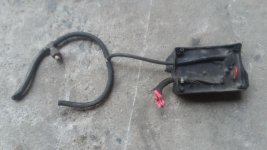
 
just trying to get/find some info on this:

34sco2.jpg

Came off of a s/c 98 with a 2nd gen. Traced the wires back to a piggyback at the ECU. grd, pwr b+, and the 02 sensor 1 (up steam). Was only using 3 wires, all the rest went no where. The box itself was getting manifold vacuum. i've been searching and looking at pics but haven't find another s/c set up with said.
 

Attachments

  • 34sco2.jpg
    34sco2.jpg
    131.2 KB · Views: 3,103
Last edited:
Interesting. I was starting to think my Dynamic tensioner was failing.

The TB bore is only $150 so I can hold off for sure. What are good options for a piggyback system? I have zero experience with any sort of tuning but would like to learn. I'm aware of the URD system, but from what I've been reading through this thread is it's not too user friendly.

I did see these injectors:OEM Denso Fuel Injectors Set (6) 23250-46050 for 1993-1997 Lexus Toyota 3.0L I6 | eBay mentioned. What are other reasonable options?

I know I'm going all over the place here in a way but I want to get all my questions out of the way and a plan of attack in place. I'm having issues finding info on snorkels and superchargers. Looking at installing the Taco snorkel on my 4R and I know the rubber tube likes to collapse while under boost (easy fix is a PVC pipe inside the rubber tube). Anyways, onto my question. Given where the Taco snorkel hole will be drilled, I want to do a straight line to an inline air filter to the TB. Replacing the stock airbox with a 2.5 gallon resivor for my methanol (the 1 gallon stock washer resivor sucks). Any ideas on any issues I'd have if I did this? Obvously I'm running the risk of lack of air intake.


For piggybacks, the list is getting small. URD has the most cost-effective unit as we really can't tune much on our engines since the ECU's cannot be flashed or cracked. They are also hard to tune sine the Oxygen Sensor input will de-tune everything in closed loop unless you skew the sensor voltage. I have the AEM FIC-6 which is easier to use but now discontinued. There's some helpful threads on here and I've documented some of my tuning progress on my build thread.

I had that exact set on Ebay bookmarked for some time, that's the right P/N and the right set to drop in. I already have the brown tops so it was just a thought to smooth the idle a bit. The air-assist works only under vacuum as once you hit boost the air tries to flow upstream (that's why there's a one-way check valve on the throttle body) so defeats the air-assist. Those will give you enough fuel to run the 2.1" pulley reliably. If you keep the 2.2" with bigger injectors AND water/meth it's too much fuel. Currently, my tune on my injectors has them pulling -20% fuel starting at 3000 RPM's and isn't till 5000 RPM's does it turn positive and end at +10%. That's with a 3.5ish gph methanol nozzle. That's also at sea level.

Snorkels and superchargers don't play very nice. A snorkel adds a lot of extra restrictions and bends. The rules of ram air intakes don't apply here either as our 4Runners don't really go fast enough to benefit. Most cars have to see highway speeds or faster to start to benefit from one and almost all snorkels leave the stock elbow in the fender which is a measured intake restriction. The best route I can think of is to add a deckplate to the front of the airbox.

deckplate.jpg


It's cheap and easy to do and best of all, waterproof. Just put the marine grade deckplate back in and you're set for water crossings again. Take it out to gain +10 HP or more. Best bang for the buck power mod for a 4Runner, supercharged or not. From my experience, here's what power you can expect to gain at what cost:

Easy power modifications:
Deckplate mod: +10 HP, $30
High flow aFe Power filter (dry or oiled): +9 HP (see my dyno chart), $60. Obviously if you off-road a lot in dusty conditions, this isn't a good idea.
2.2" pulley to 2.1" pulley: +15 HP, $100, $300. AFR gauge would be a must at this point as you cannot run lean or risk engine damage.
Bored Throttle body: +5??, $150. I didn't get a good comparison after I put it on.

Not-so easy power modifications:
Piggyback controller: +25-40HP, $500-$1000. May require extensive wiring (URD unit does not). Tuning knowledge required to an extent.
Headers: +11 HP, $750. Nightmare to install.
 
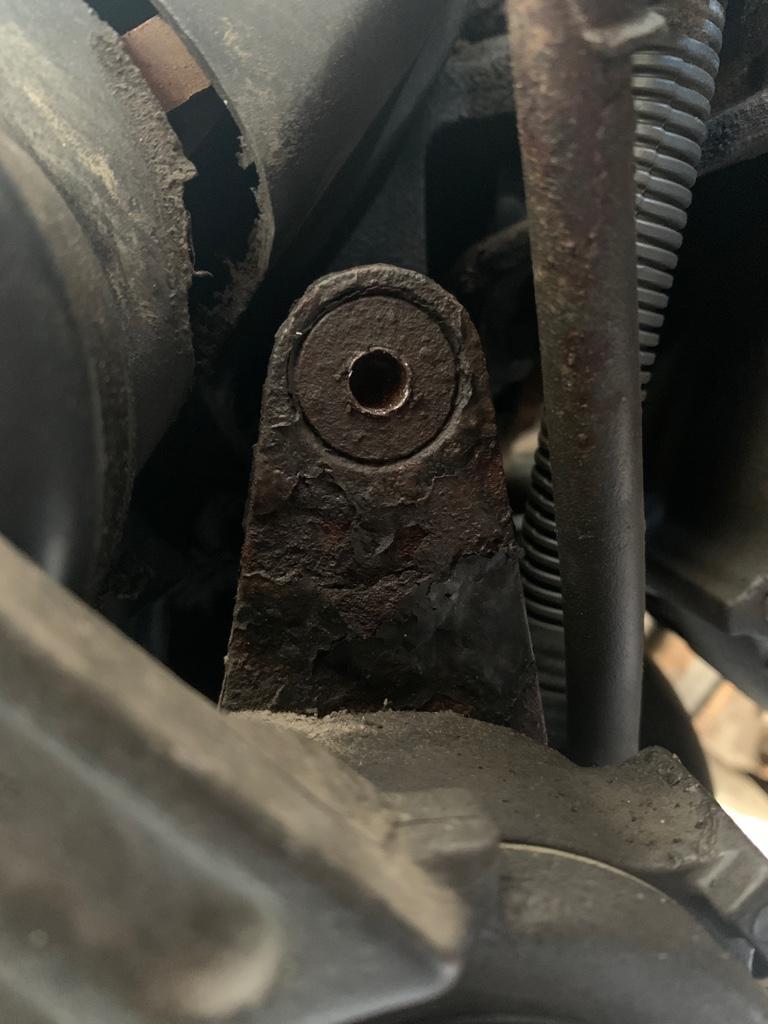
Hey all, I purchased a 1st gen Tacoma with a 2nd gen black supercharger on it to swap onto my 4runner. I was able to get the supercharger itself off of the Tacoma, however I ran into an issue trying to get the 6mm hex bolt off of the dynamic tensioner.

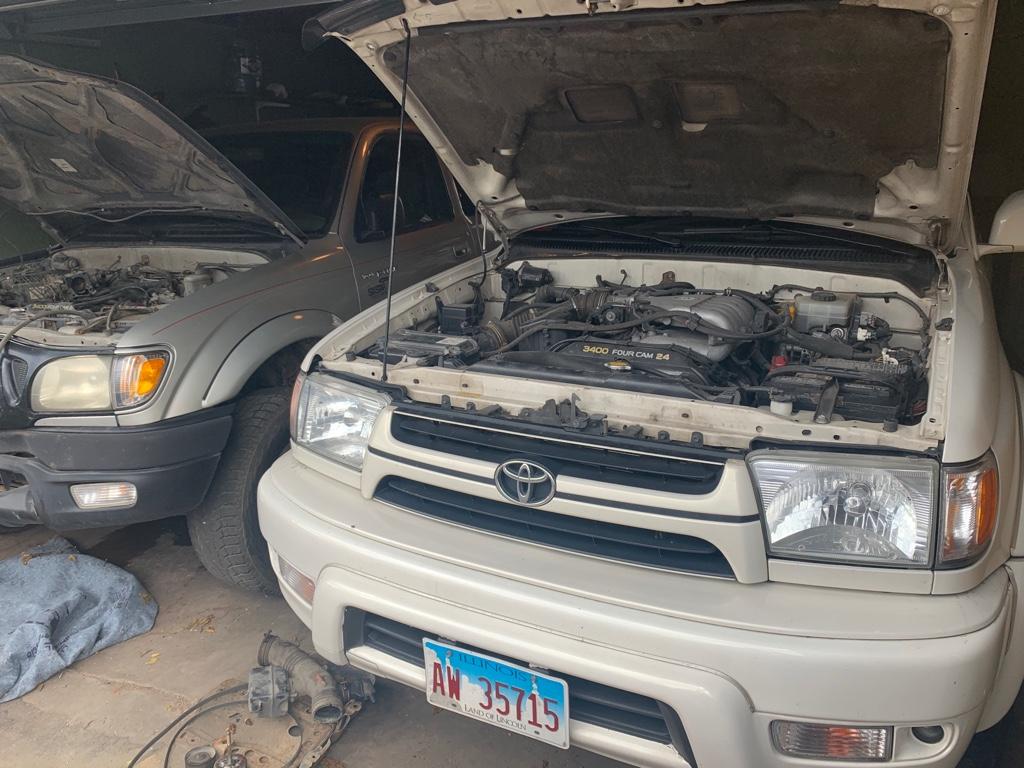
Here are some pics of the set up I'm working with in my garage. Don't mind the dirty garage, I just bought this house and I still haven't had time to clean because I'm prioritizing the important stuff like supercharging my 20 year old truck!

My 4runner!

9efb31e9125d1f37be47bf1e197fa637.jpg


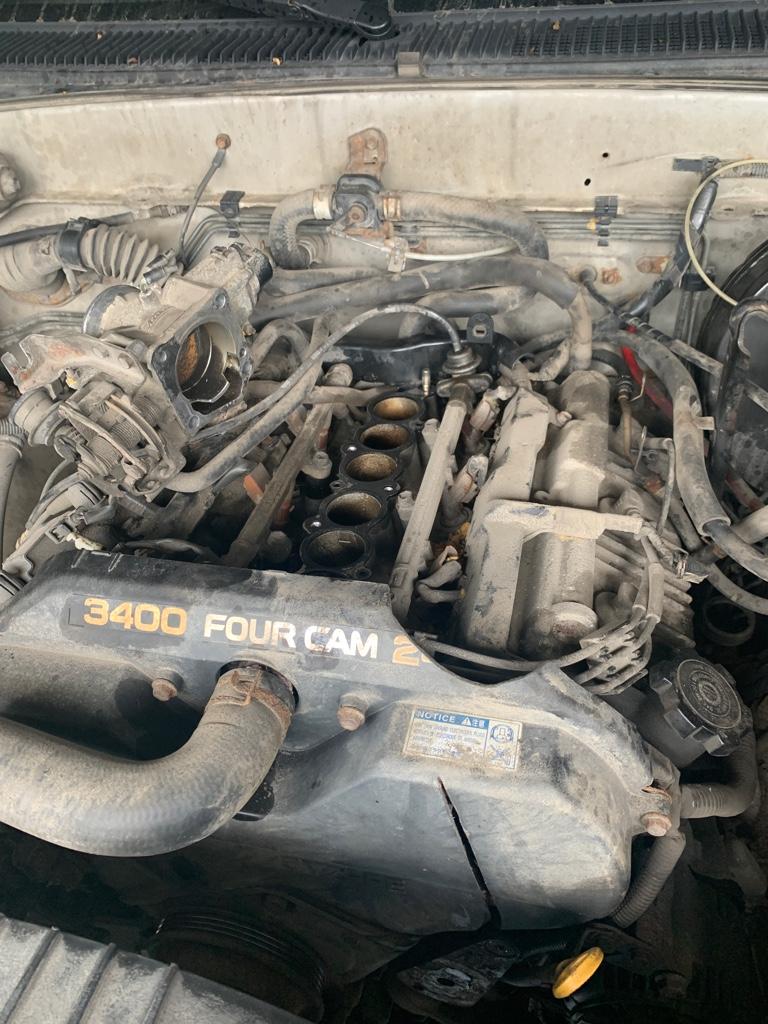
This is the Tacoma 3.4l after removing the supercharger. Whoever owned this truck treated it like CRAP! Both valve cover gaskets are shot, and it's throwing codes for a knock sensor and a O2 sensor, all of which I'l be replacing before installing the intake manifold from my 4runner.

bfff22d4062734ce2d836ae091275192.jpg


I defineitely have to repaint this...

b00aa5df3f048bcfada1d23b6624383f.jpg


Take a look at this, whoever installed this tensioner must have used the wrong size hex bit :shrug:

75b8c41b21c415f6062a671cec68806e.jpg


I already tried the trick where you hammer in a larger size torx bit, but sadly thats not working. Anyone else have any idea on how I can get this thing off? Heat, drill, dynamite?

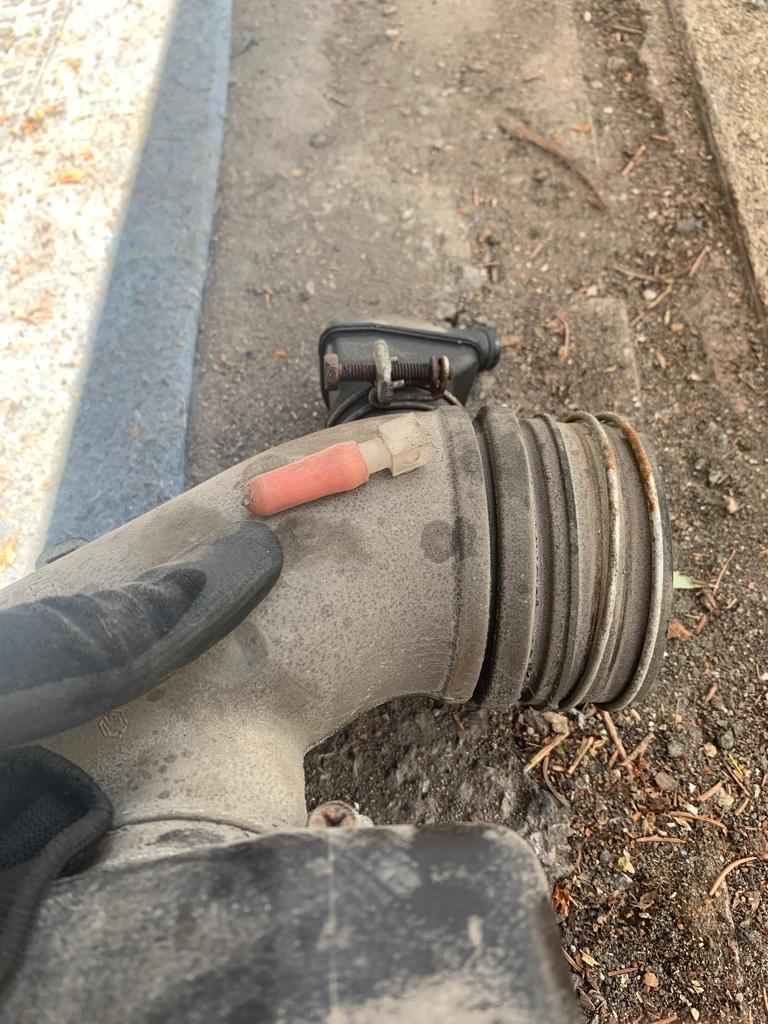
Also, I noticed this plug and red cap on the intake tube. Is this evidence of the truck being meth injected at some point in its life?

abdfa8ad65b0acce659a2541064c5840.jpg


Any help would be appreciated, thanks!

- Alex
 
Last edited:
stock 1gen Sc no piggy no fuel mod, 252k on motor w/aem wideband 6psi pull wot [email protected] not bad for being stock. no mod no pinging issues.
 

Attachments

  • IMG_20200526_225119_800[643].jpg
    IMG_20200526_225119_800[643].jpg
    133.5 KB · Views: 800
  • IMG_20200526_225119_811[642].jpg
    IMG_20200526_225119_811[642].jpg
    127.5 KB · Views: 796
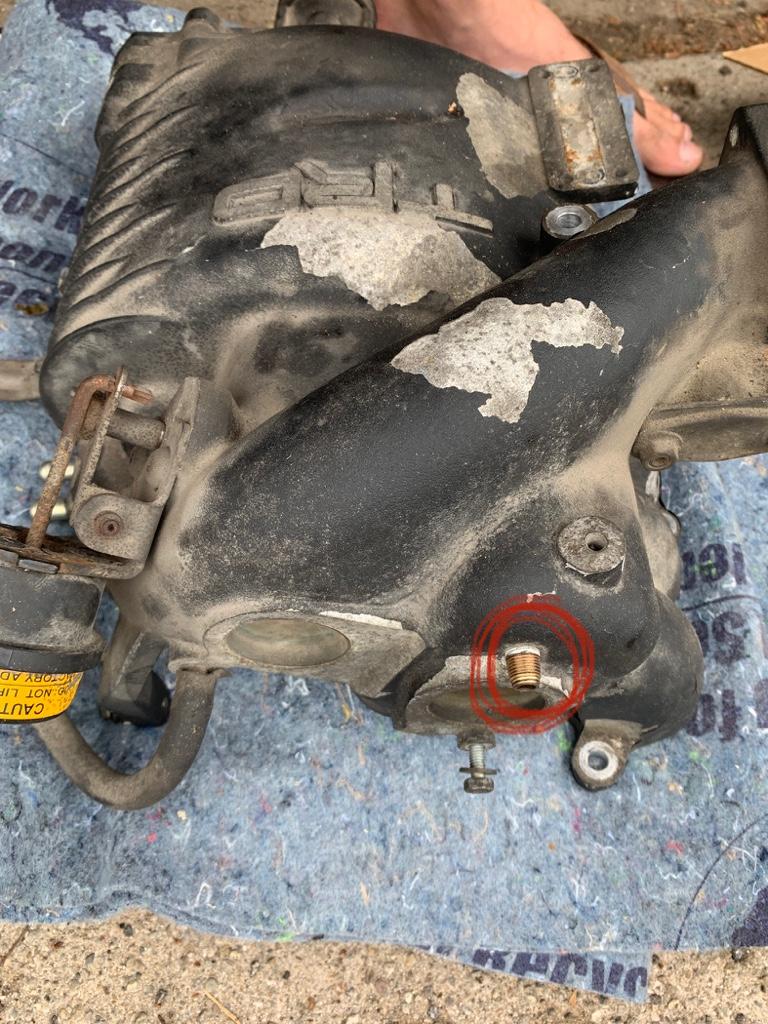
Hey guys, I ran into an issue with installing my 2nd gen supercharger. I pulled the charger from a 5 speed 2002 Tacoma 4wd. I am putting it into my auto 2002 4runner 4wd.

On the back of my supercharger, the previous owner was running a fitting that connected directly into the boost gauge. See below, don’t mind the chipped paint, it’s been repainted now.

ed5503b6f91b752b0463147fc4c1da93.jpg


However, after watching Timmy The Toolman’s video on installing the supercharger, it looks like this port is supposed to have a 1/8” national pipe fitting for a vacuum hose that goes to the fuel pressure regulator. A boost gauge then can get T’d into this fuel pressure vacuum line.

Anyone else have this issue?


Sent from my iPhone using Tapatalk
 
Hey guys, I ran into an issue with installing my 2nd gen supercharger. I pulled the charger from a 5 speed 2002 Tacoma 4wd. I am putting it into my auto 2002 4runner 4wd.

On the back of my supercharger, the previous owner was running a fitting that connected directly into the boost gauge. See below, don’t mind the chipped paint, it’s been repainted now.


However, after watching Timmy The Toolman’s video on installing the supercharger, it looks like this port is supposed to have a 1/8” national pipe fitting for a vacuum hose that goes to the fuel pressure regulator. A boost gauge then can get T’d into this fuel pressure vacuum line.

Anyone else have this issue?


Sent from my iPhone using Tapatalk

Yep, someone replaced it. My guess is they broke the barb off and then had to improvise. I would take it out (the teflon tape shows it's threaded) and see if you can find a barbed fitting for the boost hose that has the same NPT thread size as the current fitting. You are going to have to get a little creative as that port is necessary for the install. It needs to connect to the vacuum line going to your Fuel Pressure Regulator that sits on the back of the fuel rails.
 
Last edited:
Yep, someone replaced it. My guess is they broke the barb off and then had to improvise. I would take it out (the teflon tape shows it's threaded) and see if you can find a barbed fitting for the boost hose that has the same NPT thread size as the current fitting. You are going to have to get a little creative as that port is necessary for the install. It needs to connect to the vacuum line going to your Fuel Pressure Regulator that sits on the back of the fuel rails.


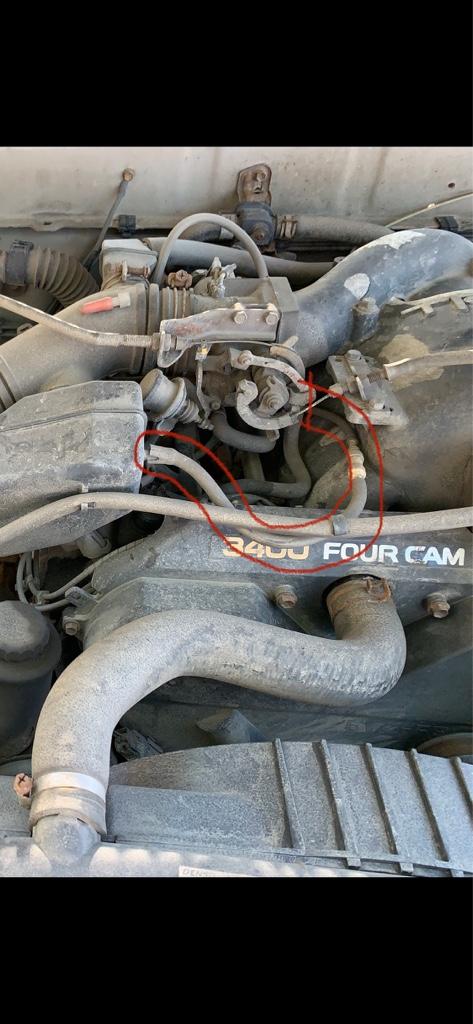
Thanks for the advice. I'm going to run to Home Depot/Menards/Lowes tomorrow to see if I can find the correct brass barb. If I can find one, I'm going to install it correctly and T off the boost gauge. If I can't find one, the way the supercharger was set up on the Tacoma is the vacuum line from the fuel pressure regulator was going to the trucks intake silencer. Anyone know if that will cause any issues? Here is a photo, the vacuum line circled in red was connected to the fuel pressure regulator.


1517c7dd9414bd5a28019fcbfd979a42.jpg


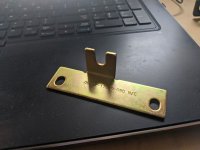
Now I have another issue, I need the proper throttle bracket for my 4runner as the one from the Tacoma is pointed down and more towards the front of the engine bay. I need the bracket that holds the cable straight up and down and towards the center of the bracket. Does anyone have one for sale leftover from a supercharger install kit? Really not trying to pay $170 for a single bracket.
 
Thanks for the advice. I'm going to run to Home Depot/Menards/Lowes tomorrow to see if I can find the correct brass barb. If I can find one, I'm going to install it correctly and T off the boost gauge. If I can't find one, the way the supercharger was set up on the Tacoma is the vacuum line from the fuel pressure regulator was going to the trucks intake silencer. Anyone know if that will cause any issues? Here is a photo, the vacuum line circled in red was connected to the fuel pressure regulator.


1517c7dd9414bd5a28019fcbfd979a42.jpg


Now I have another issue, I need the proper throttle bracket for my 4runner as the one from the Tacoma is pointed down and more towards the front of the engine bay. I need the bracket that holds the cable straight up and down and towards the center of the bracket. Does anyone have one for sale leftover from a supercharger install kit? Really not trying to pay $170 for a single bracket.

Is this the one your looking for? I just installed mine and had this left over.
 

Attachments

  • SC1.1.jpg
    SC1.1.jpg
    131.4 KB · Views: 3,801
Last edited:
Thanks for the advice. I'm going to run to Home Depot/Menards/Lowes tomorrow to see if I can find the correct brass barb. If I can find one, I'm going to install it correctly and T off the boost gauge. If I can't find one, the way the supercharger was set up on the Tacoma is the vacuum line from the fuel pressure regulator was going to the trucks intake silencer. Anyone know if that will cause any issues? Here is a photo, the vacuum line circled in red was connected to the fuel pressure regulator.


1517c7dd9414bd5a28019fcbfd979a42.jpg

.

I missed this question the first time. What you'll do is put a cap on the resonator box on the intake where the hose starts. You don't need that connection anymore. The hose will just go from the fuel pressure regulator to the boost port on the back. That's how TRD's install instructions show it after they revised it. Your setup is how it was back when they first released the supercharger and didn't know the boost pressure increases fuel pressure.
 
I missed this question the first time. What you'll do is put a cap on the resonator box on the intake where the hose starts. You don't need that connection anymore. The hose will just go from the fuel pressure regulator to the boost port on the back. That's how TRD's install instructions show it after they revised it. Your setup is how it was back when they first released the supercharger and didn't know the boost pressure increases fuel pressure.

Thanks, I was able to look at the vacuum line diagrams using the TRD instructions. I just wasn't sure if I could still run the supercharger on my 4runner the same way that it was set up on the Tacoma using that intake silencer. I was able to rig it up so that its running now (FPR to boost port) so that I can get to a parts store to look for the correct pipe fitting for the back of the supercharger.
 
Hi All,

I've got a 97 4x4 with the second gen supercharger and 7th injector kit w/ 2.2 pulley. When in open loop I smell gas coming from my engine bay from inside the car. In open loop my AFRs get into high 10s (~10.6). Has anyone experienced this? I'm wondering if its the fuel hose for the 7th injector as it permeates a bit. I have the steel braided one that came from URD. Is there anything else it could be? Should I be concerned? I haven't messed with my headers and my exhaust flanges/bolts are tight with fairly new gaskets.

Thanks in advance,
Adam
 
Hi All,

I've got a 97 4x4 with the second gen supercharger and 7th injector kit w/ 2.2 pulley. When in open loop I smell gas coming from my engine bay from inside the car. In open loop my AFRs get into high 10s (~10.6). Has anyone experienced this? I'm wondering if its the fuel hose for the 7th injector as it permeates a bit. I have the steel braided one that came from URD. Is there anything else it could be? Should I be concerned? I haven't messed with my headers and my exhaust flanges/bolts are tight with fairly new gaskets.

Thanks in advance,
Adam

Any fuel leak should be treated with caution. The 10.6 AFR won't create a fuel smell in the cabin, just a fuel smell out the exhaust plus smelly sulfur. You are smelling it through the vents so you've got a leak in the engine bay. If you take a look at where the fuel supply line is spliced for the 7th injector, it sits directly over the driver's side exhaust. That exhaust has gas in it that can heat up to 1500 degrees! Please consider this as you driver your vehicle, one drop and a flame can erupt and there's no going back.

Tighten up any fuel line and connection and see if the smell is completely gone. Fuel leaks are powerful and smell like an old gas station that leaks, exhaust leaks pre-cat just stink. I've had both and learned to trust my nose. If something's smelling wrong, there's an issue.

Once you get the leak figured out, your rig just needs a tune. I'm guessing you are above sea level and the tune you have is putting too much fuel in.
 
Hi y'all. Just picked up a 2nd gen black supercharger for my 99 and the only things missing for the install are the TRD TB gasket (easy to get) and the IAC one way check valve (apparently discontinued). Anyone know if i can just get something like a brake booster check valve and have it work? I saw somewhere that a PCV valve from a 93-96 isuzu rodeo will do the same thing. Any help is sincerely appreciated.
 
Last edited:
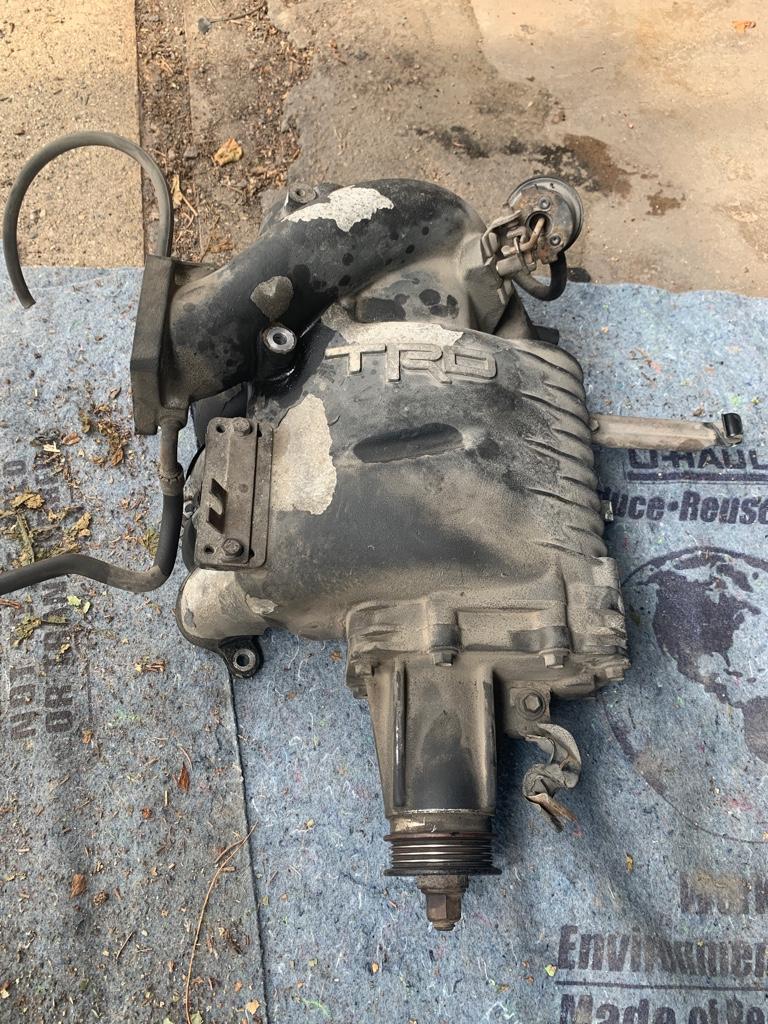
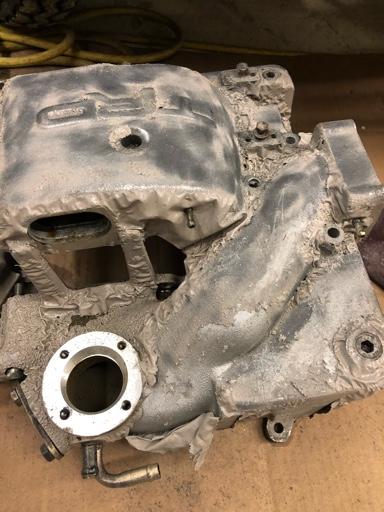
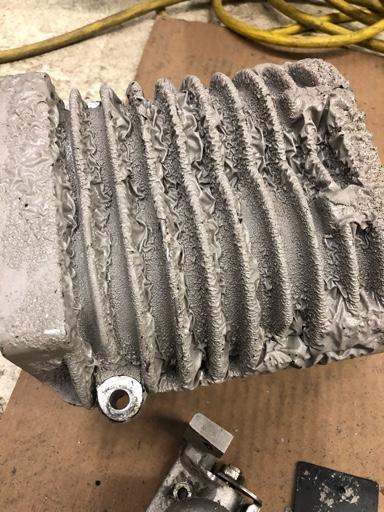
I’m in the process of slowly rebuilding this 1st gen supercharger. The paint on it was pretty wrecked, and I also hate the tan color, so I’m stripping it all off

67afeb90bd31751fb214566e1f5ee91c.jpg


0b35378cf11802523e39dda3f02da613.jpg


I was thinking that just leaving it raw aluminum is pretty boss. But then I thought that maybe the tan paint had some thermal dispersion properties.

So now I’m thinking about doing something like Cerakote or Zybar

C-187 TRANSFER GREY (AIR CURE)
| Cerakote Ceramic Coatings


Thermal Exhaust Manifold Coating & Header Paint | ZyCoat

Any word on whether either the gen 1 or gen 2 superchargers have a heat dispersion coating on them and opinions on whether it’s worth it for me to put one on?

Edit - I called Magnuson and the guy said the paint doesn’t have any thermal properties and there really wouldn’t be any benefit to a heat dispersing coating. Maybe I’ll just leave it raw aluminum or polish it up shiny.


Sent from my iPhone using Tapatalk
 
Last edited:
I’m in the process of slowly rebuilding this 1st gen supercharger. The paint on it was pretty wrecked, and I also hate the tan color, so I’m stripping it all off

67afeb90bd31751fb214566e1f5ee91c.jpg


0b35378cf11802523e39dda3f02da613.jpg


I was thinking that just leaving it raw aluminum is pretty boss. But then I thought that maybe the tan paint had some thermal dispersion properties.

So now I’m thinking about doing something like Cerakote or Zybar

C-187 TRANSFER GREY (AIR CURE)
| Cerakote Ceramic Coatings


Thermal Exhaust Manifold Coating & Header Paint | ZyCoat

Any word on whether either the gen 1 or gen 2 superchargers have a heat dispersion coating on them and opinions on whether it’s worth it for me to put one on?

Edit - I called Magnuson and the guy said the paint doesn’t have any thermal properties and there really wouldn’t be any benefit to a heat dispersing coating. Maybe I’ll just leave it raw aluminum or polish it up shiny.


Sent from my iPhone using Tapatalk


Be sure to spray it with clearcoat to keep it from oxidizing.
 
Be sure to spray it with clearcoat to keep it from oxidizing.


Good tip, I actually had just assumed since it’s aluminum I wouldn’t have to worry about corrosion and it would just stay shiny and polished forever. You’re probably right though that it’ll fade if I don’t do something.


Sent from my iPhone using Tapatalk
 
I just got a 2002 4runner with a factory installed gen 2 (black) supercharger that has 217k miles. Its making something is rattling/loose metallic noise from the back of the supercharger. I was planning to do basic maintenance and rebuild the supercharger nose cone, but I'm unsure if its sufficient.

I also want to preface this with the truck has a p0446 EVAP fault, and a p0325 knock sensor fault (in addition to a bunch of suspension maintenance isseus). Car drives fine otherwise.

With this much mileage, what should I expect if I open the supercharger nose cone? How do I judge if I need a full rebuild? Should I start with a nose cone/needle bearing rebuild and see what happens? I've seen others discuss full supercharger rebuilds (including the rotors) for $800.

Thanks all!
 
After running the 2.1” pulley for 3k miles started to get the knock sensor code. Even when in vacuum, not in boost. I would clear it with the scan gauge only to have it return. Had both knock sensors and the knock sensor wire/connector replaced.

Just a heads up for those running smaller pulleys, and confirming what you probably already know... The amount of heat generated will cause the knock sensor wire harness to fail over time as this sits directly under the supercharger.

Needless to say the 2.1” pulley was replaced.
 

Forum statistics

Threads
278,312
Messages
3,554,089
Members
248,016
Latest member
Advally Service

Trending content

Back
Top