The 3.4L TRD Supercharger Thread

I have a complete ricer question lol.

Just installed my supercharger setup, and was hoping to have a bit more supercharger whine.

I currently have the deckplate mod done, but was wondering if the ISR mod would add anymore supercharger noise? Anyone have any experience?

Nobody has any input??
 
gamefreakgc-albums-engine-performance-mods-picture49431-img-2078-1024x768.jpg


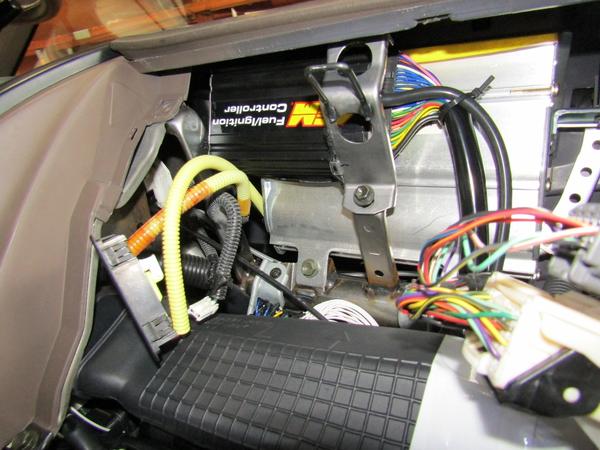
There's space above the top of the glove box. Not the URD unit but picture for reference on where mine is mounted.

What all do you have to remove to get to this area? Just the glove box?
 
question for you guys...

when I drive on long trips and end up in a higher elevation, I notice my rig smelling like coolant, and sometimes when I step on the peddle to remind me what the supercharger can do, I can also smell fuel sometimes...

i'm guessing the coolant is coming from a loose connection and it's dripping out hot so I can smell it... and the gas I'm assuming is the supercharger be pushed and therefore runs rich with fuel that hasn't been burned...


thoughts?....
 
I have a complete ricer question lol.

Just installed my supercharger setup, and was hoping to have a bit more supercharger whine.

I currently have the deckplate mod done, but was wondering if the ISR mod would add anymore supercharger noise? Anyone have any experience?

That is a bit of a ricer question... I'll humor you though.

Opening up the intake does increase noise but not really from the supercharger. Rather more engine noise than anything. There are two things that will make it scream:

1. Install a smaller pulley. This will significantly increase the revolutions per minute on the supercharger rotors and increase boost and noise. Just know that you'll need a fuel management system if you do this as it can run dangerously lean. Here's an example of my 4Runner on a dyno, it's loud (even louder now):

<iframe width="560" height="315" src="https://www.youtube.com/embed/0hIotwCwv_o?start=59" frameborder="0" allow="accelerometer; autoplay; clipboard-write; encrypted-media; gyroscope; picture-in-picture" allowfullscreen></iframe>

2. Block the silencer ports in the supercharger. I don't recommend this in the slightest but, it does increase noise. There's two ports on the exhaust size of the supercharger case that allow for the supercharger to operate quieter. Something about air pressure charges and science stuff that I don't understand. The problem with blocking this ports is two-fold: one, it's difficult to block them without damaging the surface of the rotor casing (and darn near impossible to do with the black superchargers due to access) and two, the plugs have been known to be sucked into the engine, causing severe damage.

So there ya go. You could also just put in a louder muffler if it's just noise you are after.

To get to that spot in dash, just pop out the glove box tabs (don't even have to remove the screws) and then remove the top cover and 3 10mm bolts. Disconnect or remove tabs for the complete connectors (that yellow one is your airbag so don't disconnect that one) and you're done.
 
question for you guys...

when I drive on long trips and end up in a higher elevation, I notice my rig smelling like coolant, and sometimes when I step on the peddle to remind me what the supercharger can do, I can also smell fuel sometimes...

i'm guessing the coolant is coming from a loose connection and it's dripping out hot so I can smell it... and the gas I'm assuming is the supercharger be pushed and therefore runs rich with fuel that hasn't been burned...


thoughts?....

I get the gas smell too. It alarms me as well but then it'll quickly go away, all I can guess is that it is exhaust gas making it's way in somehow.

I would double-check your coolant system though, that's not normal. Any wet spots in the cabin from a leaky heater core? A coolant pressure tester will help you spot that one (make sure it's turned to heat inside so that the valves are open).
 
I get the gas smell too. It alarms me as well but then it'll quickly go away, all I can guess is that it is exhaust gas making it's way in somehow.

I would double-check your coolant system though, that's not normal. Any wet spots in the cabin from a leaky heater core? A coolant pressure tester will help you spot that one (make sure it's turned to heat inside so that the valves are open).

I get a gas smell sometimes too. If you have 7th injector check your gas line to the 7th. I had to re-tighten the thread connection between the injector and gas line after install, which seemed to help w/ gas smell. Also the stainless braided line that comes with the kit can permeate. There's evidence on my hose that it permeates. Has anyone noticed this too? Anyone replaced this line with another type of hose?

Found an article quoted below:

"Do not use braided stainless steel lines or AN fittings unless they are SAE approved. You may have a customer who thinks racing-style braided stainless steel hoses are the ultimate solution for leaking fuel lines. They make sense for some racecars and rock crawlers, but for a daily driver, the “improved” lines could be a headache.

Most of these hoses don’t have to meet EPA, SAE and CARB standards for permeation. Some performance hoses also will not stand up well to higher ethanol content fuels. Teflon-coated and other similar hoses are designed to stand up to modern gasoline, but they can be twice as expensive as a hard line."

 
I get a gas smell sometimes too. If you have 7th injector check your gas line to the 7th. I had to re-tighten the thread connection between the injector and gas line after install, which seemed to help w/ gas smell. Also the stainless braided line that comes with the kit can permeate. There's evidence on my hose that it permeates. Has anyone noticed this too? Anyone replaced this line with another type of hose?

Found an article quoted below:

"Do not use braided stainless steel lines or AN fittings unless they are SAE approved. You may have a customer who thinks racing-style braided stainless steel hoses are the ultimate solution for leaking fuel lines. They make sense for some racecars and rock crawlers, but for a daily driver, the “improved” lines could be a headache.

Most of these hoses don’t have to meet EPA, SAE and CARB standards for permeation. Some performance hoses also will not stand up well to higher ethanol content fuels. Teflon-coated and other similar hoses are designed to stand up to modern gasoline, but they can be twice as expensive as a hard line."


I’ve dealt with the permeation effect as well.

First: I did the 3.4 swap and had a custom stainless steel braided line made to connect stock fuel feed to new engine. 8 years later it had about 15 pinholes literally RAINING raw fuel onto my engine. I changed that to the Goodyear fuel injection hose for like $4-5 PER FOOT. Double hose clamped each end with fuel injection hoses (not the worm gear kind as they dig into the hoses). Solved that problem.

Second: this new hose mentioned above actually allowed for 7th injector Install. I had the older style kit that had a rubber hose, not the braided kind. Lasted about 3 years before I smelled fuel again in that area. Contacted URD and they sent me an “updated” stainless braided hose for a small fee...

Third: a year later smelled fuel again and I determined it was from the fuel return hose from the 3.4 swap (now about 12 years old at that time). Changed that hose to the Goodyear fuel injection hose for now $6 PER FOOT and double hose clamped it as well.

Fourth: a hint of fuel smell after fueling up from charcoal canister area under hood. Nothing I can do about that as I’m convinced it’s from the vent line and is somewhat normal as there has to be an escape for the air from the tank when refueling.

As a side note I always carry an expensive non-powder fire extinguisher and have for years. Luckily it’s not my daily driver. Only once a week to work. 30 miles round trip.

So yeah, the type of hose is crucial to prevent permeation. Seems to be the nature of it. Google it and you’ll see pages and pages of hot rod guys having the same issues after a few years. Gasoline is just rough stuff to deal with.
 
I second the fire extinguisher. I have one as well, any time you start modifying fuel lines or adding alternative fuels (methanol) you exponentially increase the risk of a fire. Cheap insurance. Same goes for your house.
 
Any experiences with Ruthenium spark plugs? They say they ignite faster and burn better than iridium but I realize that half of the "data" is marketing hype. I did see some actual flame kernel studies that show they ignite better for supercharged and turbocharged engines over iridium plugs. What I don't know if that results in any real world difference.
 
From my researching if you're looking for the best and most consistent spark a straight copper electrode is going to be better than any iridium or other fancy variant. This comes from the Audi tuning work which is primarily turbo cars. The copper plugs don't last as long but compared to iridium exhibit a stronger more consistent spark and due to the electrode tip being fatter are less prone to detonation.

in all honesty though I think when it comes to that stuff you're really splitting hairs especially in a motor that makes 300 crank with the supercharger on a good day. The supercharger really doesn't make enough airflow and the comp ratio on the motor isn't high enough to really notice a difference. I kept the same iridium plugs I had with the supercharger for the turbo, just gapped a little tighter, and so far even at 10psi have yet to have problems with spark getting blown out or incomplete burning
 
I found the flame kernel comparison, see below. It seems like it's the shortened electrode strap that might be the improvement, not the metal itself like you are saying. The 1 millisecond photo shows how the shortened ground strap allows the flame to travel further, faster.

NGK68716-graphics-for-web-IGNITABILITY-768x491.jpg
 
The shorter ground strap would definitely make sense. Cuts down on the shrouding caused by the longer strap. Kinda how drag plugs offten have the strap next to the electrode rather than underneath it. Not sure if it was something you posted or somewhere else I saw the picture of a plug like that
 
The shorter ground strap would definitely make sense. Cuts down on the shrouding caused by the longer strap. Kinda how drag plugs offten have the strap next to the electrode rather than underneath it. Not sure if it was something you posted or somewhere else I saw the picture of a plug like that

Yeah that was me too. I'm always looking for new tech to put in this old 4Runner.
 
Got my supercharger installed recently w/ 7th injector and 2.2 pulley. Everything appears to run great with no notable pinging. However, it still bothers me that I don’t know what the AFR is. Plan to install an AEM X-Series wideband to take a look.

My question is, does the header pipe need to be remove to weld in the O2 bung? I’m assuming it will go close to the OEM O2, which is pre-cat. Any opinion or experiences with installing a wideband sensor?
 
Got my supercharger installed recently w/ 7th injector and 2.2 pulley. Everything appears to run great with no notable pinging. However, it still bothers me that I don’t know what the AFR is. Plan to install an AEM X-Series wideband to take a look.

My question is, does the header pipe need to be remove to weld in the O2 bung? I’m assuming it will go close to the OEM O2, which is pre-cat. Any opinion or experiences with installing a wideband sensor?

Depends really on the skill of your exhaust shop (I had mine welded in for $60) and if you have one or two cats. If your 2000 has Fed emissions with one cat, the job is doable without removing anything. If your 2000 has CA emissions with 2 cats, it gets considerably harder to do. Hence the exhaust shop suggestion.
 
Depends really on the skill of your exhaust shop (I had mine welded in for $60) and if you have one or two cats. If your 2000 has Fed emissions with one cat, the job is doable without removing anything. If your 2000 has CA emissions with 2 cats, it gets considerably harder to do. Hence the exhaust shop suggestion.

I have federal emissions, so there is a bit of room near the front O2 sensor. There is a reputable speed shop that I trust, so I'll run it by them and see what they say. At all cost, I usually try and DIY because I don't trust most people to touch my vehicles. I thought about trying the weldless bung mount, but don't think I have a smooth/straight enough section of pipe in that area. Thanks for the feedback!
 
Hey guys! I'm hoping that someone might have some advice on the issue that I'm having with the URD 7th injector. I have a 2000, manual with the Magnuson supercharger and 2.2" pulley.

I have noticed that the functionality of the AIC unit seems to be a bit variable. I have done some data logging with the R4 software and all of the signals plot as expected so I know that it is not a wiring/installation issue. Most times when driving, the air/fuel ratio (as verified from an AEM gauge) never dips below the low 13s, even when in boost. There is occasional pinging and it doesn't seem to be adjusting timing much if at all. Basically, it's as if the 7th injector/timing calibrator isn't there at all. If I shut off the engine for a short amount of time (at a red light or quick gas station stop) and then turn it back on, it seems to drive much differently. The air/fuel ratios dip into the low-mid 11s and sometimes high 10s when in boost and the engine seems to make better power (how it's supposed to work). Unfortunately, this only seems to happen after restarting the engine as described. I would love to know if there is a way to make this happen all of the time since it doesn't seem like the unit is communicating with the ECU under all driving conditions.

I reached out to URD to see if they have a solution, but I wanted to ask here as well.
 
Well being a 2000 likely means you have an air fuel ratio sensor and NOT an 02 sensor upstream for fuel control. This also means that there isn’t any closed loop enrichment by the URD unit. When you turn your truck off and back on it is likely entering open loop briefly and giving you the tuned result you’d expect. Then it enters closed loop again and URD becomes useless unless you do wide open throttle.

The older 3.4’s used an 02 upstream for fuel control and therefore could be modified while in closed loop to trick the main computer. (Mine is proof that it’s possible on the older versions).

This info is available in the various URD manuals and is curable by installing another URD magic box to trick the computer’s air fuel ratio sensor input.

This is all just a guess however. The best way to confirm is to see if the performance gains you experience coincide with closed/vs open loop modes by using a basic scan tool.

Maybe you could confirm if you have an 02 sensor up front or an AFR
 
Well being a 2000 likely means you have an air fuel ratio sensor and NOT an 02 sensor upstream for fuel control. This also means that there isn’t any closed loop enrichment by the URD unit. When you turn your truck off and back on it is likely entering open loop briefly and giving you the tuned result you’d expect. Then it enters closed loop again and URD becomes useless unless you do wide open throttle.

The older 3.4’s used an 02 upstream for fuel control and therefore could be modified while in closed loop to trick the main computer. (Mine is proof that it’s possible on the older versions).

This info is available in the various URD manuals and is curable by installing another URD magic box to trick the computer’s air fuel ratio sensor input.

This is all just a guess however. The best way to confirm is to see if the performance gains you experience coincide with closed/vs open loop modes by using a basic scan tool.

Maybe you could confirm if you have an 02 sensor up front or an AFR

Thanks for the reply. The odd thing is that after restarting, it seems to communicate with the URD AIC for the duration of the next trip. Meaning that whenever I get into higher RPMs and boost it enriches the mixture as it should (this should be closed loop, right?) I'll have to get access to a scan tool like you said.

I remember reading somewhere that the timing control only comes into play below 3k RPM. Anything higher than that is taken care of by knock sensors. Does that sound right?
 
Thanks for the reply. The odd thing is that after restarting, it seems to communicate with the URD AIC for the duration of the next trip. Meaning that whenever I get into higher RPMs and boost it enriches the mixture as it should (this should be closed loop, right?) I'll have to get access to a scan tool like you said.

I remember reading somewhere that the timing control only comes into play below 3k RPM. Anything higher than that is taken care of by knock sensors. Does that sound right?


Hmmm well that is odd about the restarting thing. I may very be incorrect on my original guess. A scan tool should be able to verify if what I thought is true (basically find the PID for “fuel control” or “fuel system” and it will say either “open loop” or “closed loop”. Closed loop means the computer is in full fuel control and will do whatever it takes to keep emissions down and run at 14.7:1 AFR. Open loop means it will add fuel based on demand, basically, and ignore other parameters to complete the task.

Open loop: engine temperature cold, load demand is high (wide open throttle/80% or more throttle demand) etc

Closed loop: engine warmed up, load demand is low, cruising around, weak throttle demand etc.

That’s the best I can describe the 2 operating modes.

I would try and verify what the main computer is doing when you experience your symptoms.

The timing control is always active, but is more effective below 3K because yes the main computer ignores the knock sensors. That being said, changes to timing above 3K does help protect the engine by expanding the affective safe zone in which the computer can operate (the computer can only change timing so much, and by changing its zone it allows it to operate less “on-the- edge” of its zone). That’s my understanding.
 

Members online

Forum statistics

Threads
278,312
Messages
3,554,085
Members
248,016
Latest member
Advally Service

Trending content

Back
Top