The 3rd Gen All Questions Allowed Thread

Status
Not open for further replies.
I'm no battery expert, but from my research it looks like AGM batteries require about 14.4-14.8V to charge properly. That's a lot more than the 4Runner alternator can provide.

Some folks have used modules to bump the alternator output to the higher voltage. The one downside to that is that some components in the truck (e.g. light bulbs) may not be designed to operate at the higher voltage.

Other folks follow the strategy of using a charger to occasionally charge the battery fully, since chargers can provide higher voltage. That seems reasonable, but is one more thing to keep in mind.

Yet others have said that they've ran the AGM battery as is, with no issues. Though the counterargument seems to be that by doing that, the life of the battery will be shortened significantly.

So, it's not as simple as it seems :). I'd still love to get an AGM for my next battery, just want to make sure I know what I'm signing up for.

Do you or plan to do heavy, jarring 4-wheeling?
 
Nope. But I like the benefits of AGM such as no gases or corrosion, faster charging, higher DoD capability, and no sulfation.
No sulfation?

Not sure where you heard that one. How else would undercharging them be a detriment?

Sure, they are less prone to hardened sulfation that wet batteries, but they will sulfate if you leave them at a low SOC for too long. Or continuously undercharge them.

That said, I personally don't believe one needs to charge them at those higher voltages to get good life out of them. A pair of them came with the diesel pusher for cranking (previous owner had money to burn.) They were already old and abused when we acquired the rig and they are 4 years older now. And guess what... that alternator tends to run in the 13.6-13.7 range. I haven't load tested them, but they have no problem firing up the Cat. I just keep them floated when in storage.

Caveat... I do give them a boost with the house charging system on occasion.

20 year RV-er here and I DO love the fact that I never have to even consider adding water, let alone testing with a hydrometer and spilling electrolyte. Made the switch to LiFePO4 for the house bank and absolutely loving them, so far!

And that said, for the daily drivers in the family, I can get a good 5 years out of a flooded battery without adding water. More if I equalize them on occasion. I don't seem to run into much corrosion. Just lucky, I guess. No plans to change to AGM.

AGM have higher CCA, if that's a concern

AGMs ARE sensitive to charging in the heat. That makes your engine compartment less than ideal. But mine are in a tray next to the engine. Can't be too cool there either.

AFAIC, it's hard to go wrong either way. I would only demand an AGM for a 4Runner if I was going to be doing a lot of hard off-road stuff.

But you seem to have a desire to try them. If so, I would just do it. I think worst case, you'll still get at least 5 years. So if you spend $200 instead of $100, that's a "whopping" 20 bucks a year / $1.67 a month to fund the experiment.
 
Last edited:
No sulfation?

Not sure where you heard that one.

Like I said, I'm not a battery expert, and I should have said "less prone to sulfation", not "no sulfation." I got that from this - 415 Unsupported Media Type:

"6. They are unlikely to build up sulfation
...However, in AGM batteries, sulfation is significantly reduced. Therefore, they can be stored for extended periods without needing a recharge."

But I'm always happy to be corrected.

I just keep them floated when in storage.

Caveat... I do give them a boost with the house charging system on occasion.

Right, that's what I mentioned above, it's one (or two) more thing(s) to do than I do with FLA batteries.

But you seem to have a desire to try them. If so, I would just do it. I think worst case, you'll still get at least 5 years. So if you spend $200 instead of $100, that's a "whopping" 20 bucks a year / $1.67 a month to fund the experiment.

I'm still undecided, I just hate dealing with corrosion, which is why AGM is intriguing. And some AGMs are only slightly higher in cost than FLAs - FLA $139.84, AGM $179.84
 
No expert here, either. I CAN say that a small group of friends who don't DD their rigs have said that AGMs tend to 'self-discharge' quite a bit slower than FLAs meaning you can let them sit unused and expect them to start more reliably. I drive mine every few days at a minimum, so I can't confirm that. I did just leave mine in an airport lot for 14 days and it started right up, but I'd expect that from any healthy battery that doesn't have a parasitic drain going on. I have Modificitis and when it's time to replace something I often go overboard (except when a part calls for OEM only). I made some measurements, looked at post polarity, capacities and ended up with a Yellowtop DH6 (I believe is AKA a Group 48), which is a bit short for the factory hold-down so I shimmed it with a piece of hardwood slat/strip. Now that I think about it, one of the DIN posts was a bit small for the OEM cable clamp and I used a lead shim from the parts store. Anyway it's been trouble-free for a couple years with a stock alternator and my cheapo battery tester says it's 'healthy'
 
Like I said, I'm not a battery expert, and I should have said "less prone to sulfation", not "no sulfation." I got that from this - 415 Unsupported Media Type:

"6. They are unlikely to build up sulfation
...However, in AGM batteries, sulfation is significantly reduced. Therefore, they can be stored for extended periods without needing a recharge."

But I'm always happy to be corrected.


Right, that's what I mentioned above, it's one (or two) more thing(s) to do than I do with FLA batteries.


I'm still undecided, I just hate dealing with corrosion, which is why AGM is intriguing. And some AGMs are only slightly higher in cost than FLAs - FLA $139.84, AGM $179.84
Yeah, I was just clued in to similar pricing. Sounds like a no-brainer to at least give it a shot. Remember the Nike slogan.

An RV buddy of mine is a retired EE. He's a TC (Truck Camper) guy. He has done extensive testing over decades. Like me, he only recently upgraded to LiFePO4 from Lifeline AGM. He had great success with Lifeline, but the benefits to Lithium are just too great to ignore.

I ran this question by him. Here's his reply...

"I do not think auto gen systems would do much harm to AGM's.
Normal run charged voltage is 13.6-13.8. Cold and even a semi-low battery, some vehicles etc., will have a 14.2-14.6, as I have measured, sometimes 14.8. But both AGM and FLA need higher voltage when cold to charge! And if cold they will not accept full current. Remember, cold batt acts like a full batt! So when hot? The Alt reduces voltage.. . So I see no real issue."

Just do it!
 
this is a lot of good information to put out there, so thanks to all of the above repliers for that. im glad this conversation has taken off the way it has. ever since I recharged my battery on a trickle charger it has been performing quite well with no issues to report. ill ride this battery out for as long as I can and perhaps in the future will buy an AGM.
 
I might give that a try again next year. It's strange that I had the same squeak before and after replacing my master cylinder with an Aisin one. What brand did you go with?

i bought from my local toyota dealer -- will find the part number.
 
Power steering pump

So I’ve had a PS leak for a while and finally took it in to the shop to have it looked at, they said PS pump needed replacement as that’s where it was leaking from. Quoted 1200$ am I crazy or is that an absurd amount? Also is there a way I fix the leak without replacing the whole pump? Any advice is appreciated!
 
So I’ve had a PS leak for a while and finally took it in to the shop to have it looked at, they said PS pump needed replacement as that’s where it was leaking from. Quoted 1200$ am I crazy or is that an absurd amount? Also is there a way I fix the leak without replacing the whole pump? Any advice is appreciated!
While the pump CAN leak, the o-ring between the pump and the reservoir is just as likely and costs about $1.50, maybe less.... (well, plus fluid and some of your time) This is assuming you have a V6.

HXKitYn.jpg


-Charlie
 
Hello! I am trying to see if I need a weight distribution hitch/swaybar to tow my boat. Total weight of trailer and boat is about 2300 pounds, and although I don't plan on getting anywhere in a hurry, I want to be safe. Thanks!
 
Hello! I am trying to see if I need a weight distribution hitch/swaybar to tow my boat. Total weight of trailer and boat is about 2300 pounds, and although I don't plan on getting anywhere in a hurry, I want to be safe. Thanks!
If the trailer is good, you should be good. Meaning, 10-20% weight on the hitch. How's the brake situation on the trailer? I'd worry about that as much as anything else (surge vs. electric, condition).

-Charlie
 
Question about Door Panel Part Number

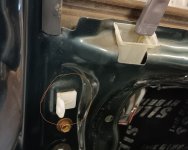
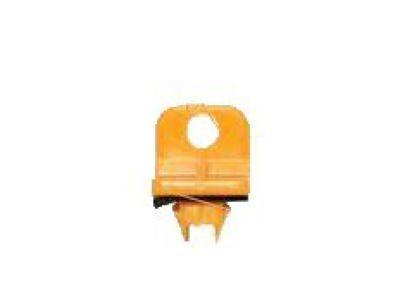
I took my interior door panels off on my 96 to put some sound deadener in the doors and ended up breaking a few plastic parts. I am trying to figure out what this part number is or at least what this part is called. It's the part that clips into the door that the retainer clip goes into. Any help would be appreciated.
 

Attachments

  • door.jpg
    door.jpg
    124.6 KB · Views: 190
Procedure for re-installing the splined coupler on transfer case input shaft?

Before I start heatin' and beatin', I'd like to see if there's a known correct method for putting the splined coupling back on the input shaft. I don't want to break something unnecessarily if there's a method.
Mine came off (long story) and I need to put it back on. TIA!
 
So I’ve had a PS leak for a while and finally took it in to the shop to have it looked at, they said PS pump needed replacement as that’s where it was leaking from. Quoted 1200$ am I crazy or is that an absurd amount? Also is there a way I fix the leak without replacing the whole pump? Any advice is appreciated!

well I try to go OEM when posssible, but a rebuilt pump is under 200. YOu can buy seal kits too and rebuild your own. Last I looked on line from a toyota dealer they were only about 400. Its not a hard job, not 800 labor hard
 
Hoping for a little guidance on a 98 4WD I just picked up for my daughter. It came with zero records but I've had Tacomas and Land Cruisers my whole life, so I'm comfortable going through it.

I just replaced the LBJs and front shocks (4600s), I'm still getting a lot of dive and an audible clunk when I apply the brakes. I've got some sway bar bushings coming in, but think at least one of the UBJs are bad, are the Napa 555 UBJs a good alternative to OEM?

Rear axle wrap is the worst I've ever experienced, especially after hard braking. I'm gonna take a look at the u-joints and will be replacing the rear shocks as well (4600s again). Anything else I should take a look at?

Fuel tank won't fill up. I figure it's evap related, I found a FSM online but it looks like it's for a 2002, so the charcoal canister is different and I have no CEL codes, so I'm not sure where to start when troubleshooting this one?

Thanks in advance!
 
Hoping for a little guidance on a 98 4WD I just picked up for my daughter. It came with zero records but I've had Tacomas and Land Cruisers my whole life, so I'm comfortable going through it.

I just replaced the LBJs and front shocks (4600s), I'm still getting a lot of dive and an audible clunk when I apply the brakes. I've got some sway bar bushings coming in, but think at least one of the UBJs are bad, are the Napa 555 UBJs a good alternative to OEM?

Rear axle wrap is the worst I've ever experienced, especially after hard braking. I'm gonna take a look at the u-joints and will be replacing the rear shocks as well (4600s again). Anything else I should take a look at?

Thanks in advance!
Front end bushings are probably toast - inner pivots. Swaybar bushings are easy and worthwhile, so those parts won't be wasted. Use OEM only for the lower ball joints (and those should be replaced if they haven't been, or poor quality aftermarket stuff was used). Uppers are much less stressed, but also less likely to wear out. Aftermarket should be 'fine' there, but the OEM upper ball joints aren't crazy expensive.

For the 'axle wrap' it is probably the slip joint in the rear prop shaft. With age and lack of maintenance, it can get sticky. I have had pretty good success with removing, disassembling (keep track of clocking!), cleaning and re-lubing with Ford driveshaft spline grease (blue PTFE stuff).

edit: the container has a red label, the grease is blue.

-Charlie
 
I’ve been searching through threads trying to decide between 4th gen 4Runner rear shocks or LC80 Tokico black shocks to pair with LC 7.5 wrap shocks. I don’t have any added armor or cargo weight. There’s a lot of mixed reviews which is understandable since ride quality is very subjective, and it’s been difficult to find anyone with no armor or added weight with 7.5 or 8 wrap coils.
 
Status
Not open for further replies.

Members online

Forum statistics

Threads
278,310
Messages
3,554,080
Members
248,016
Latest member
Advally Service

Trending content

Back
Top