To improve the AC

nissanh

Senior Member
A new idea to cool the front AC condenser.

I have an idea and I like to talk to fellow members to get their opinion.

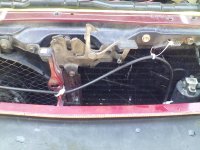
I want to cool the AC condenser by a small spray of water. Water has the highest heat capacity and for it to evaporate it will absorb lots of heat energy from the AC condenser cooling it even further than just by the fan itself. Currently, I am assembling the setup in my car and uses water from the washer fluid bottle.

What do you guys think?

My second plan to improve the AC.
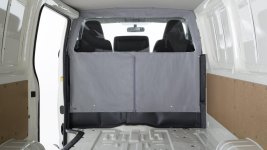
Toyota vans such as "Hiace" has a plastic transparent sheet right behind the drivers seat to keep the drivers cabin small to cool it faster (see image). http://www.toyota.com.au/hiace/accessories
I am working on the same idea but to go behind the rear seats. Why we need to cool the cargo area anyways?
 

Attachments

  • a.jpg
    a.jpg
    48.7 KB · Views: 2,600
Register to hide this ad
Both are worth a try. I'd be interested to see your results.

I have my A/C working really well so I don't really feel the need here in NJ.
 
I love the inventive spirit. Can't wait to see how this turns out. However, if you're unhappy with your A/C, you might consider getting it checked out. It was 117 here today, and I was completely satisfied with my truck's cooling capacity. Keeps the swamp ass to a minimum.
 
Both AC's on my car and 4runner works great, but I want to cool the interior ASAP after parked under the sun on a hot summer day. Usually it takes about 7-8 minutes to cool the interior at 3rd speed on both vehicles.

I pierced a washer fluid hose (black hose) in every 1/2 inch and mounted it in front of the condenser. Now, waiting for the sun....
 
My AC for the most part is in great condition, though the clutch may have seen better days.

I cleaned off my condenser last year using this stuff (don't get on your paint, it is like brake cleaner) and could verify that my high side pressure readings were lower than before. It seems as if the AC cools quicker than before:
AC-Safe Air Conditioner Coil Foaming Cleaner-AC-920 - The Home Depot

If one does a lot of offroading, or is dusty where one resides, I'd may give this a try.
 
Results:

Left the car out in the sun at 93 F for 2 hours. Started up and turned on AC. After 2 minutes the high pressure aluminum line at the firewall was basically untouchable!. AC blows cold

Pumped water onto the AC condenser (see picture) for about 10 seconds. Then touched the same high pressure line and it was barely warm. Went inside the car and the AC was very cold. Also noticed the compressor clutch comes on and off frequently as opposed to continuous run during this hot weather at the first 8 minutes or so.
 

Attachments

  • 150816_0000.jpg
    150816_0000.jpg
    136.3 KB · Views: 2,563
I have also seen guys wrap up their lines with heat reflective tape and insulation, which seems to work better. Less heat yields quicker, more efficient cooling.

To the OP: I would think that massive electric fan would be more than capable of working well to cool the condenser, or at least parts of it.
 
I have also seen guys wrap up their lines with heat reflective tape and insulation, which seems to work better. Less heat yields quicker, more efficient cooling.

To the OP: I would think that massive electric fan would be more than capable of working well to cool the condenser, or at least parts of it.

Yes that big fan do it's job on normal continuous driving. I am trying to cool the cabin ASAP right after pulling out from an uncovered parking lot.

Now to work on the curtain. Thanks for the iformation guys.
 
Results:

Left the car out in the sun at 93 F for 2 hours. Started up and turned on AC. After 2 minutes the high pressure aluminum line at the firewall was basically untouchable!. AC blows cold

Pumped water onto the AC condenser (see picture) for about 10 seconds. Then touched the same high pressure line and it was barely warm. Went inside the car and the AC was very cold. Also noticed the compressor clutch comes on and off frequently as opposed to continuous run during this hot weather at the first 8 minutes or so.

I can't see cooling the condenser making a significant difference in the amount of time it takes to bring the cabin temperature down. Yes the system becomes more efficient at what it already is doing, but you still have to bring the volume of air over the evaporator. I think your vapor barrier would do more to shorten the time needed to reduce cabin temp.

In order to really test this you'd have to have two vehicles and first establish they are equal in capacity, testing register temp and ambient temp in the cabin in both vehicles. Then let them sit in the sun again, and test both but cool the condenser on one, and not the other while monitoring how fast the temperature changes in each one.

Nice project!

:fro:
 
The same idea applies to intercoolers for boosted vehicles. Spraying the intercooler with water or methanol provides a very temporary reduction in temps. I can't see something like this actually making a huge difference though vs maybe another electric fan or making sure the system is sealed and charged.

Very cool idea though, and maybe you could be on to something with a configuration that could spray on a more full time basis, but then would need to haul a water trailer probably...
 
Not sure about vehicles but when people try this technique with standard residential outdoor AC units it rots the coil out pretty fast. Minerals build up and eat away the fins, lowering cooling capacity. Air cooled condensers just are not designed to last with water applied constantly. I reckon you could use some de-scaler but that stuff would likely eat the condenser as well. It is an interesting project, maybe there is a way to make it work long term. There was a thread on hvac-talk and one guy had success using the condensate water. If I remember correctly the condensate was mineral free and already chilly. Maybe there is a way to pump the condensate water to the condenser.
 
I can't see cooling the condenser making a significant difference in the amount of time it takes to bring the cabin temperature down. Yes the system becomes more efficient at what it already is doing, but you still have to bring the volume of air over the evaporator. I think your vapor barrier would do more to shorten the time needed to reduce cabin temp.

In order to really test this you'd have to have two vehicles and first establish they are equal in capacity, testing register temp and ambient temp in the cabin in both vehicles. Then let them sit in the sun again, and test both but cool the condenser on one, and not the other while monitoring how fast the temperature changes in each one.

Nice project!

:fro:

I am sad to have to disagree--a very rare event with you. The exit temp of the A/C system is heavily dependent on the ambient temperature, as that determines the delta T between the condenser and the atmosphere. Injecting the water onto the condenser has the effect of lowering that ambient temp. and increasing the amount of heat energy that is radiated by the condenser. This then lowers the temp of the evaporator as more heat can be removed from the cabin, lowering the exit temperature of the air. The volume of air blown over the evaporator remains the same; what changes is its temperature as it returns to the cabin. It could drop significantly, reducing the time required to cool the cabin.

For example, at 70% relative humidity, the exit temp (on high, recirc, windows open) of a nominally functioning R-134a system is 67°F at 90°F ambient temp and 56°F at 80°F ambient temp. Yes, the ambient temp inside the cab is unchanged, but I believe the change of the outside delta-T is far more important.

The concern about the effect on the condenser is a real one, although the water injection is only needed during initial cool down. Using distilled water for those few minutes would not be that expensive. I don't know if the system would produce condensate fast enough to make that practical. Those evaporators see lots of rain water (essentially distilled water) without ill effect.
 
Last edited:
Another thought: you could make the ac's job easier by getting the sun off it some. A sheet of thin plastic or vinyl mounted to a full size roof rack would keep direct sunlight off the roof of your truck.
 
I am sad to have to disagree--a very rare event with you. The exit temp of the A/C system is heavily dependent on the ambient temperature, as that determines the delta T between the condenser and the atmosphere. Injecting the water onto the condenser has the effect of lowering that ambient temp. and increasing the amount of heat energy that is radiated by the condenser. This then lowers the temp of the evaporator as more heat can be removed from the cabin, lowering the exit temperature of the air. The volume of air blown over the evaporator remains the same; what changes is its temperature as it returns to the cabin. It could drop significantly, reducing the time required to cool the cabin.

For example, at 70% relative humidity, the exit temp (on high, recirc, windows open) of a nominally functioning R-134a system is 67°F at 90°F ambient temp and 56°F at 80°F ambient temp. Yes, the ambient temp inside the cab is unchanged, but I believe the change of the outside delta-T is far more important.

The concern about the effect on the condenser is a real one, although the water injection is only needed during initial cool down. Using distilled water for those few minutes would not be that expensive. I don't know if the system would produce condensate fast enough to make that practical. Those evaporators see lots of rain water (essentially distilled water) without ill effect.

My thought process is this, the low side pressure(which equates to temp) can never be lower than is allowed by the system. Most run a low side of nominally 30PSI I think, I'm a little rusty on AC systems. Not sure how cool you can get the evaporator before it freezes, I'm not that knowledgeable on refrigeration. When a system gets bigger, it gets bigger in airflow, volume of refrigerant and condensing ability. I see how the water cooling would get that high side down a little quicker, so the delta "curve" is brought down after the expansion valve. That makes sense to me, I just don't know, or understand, how that would equate to actual in cabin benefit of any significance.

This is one area I can easily admit not knowing enough about to offer alternatives or truly say, yay, or nay.

:fro:
 
My thought process is this, the low side pressure(which equates to temp) can never be lower than is allowed by the system. Most run a low side of nominally 30PSI I think, I'm a little rusty on AC systems. Not sure how cool you can get the evaporator before it freezes, I'm not that knowledgeable on refrigeration. When a system gets bigger, it gets bigger in airflow, volume of refrigerant and condensing ability. I see how the water cooling would get that high side down a little quicker, so the delta "curve" is brought down after the expansion valve. That makes sense to me, I just don't know, or understand, how that would equate to actual in cabin benefit of any significance.

This is one area I can easily admit not knowing enough about to offer alternatives or truly say, yay, or nay.

:fro:

No, the low side pressure varies with the Delta-T just as the exit temp does.
Adding the pressures to my example above:
70% Humidity:

Ambient Temp: 90°F, Exit Temp : 67°F, Low Side Pressure 61 psi, High Side: 260 psi
Ambient Temp: 80°F, Exit Temp. 56°, Low Side Pressure 42 psi, High Side: 215 psi.

http://www.toyota-4runner.org/attachments/3rd-gen-t4rs/165081d1436935132-ac-question-ac-temp-chart.jpg

It's basic conservation of energy. You make it easier for the system to throw heat off the front, the more heat it can suck off the inside. The phase change from the evaporation eats up a pantload of heat from the front of the system.
 
Last edited:
I agree with "TheDurk". If we can cool down the condenser, the refrigerant can absorb more heat from the cabin and release it at the condenser, making the cooling process faster.

One gram of water takes 1 calorie (4.184 Joules) to raise its temperature by one degree Celsius. So to bring it to the evaporating temperature (100 Celsius), it will absorb quite a lot of heat from the condenser. This makes the condenser to rid more heat from the refrigerant before it exists from the condenser.

Yes, I will need to use DI water for this purpose and this system will only be used at the initial cooling.

I thought about having some kind of sheet above the roof rack to block the sun rays but then it will cause a heavy drag due to a narrow space to escape air diverted by the windshield.
 
Last edited:
I agree with "TheDurk". If we can cool down the condenser, the refrigerant can absorb more heat from the cabin and release it at the condenser, making the cooling process faster.

One gram of water takes 1 calorie (4.184 Joules) to raise its temperature by one degree Celsius. So to bring it to the evaporating temperature (100 Celsius), it will absorb quite a lot of heat from the condenser. This makes the condenser to rid more heat from the refrigerant before it exists from the condenser.

Yes, I will need to use DI water for this purpose and this system will only be used at the initial cooling.

I thought about having some kind of sheet above the roof rack to block the sun rays but then it will cause a heavy drag due to a narrow space to escape air diverted by the windshield.

Basically, you are tacking a swamp cooler, aka evaporative cooler, on to the front of the A/C system to boost its performance.

https://en.wikipedia.org/wiki/Evaporative_cooler
 

Members online

Forum statistics

Threads
278,310
Messages
3,554,080
Members
248,016
Latest member
Advally Service

Trending content

Back
Top