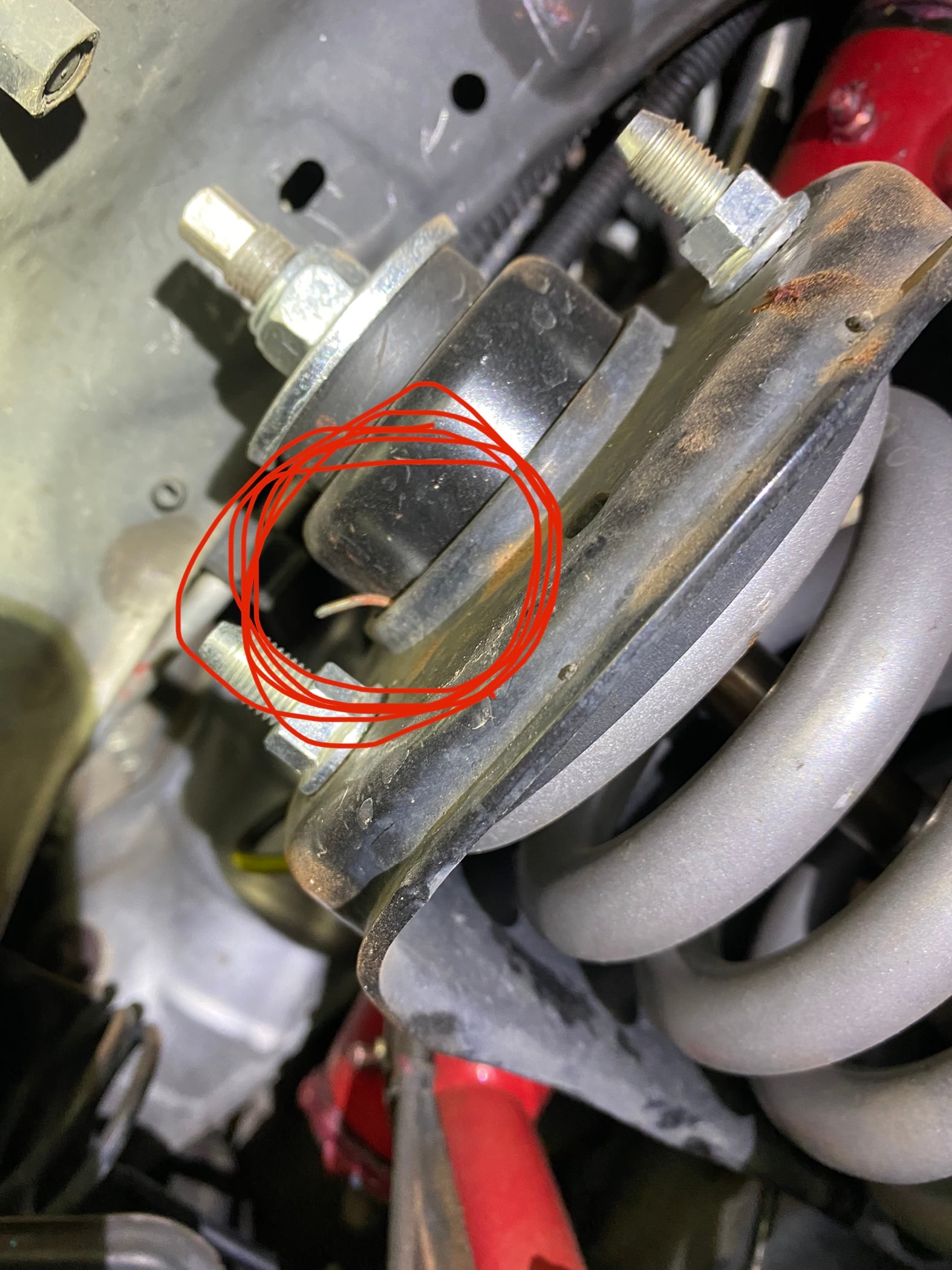
You're correct, the bolt is factory installed from back to front. The nut should be torqued to spec after vehicle has been lowered to the ground and bounced. The nut cannot be accurately torqued by placing a torque wrench on the head of a reversed bolt with weight on the wheels. Installing the bolt from back to front allows one better access to use a torque wrench on the nut when vehicle has weight on the wheels. It's much easier to accurately use a torque wrench on the nut when the bolt is installed back to front because otherwise, one has to blindly reach around the tire for access to the nut, which would put a lot of stress on the mechanic's shoulder, arm and elbow. There is one way the nut could have been properly torqued. Hand tighten the reversed lower shock bolt, lower vehicle to ground and drive it to an alignment rack and let that mechanic torque the nut while lying on a creeper. I doubt it was done this way; too much risk the alignment guy would forget to torque the nut on a reversed bolt unless perhaps only one guy fixed the missing washers and performed an alignment. But why do it that way when it's easier to see and torque the nut with the bolt installed back to front?
I would look to see if the lower shock bushing is under stress, indicating the bolt was tightened with the vehicle off the ground. Unfortunately, most of the bushing is hidden, so it will be difficult to conclusively determine if the bolt was tightened before the vehicle was lowered to the ground. If I had to make a guess, I suspect the bolt was tightened with the vehicle up on a hoist, which would stress the bushing when the vehicle is lowered to the ground, specifically, the bushing would be "wound up" in one direction with weight on the wheels. This causes the bushing to "overwind" when the wheel assembly rises over a high bump. Does it matter? Does it shorten life of the bushing? The extra torsional stress may eventually shear the hard rubber leading to a squeak between rubber and metal such as I have on a bushing in my 2000 Nissan Maxima. The lower shock mount might displace axially after a long period of time, creating metal to metal contact, but I haven't seen anyone report this.