Oil Change 5th Gen: How To- LOTS of PICS!

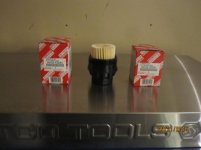
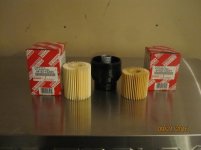
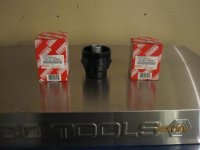
There is a huge difference between oil filter housing for 3.5L (same as filter housing for 2.5L I-4) and 4.0L Toyota V-6 engines. 3.5L/2.5L filter is substantially shorter compared to 4.0L filter. I would not mess with getting a 3.5L housing for the sake of having a metal housing. Too much or little oil pressure is not good and may impact the longevity for that particular engine. I am not going to pretend that I know more than the Toyota engineers who purposely selected different filter housing for 4.0L engines. It is much cheaper for Toyota to go with one-size filter housing instead of having different housings for various engine sizes.
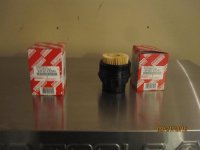
IMG_0001.jpg

IMG_0002.jpg

IMG_0003.jpg

IMG_0004.jpg
 

Attachments

  • IMG_0001.jpg
    IMG_0001.jpg
    131.1 KB · Views: 1,691
  • IMG_0002.jpg
    IMG_0002.jpg
    134.1 KB · Views: 1,516
  • IMG_0003.jpg
    IMG_0003.jpg
    132.4 KB · Views: 1,792
  • IMG_0004.jpg
    IMG_0004.jpg
    131.8 KB · Views: 1,378
The plastic cap, while well designed for what it is, will not have the service life length of the aluminum unit. Even with careful and proper removal, heat and pressure will eventually take their toll, and the piece will begin to fail.

The cap material will not cause any issues with oil pressure. Swap the the tube with bypass and all works as intended.

FWIW, I never found the oil change to be horribly difficult. However, I can see how many find it unnecessarily involved and messy. So after 8 years of hearing about people's dissatisfaction with the process, I decided to try and make it easier.
 
The plastic cap, while well designed for what it is, will not have the service life length of the aluminum unit. Even with careful and proper removal, heat and pressure will eventually take their toll, and the piece will begin to fail.

The cap material will not cause any issues with oil pressure. Swap the the tube with bypass and all works as intended.

FWIW, I never found the oil change to be horribly difficult. However, I can see how many find it unnecessarily involved and messy. So after 8 years of hearing about people's dissatisfaction with the process, I decided to try and make it easier.

I am not going to ask you to prove what you have written above. The filter housing is not made out of simple "plastic" material but rather it is made out of composite material, which is very durable and long lasting. If people are so worried about "plastic" filter housing failures (I have yet to see one), you can just buy new one and replace it every 100K miles or whatever.
 
I am not going to ask you to prove what you have written above. The filter housing is not made out of simple "plastic" material but rather it is made out of composite material, which is very durable and long lasting. If people are so worried about "plastic" filter housing failures (I have yet to see one), you can just buy new one and replace it every 100K miles or whatever.

Agreed. That housing will last the life of the engine and then some. Not all "plastic" is the same. Stating it will fail is pure speculation.

Imo, changing anything related to the lubrication system is just plain stupid- and this comes from a guy that has no problem ripping holes in his truck and taking everything apart, lol.
 
You guys are wise to question things pertaining to this. Early on, I too questioned the need for the swap to the OEM alloy cap, and again, it required 8 years of reading about people's dissatisfaction with the process before deciding to design something that would make it easier.

The plastic composit used for the stock cap is PA6T/XT GF35. DuPont calls this product Zytel, it is a Nylon glass fiber product. I am aware of this because I studied what the cap is while researching replacement, and compared its mechanical properties to the 6061 t6 used for my cap. We don't know what alloy Toyota uses to cast the OEM aluminum cap, but their literature says it is designed to last longer than the plastic piece. Ultimate tensile for this particular Zytel is 210 MPa, 6061 T6 is 260 - 310 MPa. Fatigue for the Zytel will not match the aluminum. The adhesion between the fiber and nylon will eventually break down due to environmental factors.

My local dealer will see several weeping caps a year. I will attempt get a picture of one next time they see it. For pictures of various manufacters cracked composite plastic pieces can be found online, including oil filter caps.

By all means, continue to use the stock cap, since it meets your needs.
 
The plastic composit used for the stock cap is PA6T/XT GF35. DuPont calls this product Zytel, it is a Nylon glass fiber product. I am aware of this because I studied what the cap is while researching replacement, and compared its mechanical properties to the 6061 t6 used for my cap. We don't know what alloy Toyota uses to cast the OEM aluminum cap, but their literature says it is designed to last longer than the plastic piece. Ultimate tensile for this particular Zytel is 210 MPa, 6061 T6 is 260 - 310 MPa. Fatigue for the Zytel will not match the aluminum. The adhesion between the fiber and nylon will eventually break down due to environmental factors.

I will believe the numbers you posted. But the real important question is what is the required tensile strength for Toyota oil filter housing? 260-310 MPa is better than 210 MPa. Is the requirement 100 or 200 or 300 MPa? It the "plastic" housing lasts or breaks down after 10 years, I am perfectly ok with it. I know you will be driving your truck for another 30 years so perhaps aluminium housing would be perfect for your application.
 
Plastic oil filter housing caps have been used for decades now. Volkswagen has used them since the early 90s, as has BMW. My BMW has over 140k miles and is 13 years old, no issues. The main issue comes with over tightening or using the incorrect tools. This can cause issues with aluminum as well (quite a few aluminum oil pans have cracked around the drainbolt from over tightening).

Take a look in your engine bay, we also have plastic necks for filling the oil, a plastic intake manifold, plus a bunch of other stuff. They don't build them like they used to...thankfully.
 
The ultimate tensile largely comes into play when the cap is over-torqued. In a perfect world, that doesn't happen... But we all know the world is not perfect, and these caps are over tightened frequently and severely. I know of several that needed to be chiseled and broken to remove.

I do prefer a true lifetime part where feasible. If they don't rust away, Toyota Vehicles last a very long time.
 
On the Toyota TIS web page, under new car features. If I recall correctly I read it under one of the Lexus models, maybe the 2006ish ES 350. Under the 2007 Tundra, it mentions a plastic cap is used for light weight. I need to renew my subscription, when I do so, I'll see if I can download those pages for you.
 
Meh, much ado about nothing.

I've had these things on my vehicles for years and never once had an issue.

If you get ham-fisted, gung-ho and over torque the crap out of things, sure you could have issues. I can break lug nuts with my Snap-On torque wrench if I try. ;-)

Mix 12 oz. of common sense with 0 oz. of not following the torque specs and the housing will outlast the vehicle and you.
 
If you do Google that phrase you will find a similar discussion from several years ago in the tundra forums. I'm sticking with my plastic housing for now.
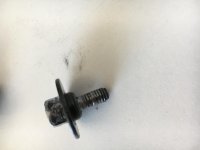
I changed my oil again yesterday and ended up with a stripped bolt; one that fastens the plastic cover to the swing down skid plate. Luckily it was the screw and not the nut.
I bought a few replacements for both skid plates a few years ago, when the dealer lost one and stripped another for me.
Anyway, it is a good reminder to chase the threads on both the nuts and the screws on these as they can take a lot of abuse during r&r. Anti seize can actually make it easier to strip one when installing, (even if you think you are being careful:)). Threads are 6mm.

SKID PLATE BOLT 9008011373
LOWER COVER BOLT 9010906330
 

Attachments

  • IMG_4611.jpg
    IMG_4611.jpg
    111 KB · Views: 28,596
Last edited:
So, I ended up doing something today that will likely make me have to get a new canister...
A few months back when I went to do my 1st oil change I noticed the drain plug was sealed tight. Ended up changing the filter and big O ring only. An awesome member on here gave me the idea on how to take off the seized drain plug bolt. Today I ended up getting the bottom plug out and all was good until my torque wrench was miscalobtard. I thought it was getting tighter than the 10 lbs of torque, but the wrench wasn't clicking. Eventually the bolt popped and started to spin looser without ever stopping.

I checked it multiple times (shaking it with fingers and tightening)- no oil leaks. I driven it for approximately 50 miles and three trips since changing the oil and no leaks. My lift kit should be coming in soon so I'll recheck then. Hoping she'll be straight until the next oil change when I change the canister!
 
So, I ended up doing something today that will likely make me have to get a new canister...
A few months back when I went to do my 1st oil change I noticed the drain plug was sealed tight. Ended up changing the filter and big O ring only. An awesome member on here gave me the idea on how to take off the seized drain plug bolt. Today I ended up getting the bottom plug out and all was good until my torque wrench was miscalobtard. I thought it was getting tighter than the 10 lbs of torque, but the wrench wasn't clicking. Eventually the bolt popped and started to spin looser without ever stopping.

I checked it multiple times (shaking it with fingers and tightening)- no oil leaks. I driven it for approximately 50 miles and three trips since changing the oil and no leaks. My lift kit should be coming in soon so I'll recheck then. Hoping she'll be straight until the next oil change when I change the canister!

Jesus man! Get a new canister- because...when it does leak it just may happen that the oil will drain out enough to cause a giant problem. Do it.
 
Jesus man! Get a new canister- because...when it does leak it just may happen that the oil will drain out enough to cause a giant problem. Do it.

^^^ THIS ^^^

I went wheeling last night for a bit and THAT'S ALL I COULD THINK ABOUT! I'll be swinging by the dealership tonight for new canister and plug, and to Costco for oil.
 
On second thought, I'm going to let it ride.

I went into the parts department at Toyota and they didn't have one even if I wanted it. The price is $140!

The guy at the sales counter explained that I should keep monitoring it for oil leaks, but I should be fine running it the way it is. Since the metal bolt is still in my canister it'll help keep any residual oil from leaking. He pulled out a canister and the filter plug for a demonstration.

The plastic plug pushes up a metal valve. Once the valve is up, the oil will constantly drain. Basically, he said without me taking a plastic plug and shoving it in there to lift the valve the only thing the metal bolt is for is to catch the dribbles of oil. He said when they do oil changes its only very rarely that oil will come out when removing the metal bolt... fingers crossed...:loco:
 
On second thought, I'm going to let it ride.

I went into the parts department at Toyota and they didn't have one even if I wanted it. The price is $140!

The guy at the sales counter explained that I should keep monitoring it for oil leaks, but I should be fine running it the way it is. Since the metal bolt is still in my canister it'll help keep any residual oil from leaking. He pulled out a canister and the filter plug for a demonstration.

The plastic plug pushes up a metal valve. Once the valve is up, the oil will constantly drain. Basically, he said without me taking a plastic plug and shoving it in there to lift the valve the only thing the metal bolt is for is to catch the dribbles of oil. He said when they do oil changes its only very rarely that oil will come out when removing the metal bolt... fingers crossed...:loco:

I understand things are expensive in Alaska. You are driving a $20K+ truck so spending $140 for an oil filter housing is not a big deal. I think having a "peace of mind" is at least worth $100. With the winter coming up soon in Alaska, I would just get it done before Mr. Murphy shows up and tells you who the boss is. Things always go bad when the conditions get really bad. It will not be fun doing this when it is -30F.
 

Members online

No members online now.

Forum statistics

Threads
278,315
Messages
3,554,125
Members
248,016
Latest member
Advally Service

Trending content

Back
Top