SPC UCA Alignment Sheets

For some reason I am having a hard time grasping IFS alignment and why the G setting gets more clearance. Seems like more positive caster gets more clearance so why wouldn't A be better?

Really disappointed as I switched from D to G and lost clearance. Can someone look at these and tell me what happened?

The short answer is that the way the spc uca and stock lca impact caster and firewall clearance work oppositely.

I’m gonna use the ubj & lbj as reference points for the top & bottom of the wheel. If the ubj on the spc uca is directly above the lbj on lca that would be 0 degrees caster since a line between those 2 points would be vertical.

As we know, adjusting the lca to move the lbj forward or away from the firewall will increase caster because now the vertical line from lbj to ubj is angled. Increasing caster by adjusting the lca will create more firewall clearance.

However, to increase caster via the spc uca, you would move the ubj closer towards the ‘A’ setting which would move the ubj towards the firewall which will reduce tire clearance. Adjusting the spc uca so that the ubj is closer the the firewall increases caster because now the line from the ubj in relation to the lbj is angled (relative to a vertical line or 0 caster).

If the ubj is moved towards ‘G’ (away from the firewall) this decreases caster because now the angle between the ubj in relation to the lbj is decreased & becomes “more vertical” or perpendicular. This will increase tire clearance.

Hopefully my attempt to answer your question didn’t confuse you more. :confused::nono:
 
The short answer is that the way the spc uca and stock lca impact caster and firewall clearance work oppositely.

I’m gonna use the ubj & lbj as reference points for the top & bottom of the wheel. If the ubj on the spc uca is directly above the lbj on lca that would be 0 degrees caster since a line between those 2 points would be vertical.

As we know, adjusting the lca to move the lbj forward or away from the firewall will increase caster because now the vertical line from lbj to ubj is angled. Increasing caster by adjusting the lca will create more firewall clearance.

However, to increase caster via the spc uca, you would move the ubj closer towards the ‘A’ setting which would move the ubj towards the firewall which will reduce tire clearance. Adjusting the spc uca so that the ubj is closer the the firewall increases caster because now the line from the ubj in relation to the lbj is angled (relative to a vertical line or 0 caster).

If the ubj is moved towards ‘G’ (away from the firewall) this decreases caster because now the angle between the ubj in relation to the lbj is decreased & becomes “more vertical” or perpendicular. This will increase tire clearance.

Hopefully my attempt to answer your question didn’t confuse you more. :confused::nono:

Nope - helps! Thanks.
 
The short answer is that the way the spc uca and stock lca impact caster and firewall clearance work oppositely.

I’m gonna use the ubj & lbj as reference points for the top & bottom of the wheel. If the ubj on the spc uca is directly above the lbj on lca that would be 0 degrees caster since a line between those 2 points would be vertical.

As we know, adjusting the lca to move the lbj forward or away from the firewall will increase caster because now the vertical line from lbj to ubj is angled. Increasing caster by adjusting the lca will create more firewall clearance.

However, to increase caster via the spc uca, you would move the ubj closer towards the ‘A’ setting which would move the ubj towards the firewall which will reduce tire clearance. Adjusting the spc uca so that the ubj is closer the the firewall increases caster because now the line from the ubj in relation to the lbj is angled (relative to a vertical line or 0 caster).

If the ubj is moved towards ‘G’ (away from the firewall) this decreases caster because now the angle between the ubj in relation to the lbj is decreased & becomes “more vertical” or perpendicular. This will increase tire clearance.

Hopefully my attempt to answer your question didn’t confuse you more. :confused::nono:

That’s the best explanation I’ve heard yet. Thanks!
 
So I’m not super happy with my alignment. They didn’t get me any positive caster, and I don’t like the way it drives now. I’m taking it back for another alignment, and I want to tell them the exact steps on how to do the alignment for max positive caster. I’m also rubbing slightly at setting “F”, so I will be changing it to “G” as many others have.

Please review these steps and see if this sounds like the correct way to go about the alignment.

Step 1: Keep UCA ball joint at “G” setting.

Step 2: Maximize positive caster by adjusting all 4 LCA cams.
- Both rear cams pushed outward as far as possible
- Both front cams pulled inward as far as possible

Step 3: Raise the front of vehicle and adjust camber, by adjusting the bolt in the slot at top of UCA. (Be sure adjustment plate stays at “G” setting and is still in machined slot on underside of UCA while doing this.)

Step 4: Lower vehicle onto tires. Roll vehicle several feet back and forth to allow wheels to return to natural position. Check camber angles. Repeat step 3 if necessary. Tighten top ball joint nut to 150 ft-lbs.

Step 5: Once camber angles are in spec, set toe with tie rods.


Have I stated anything incorrectly, or missed any important information?
 
So I’m not super happy with my alignment. They didn’t get me any positive caster, and I don’t like the way it drives now. I’m taking it back for another alignment, and I want to tell them the exact steps on how to do the alignment for max positive caster. I’m also rubbing slightly at setting “F”, so I will be changing it to “G” as many others have.

Please review these steps and see if this sounds like the correct way to go about the alignment.

Step 1: Keep UCA ball joint at “G” setting.

Step 2: Maximize positive caster by adjusting all 4 LCA cams.
- Both rear cams pushed outward as far as possible
- Both front cams pulled inward as far as possible

Step 3: Raise the front of vehicle and adjust camber, by adjusting the bolt in the slot at top of UCA. (Be sure adjustment plate stays at “G” setting and is still in machined slot on underside of UCA while doing this.)

Step 4: Lower vehicle onto tires. Roll vehicle several feet back and forth to allow wheels to return to natural position. Check camber angles. Repeat step 3 if necessary. Tighten top ball joint nut to 150 ft-lbs.

Step 5: Once camber angles are in spec, set toe with tie rods.


Have I stated anything incorrectly, or missed any important information?

Perfect. But best would be to do all this your self. Tq to 175lb as they can slip at the 150tq rating. Then bring in. They well slightly tune it.
 
So I’m not super happy with my alignment. They didn’t get me any positive caster, and I don’t like the way it drives now. I’m taking it back for another alignment, and I want to tell them the exact steps on how to do the alignment for max positive caster. I’m also rubbing slightly at setting “F”, so I will be changing it to “G” as many others have.

Step 3: Raise the front of vehicle and adjust camber, by adjusting the bolt in the slot at top of UCA. (Be sure adjustment plate stays at “G” setting and is still in machined slot on underside of UCA while doing this.)

Step 4: Lower vehicle onto tires. Roll vehicle several feet back and forth to allow wheels to return to natural position. Check camber angles. Repeat step 3 if necessary. Tighten top ball joint nut to 150 ft-lbs.

I understand your frustration. I had a similar experience when I was experimenting with the different settings. I agree with JayRolla about doing all the SPC adjustments your self then taking it in to a good alignment shop.

One tip SPC told me was to tighten the top nut hand tight after making the necessary adjustments while the wheels are off the ground. Once the wheels are on the ground and you roll the vehicle forward and backwards a few times to let things settle (& prevent any binding), torque top nut to 150ft/lbs. The camber setting may shift a bit BUT having the LCA adjusted should bring everything back into spec (although if you're on G the caster will be in the 1.7 range).
 
Perfect. But best would be to do all this your self. Tq to 175lb as they can slip at the 150tq rating. Then bring in. They well slightly tune it.

I understand your frustration. I had a similar experience when I was experimenting with the different settings. I agree with JayRolla about doing all the SPC adjustments your self then taking it in to a good alignment shop.

One tip SPC told me was to tighten the top nut hand tight after making the necessary adjustments while the wheels are off the ground. Once the wheels are on the ground and you roll the vehicle forward and backwards a few times to let things settle (& prevent any binding), torque top nut to 150ft/lbs. The camber setting may shift a bit BUT having the LCA adjusted should bring everything back into spec (although if you're on G the caster will be in the 1.7 range).

So you guys are saying I should set the camber with the top bolt/nut myself. Don't let the alignment shop do it?
[MENTION=116877]fourfive[/MENTION] So having the nut only hand tight, and then rolling the truck back and forth a little, this will move the bolt into a position where the camber will be pretty close? Then just have the shop tweak it into spec with the LCA cams?

I guess I could try and take camber angle measurements and tweak the upper bolt myself. It would be a lot of up-and-downs with the truck though. Like trial and error.
 
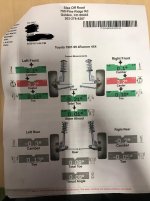
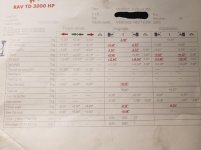
Hey guys, new to the forum but saw this thread and thought I would post up my alignment sheet. I just had King Coilovers (2.5"), 1.25" Spidertrax spacers and SPC UCAs installed on my 99' by Slee Offroad in Golden, CO and they also did my alignment. Truck drives great with only minimal rubbing when I hit a big bump while wheels are turned. I am running 285/75/16 BFGs.

Hope this helps somebody.
 

Attachments

  • Alignment.jpg
    Alignment.jpg
    124 KB · Views: 1,011
So you guys are saying I should set the camber with the top bolt/nut myself. Don't let the alignment shop do it?

[MENTION=116877]fourfive[/MENTION] So having the nut only hand tight, and then rolling the truck back and forth a little, this will move the bolt into a position where the camber will be pretty close? Then just have the shop tweak it into spec with the LCA cams?

I guess I could try and take camber angle measurements and tweak the upper bolt myself. It would be a lot of up-and-downs with the truck though. Like trial and error.

I'm fortunate enough to have an alignment shop that I trust. It's pretty bad there's only one kid in this whole area that I trust to do it, but that's besides the point. He's smart enough to know about working the top nut of the UCAs along with the rest of the alignment to work together to dial it in.

He's also cool enough that I can show him Timmy the Toolman videos while working on my truck to show him little pointers to help him out.

I'm surprised this kid appears to be as rare as he is. I expect this up here, but down there I would think there's specialty shops that take enough pride in their work and the knowledge to be able to dial in your trucks the way you want them to.

The first time I took it to him with my UCAs, it took a bit over 2 hours. They started with my new adjustable LCAs in the rear and got it squared up. Then moved to the front and got it dialed in. Went back to the rear and did a small tweak and of course had to touch up the front again.

Something happened and two days later I had to take it back to them because my front end was insanely out of wack. There was three of us looking and couldn't see anything that shifted. He fixed it and it's been perfect ever since.

I guess it just boils down to finding the right person for the job. I guess I have to ask, is this kid one in a million or is there more of them out there?
 
So you guys are saying I should set the camber with the top bolt/nut myself. Don't let the alignment shop do it?

[MENTION=116877]fourfive[/MENTION] So having the nut only hand tight, and then rolling the truck back and forth a little, this will move the bolt into a position where the camber will be pretty close? Then just have the shop tweak it into spec with the LCA cams?

I guess I could try and take camber angle measurements and tweak the upper bolt myself. It would be a lot of up-and-downs with the truck though. Like trial and error.

If you leave top nut loose and slowly lower tires onto ground till they look visually straight and then tighten camber will be very close. They will fine tune your lcas for camber but the change will be so small you won't loose caster. This is how I did mine.
 
Hey guys, new to the forum but saw this thread and thought I would post up my alignment sheet. I just had King Coilovers (2.5"), 1.25" Spidertrax spacers and SPC UCAs installed on my 99' by Slee Offroad in Golden, CO and they also did my alignment. Truck drives great with only minimal rubbing when I hit a big bump while wheels are turned. I am running 285/75/16 BFGs.

Hope this helps somebody.

You can actually tune them so you have zero rub at full lock and full stuff if using the g settings. But only get 1.5* caster.
 
So you guys are saying I should set the camber with the top bolt/nut myself. Don't let the alignment shop do it?

[MENTION=116877]fourfive[/MENTION] So having the nut only hand tight, and then rolling the truck back and forth a little, this will move the bolt into a position where the camber will be pretty close? Then just have the shop tweak it into spec with the LCA cams?

I guess I could try and take camber angle measurements and tweak the upper bolt myself. It would be a lot of up-and-downs with the truck though. Like trial and error.

I set the top nut myself because the alignment shops that I have been going too didn't seem very convincing that they knew how to make the adjustments.

My experience on G & setting the top nut myself is that after rolling the vehicle forward and backwards, the top nut will slide to the most inboard position. The camber will look positive but after getting the lca adjusted, my alignment would be in spec except for caster which usually is around 1.7. It's no doubt a tedious process but well worth it for me for the tire clearance without compromising handling.


I guess it just boils down to finding the right person for the job. I guess I have to ask, is this kid one in a million or is there more of them out there?

Very rare! When I find people like that (my bodyshop guy) I try take GOOD care of them by paying them what they ask & not hussle for discounts, buy them lunch when I drop by & tip them any time they do extra work that they didn't have to do. I want to be sure that I help keep people like that in business & that it's always a pleasure for good pro's like that to do business with me.
 
Well, I finally got my alignment the way it should be. This is what I had to do:

Step 1: Set the SPC UCA's to "G" setting. This basically gives you the same amount of clearance to the firewall that you had with the OEM UCA's. Do this yourself, because the alignment shop won't have a clue.

Step 2: Maximize positive caster by adjusting all 4 LCA cams bolts.
- Both rear cams pushed outward as far as possible
- Both front cams pulled inward as far as possible
You can easily do this yourself also. Just loosen the nuts, turn the cam bolts, and re-tighten the nuts.

Step 3: Raise the front of vehicle and adjust camber, by adjusting the bolt in the slot at top of UCA. Do this yourself. The alignment shop won't want to mess around with this. It is easy to do, just takes some time. All I needed was a tape measure, level, and some trigonometry (an angle finder would have been easier, but I didn't have one). This does take some trial and error. You have to measure camber, raise the vehicle, adjust the bolt in the slot, lower the vehicle, roll it back-and-forth to let it settle, and re-measure. Repeat until you get it right. It took me 2 tries to get the passenger side right, and 4 tries for the driver side. Tighten top ball joint nut to 150 ft-lbs.

Step 4: Now bring it to the alignment shop. Have them tweak the camber if needed and set the toe. My crude setting of the camber was actually in spec, so all they had to do was set the toe.

If you perform these steps you will maximize the firewall clearance, and at the same time, get the most positive caster possible. I got 1.6 degrees caster on one side and 2.2 degrees on the other. The truck drives great like this.
 
Last edited:
I have come to believe that a good alignment tech is about as easy to find as a ****ing unicorn. Correction - a competent alignment tech. A good alignment tech is beyond my comprehension at this point.

I have (had) my SPC UCAs set to E, and took the 4Runner to yet another alignment shop trying to find a tech who would get my alignment right. This is the 6th shop I've been to this year. SIX! I typed out a letter saying "please adjust camber if needed at the UBJ, but please don't change the UBJ caster setting" and stapled it to the SPC instruction sheet. Then I verbally explained in detail that the aftermarket UCAs give additional adjustment if needed, but please don't change the caster setting at the UBJs.

I picked it up this afternoon (they have had it since Tuesday) and drove it home $115 poorer and without a printout because "our machine can't do printouts."

The drivers side UBJ is at G and the passenger side is at D.

:faint2:

I would take it back to them and raise hell, but I honestly believe they don't have the mental capacity to understand why I'm so pissed off.

Seriously though, are you guys literally standing next to alignment techs and guiding their hands to properly get the thing aligned? Are you all buying your own alignment rack? Because I think that's what I'm going to have to do. Holy shit.

/rant
 
Seriously though, are you guys literally standing next to alignment techs and guiding their hands to properly get the thing aligned? Are you all buying your own alignment rack? Because I think that's what I'm going to have to do. Holy shit.

/rant

I've got the lifetime alignment at Firestone for the truck I have and they will only mess with the LCA adjustment bolts with this deal. They won't touch the tops ones, so I've not had a problem. I get it though. They're so used to dealing with customers whom don't know the first thing about their cars, they probably feel like they can get away with stuff like this.:wow:
 
I have come to believe that a good alignment tech is about as easy to find as a ****ing unicorn. Correction - a competent alignment tech. A good alignment tech is beyond my comprehension at this point.

I have (had) my SPC UCAs set to E, and took the 4Runner to yet another alignment shop trying to find a tech who would get my alignment right. This is the 6th shop I've been to this year. SIX! I typed out a letter saying "please adjust camber if needed at the UBJ, but please don't change the UBJ caster setting" and stapled it to the SPC instruction sheet. Then I verbally explained in detail that the aftermarket UCAs give additional adjustment if needed, but please don't change the caster setting at the UBJs.

I picked it up this afternoon (they have had it since Tuesday) and drove it home $115 poorer and without a printout because "our machine can't do printouts."

The drivers side UBJ is at G and the passenger side is at D.

:faint2:

I would take it back to them and raise hell, but I honestly believe they don't have the mental capacity to understand why I'm so pissed off.

Seriously though, are you guys literally standing next to alignment techs and guiding their hands to properly get the thing aligned? Are you all buying your own alignment rack? Because I think that's what I'm going to have to do. Holy shit.

/rant
I just did my SPC UCA install last weekend, and did a driveway alignment for camber/toe. It drove straight down the road even before the shop alignment. The tech didn't have to touch the UCAs to get everything to factory specs. Admittedly, my front lift is only 1.5-2", so those running taller lifts might not be able to get caster to factory specs at the G setting on the UCA. My point is, if you get it close on the UCA settings the shop should be able to fine tune with the essentric bolts.

I was able to set the camber within spec using a long level agaist the tire and a simple carpenter's square to make sure the level was straight up and down in all directions. By touching one end of the perfectly vertical level against the tire, and measuring the gap between the tire sidewall and the level at a known distance (I made a pencil mark on the level at 24" and 27" from one end) I was able to determine the camber angle using simple trig (inverse sin). For the long (adjascent) leg of the right triangle I used 27" if the camber was positive (sidewall touching the level at the top) or 24" for negative camber (sidewall touching the level at the bottom). The different distances were just to reduce interference between the level and sidewall lugs. The short leg of the triangle was the gap between the level and sidewall, which I measured with a machinists scale with 1/64" divisions. The inverse sin of the short leg divided by the long leg is the camber angle. It took a few tries of trial and error on each side to get the angle to where it needed to be on the top bolt at the UCA. Basically, I would take the angle at ride height, figure out the difference of the actual camber angle at ride height to the factory spec, jack the wheels off the ground, take the angle at droop, and then adjust the droop angle by the difference I previously calculated. Rinse and repeat a couple of times with a roll back and forth to settle the suspension in between.

After my driveway alignment the toe was 0.5 degrees out (positive) on each side. It was definitely outside of factory specs, but not bad for just a tape measure on the front and back of the tires, IMO.

So, it's possible to "rough in", and get the alignment very close yourself, which means the alignment tech doesn't have to work outisde of his comfort zone. Unfortunately, unless you are very lucky I wouldn't expect the tech at any tire/alignment shop to be able to dial in aftermarket suspension. For that you gotta DIY or take it to a specialty (e.g. racing or offroad) shop for good results, IMO.

Sent from my RS988 using Tapatalk
 
Last edited:
I set the UBJs back to E and centered them in the slot. It looks like they failed to properly center the star plate around the star on the UBJ and bent it when they torqued the nut. There are marks all over the side of the UBJ that look a lot like hammer impacts...

I'm burning a couple hours of PTO this morning and going to a different shop, and I'm going to stand there with the tech while he does the work.

[MENTION=168693]Mchaz[/MENTION] I'm having trouble picturing your setup there. Did you set your level on the ground and use the carpenter's square on the side of the level and the ground to get the level perfectly square to the ground?
 
Last edited:
[MENTION=158195]thezentree[/MENTION], yup! That's exactly how I did it. You just need a good straight vertical reference. I had those tools at my disposal, so I made it work.

Sent from my RS988 using Tapatalk
 
Last edited:
Close to 3" lift up front with bilstein 5100/Eibach 620 coils. SPC arms set to G for maximum clearance, still need some trimming with 35s.

What do you guys think? Slight pull to the left still but drives way better then it ever has, maybe I'll put sway bars back on for the winter lol.

You can see how bad my driveway alignment went from eyeballing it. Scary drive there!
 

Attachments

  • 20180908_125740.jpg
    20180908_125740.jpg
    128.4 KB · Views: 622
Just wanted to chime-in to say thanks those who have contributed so much with real life experiences. I picked these up on a GB several months back, and also got a good deal on King coil-overs. Thanks much.
 

Members online

No members online now.

Forum statistics

Threads
278,306
Messages
3,554,044
Members
248,016
Latest member
Advally Service

Trending content

Back
Top