It was pretty slow today so I threw in the wheel bearing assemblies in before I went home today. Its pretty straight forward, it would have taken about half the time it did if I didn't decide to replace the spindle seals as well.
This isn't really meant to be a full write-up but more a brief over-view of how to do it. I believe there are some really good write-ups on the forum and I didn't think I needed to make a new one, so that's why it isn't normally as detailed as my official write-ups are.
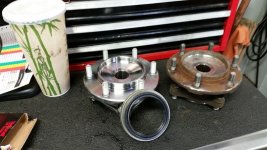
The new vs. the old:
View attachment 145009
First thing is first get the wheel, brake caliper, and brake rotor off the hub. Then remove the axle nut (36mm), then unbolt the hub from the spindle (x4 17mm bolts, they will come off with the assembly so keep that in mind when loosening them), tap the axle out of the hub as you pull it away from the spindle. Installation is just the reverse of what you just did.
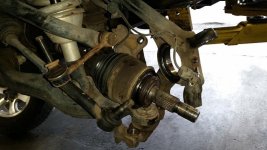
Should look something like this when you've got the hub off (you'll note I show a Allen bolt on the side, I highly recommend you remove the wheel speed sensor from the spindle before removing the hub just to be safe):
View attachment 145007
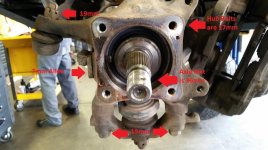
But wait! I spent money on new spindle seals, where do those go!? That's a bit more work to get to. While you have the hub out, go ahead and pop the tie rod end off and the x2 19mm lower ball joint bolts off, I also recommend undoing the 12mm bolt for the brake line bracket to give you more wiggle room. After you do that, flip the spindle around and take a screw driver or punch and tap the seal out from the front.
When you've got it torn down it should look something like this:
View attachment 145008
I found a really big round object that fit perfectly on the inside of the seal to tap it in with a hammer, so pretty much anything that rests on the metal rim of the seal and you can tap on with a hammer should do well. Its a bit tricky to do with the spindle just floating about, but luckily it doesn't take much force to seat the seal. I took a steel brush and brushed off any surface rust and cleaned any rampant grease/debris I found on the spindle axle, brake shields, ect. When you've done all that, then just do the reverse of what you did to tear it down to put it all back together.
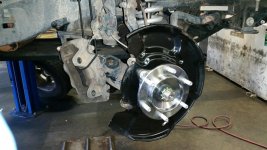
It should look roughly like this when you are done (sans hub cap):
View attachment 145010
Post Note-
I'm really impressed with how Toyota sealed the hubs on these vehicles. I never bothered to really look that closely until today, but they really thought it out.
-x1 Single lip seal on the axle
-x1 Double lipped seal in the spindle (one lip actually meshes with the axle shaft AND the seal on the axle)
-O-Ring on the hub Assembly
-O-Ring on the ABS Sensor
There was grease (the driver's side seemed to leak a bit of grease) and light surface rust (from latent moisture I assume) in the spindle, but not as much evidence of water intrusion as I had expected (been throw good amounts of standing water and mud and I knew the bearings weren't entirely sealed units.) I would be surprised if a properly maintained hub & seal assemblies actually allowed water to force its way into the spindle. (I assume the rears are just as well sealed.
I also probably didn't need to replace the spindle seals on my vehicle as they were still in great shape (oh well, live and learn.) :fish:

 arty:
arty:









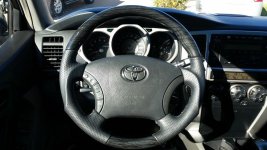


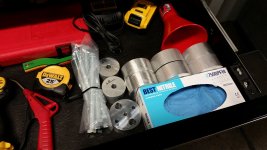



 I'll have to get back to you guys if the measurements on my steering spacer are correct (they should be, but I reverse engineered the part based on some quick measurements of the rag joint when I took it out the 4Runner a couple weekends ago since I can't get my Solidworks to work anymore
  )
)


