marcus clarkus
New member
Hey foo, Christmas came early!


I wanted to thank you for compiling all this info into one thread. My 4Runner pedal was sticking and the idea of adding an extra spring rather than understanding the root cause was unsettling. It turns out I had two issues: The clutch pedal bracket/bushings were worn through and what I think is a throw-out bearing problem. I replaced the bracket and bushings with OEM parts, which removed the squeak and the pedal no longer sticks to the floor. The pedal doesn't come up the last inch or two, yet the master/slave cylinders are good. So that pretty much leaves it to the throw-out bearing, or something else near the clutch. I'll tackle that job next summer; for now I can live with my pedal not returning fully.
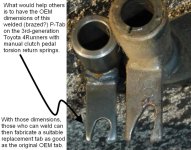
Anyways, I wanted to better understand the problem with the bracket and bushings so I don't have to shell out more money on those in 5 years or so.
Your thread really helped me better understand the situation (and the assortment of solutions that people came up with), so I thought I'd repay the favor.
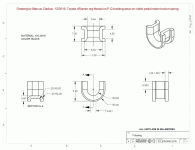
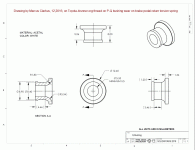
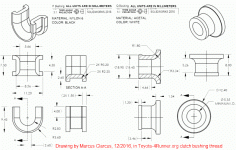
I ordered some extra bushings and made these drawings of the parts. The simple outer dimensions were measured with digital calipers, inner diameters where measured with pin gauges, and for some of the tricky measurements I used a CMM/Vision system.
Now how do I know the materials, you ask? Simple: a burn test. Boedeker Plastics : How to Identify Plastic Materials Using The Burn Test
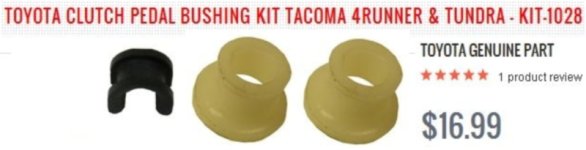
The smooth, shiny, slippery, hard, somewhat brittle, white Q-bushing I immediately recognized as acetal (aka Delrin, POM). I did a burn test just to be sure, side by side with a sample of plastic that I was 100% certain was acetal. Both samples continued to burn after I removed the flame from the lighter. Same slow, blue glowing flame; same nasty smell. Easy.
I suspected the P-bushing was some type of nylon based on the application, appearance, and how tough it is (well, not that tough when the clutch pedal spring is rubbing against it for thousands of repetitions, but tough when I'd pick at it with a fingernail or knife). I did the burn test and it smelled like burning hair, had a small yellow flame with a blue base, and continued to burn after I removed the lighter. I did the same test with a piece of plastic that I was 100% certain was Nylon 6/6 and it had the same smell, same flame appearance, but extinguished immediately when I removed the lighter. From the chart I linked to, I think it's pretty clear the P Bushing is made of Nylon 6.
So why did people say the P-bushings they made out of nylon work better? I don't know. Luck? Bias? Thicker walls so there was more material to wear through before it failed?
These are the reasons I believe the bushings fail over time:
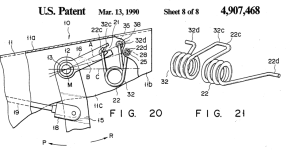
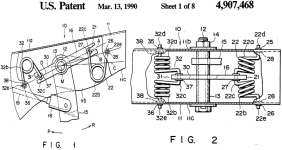
1. Wear (duh). But seriously, the bushings have a lot of pressure applied to them by your foot and that spring. There's no way Toyota believed these things would outlast the vehicle, but the alternatives (bronze bushings, ball bearings) are very expensive compared to a 2 cent injection molded plastic part. I still can't figure out exactly why they felt it was necessary to go with a torsion spring, but since they did I understand why they chose plastic bushings, even though I don't like it.
2. Wearing of the metal components, especially the bracket for the P-bushing. As soon as you wear through that bushing and start rubbing against the metal, you're changing the geometry (and therefore stress concentrations). If you gouged the metal and throw new bushings in there they aren't going to last long at all, no matter how much grease you dump on them. Same goes with bronze bushings - and good luck getting those aligned with the spring properly (which isn't exactly a precision component itself).
3. Dirt and lack of lubrication. Dirt or metal particles getting on the bushings and sticking in the lubricant can definitely accelerate the wear. Keep everything clean and covered with a thin coat of grease.
4. Humidity. This one is only going to affect the nylon P-bushing, not the acetal Q-bushings. Nylon absorbs a lot of moisture and becomes soft, making it wear faster. Having the bushing exposed to a constant high humidity will shorten its life. Not much you can do about this one though.
All that and still no solution?:redbrick::redbrick:
Yep, sorry. I've been thinking on it, but there's really no obvious fix-it-for-good solution, at least in my mind. As far as plastics go, nylon and acetal are actually very good materials for bushings because of their low friction and high wear resistance. Unfortunately, the forces here are just too high for plastics to withstand for decades. I'd like to figure out a way to use bearings or bronze bushings or maybe just a beefier plastic bushing (www.igus.com has a lot of sizes, something must fit!). It's going to be a challenge to get them installed properly (misalignment = fast failure). My plan (for now) to save me from replacing my bracket again is to replace the bushings every 30,000 miles or so and keep them coated in silicone grease.
I wanted to thank you for compiling all this info into one thread. My 4Runner pedal was sticking and the idea of adding an extra spring rather than understanding the root cause was unsettling. It turns out I had two issues: The clutch pedal bracket/bushings were worn through and what I think is a throw-out bearing problem. I replaced the bracket and bushings with OEM parts, which removed the squeak and the pedal no longer sticks to the floor. The pedal doesn't come up the last inch or two, yet the master/slave cylinders are good. So that pretty much leaves it to the throw-out bearing, or something else near the clutch. I'll tackle that job next summer; for now I can live with my pedal not returning fully.
Anyways, I wanted to better understand the problem with the bracket and bushings so I don't have to shell out more money on those in 5 years or so.
Your thread really helped me better understand the situation (and the assortment of solutions that people came up with), so I thought I'd repay the favor.
I ordered some extra bushings and made these drawings of the parts. The simple outer dimensions were measured with digital calipers, inner diameters where measured with pin gauges, and for some of the tricky measurements I used a CMM/Vision system.
Now how do I know the materials, you ask? Simple: a burn test. Boedeker Plastics : How to Identify Plastic Materials Using The Burn Test
The smooth, shiny, slippery, hard, somewhat brittle, white Q-bushing I immediately recognized as acetal (aka Delrin, POM). I did a burn test just to be sure, side by side with a sample of plastic that I was 100% certain was acetal. Both samples continued to burn after I removed the flame from the lighter. Same slow, blue glowing flame; same nasty smell. Easy.
I suspected the P-bushing was some type of nylon based on the application, appearance, and how tough it is (well, not that tough when the clutch pedal spring is rubbing against it for thousands of repetitions, but tough when I'd pick at it with a fingernail or knife). I did the burn test and it smelled like burning hair, had a small yellow flame with a blue base, and continued to burn after I removed the lighter. I did the same test with a piece of plastic that I was 100% certain was Nylon 6/6 and it had the same smell, same flame appearance, but extinguished immediately when I removed the lighter. From the chart I linked to, I think it's pretty clear the P Bushing is made of Nylon 6.
So why did people say the P-bushings they made out of nylon work better? I don't know. Luck? Bias? Thicker walls so there was more material to wear through before it failed?
These are the reasons I believe the bushings fail over time:
1. Wear (duh). But seriously, the bushings have a lot of pressure applied to them by your foot and that spring. There's no way Toyota believed these things would outlast the vehicle, but the alternatives (bronze bushings, ball bearings) are very expensive compared to a 2 cent injection molded plastic part. I still can't figure out exactly why they felt it was necessary to go with a torsion spring, but since they did I understand why they chose plastic bushings, even though I don't like it.
2. Wearing of the metal components, especially the bracket for the P-bushing. As soon as you wear through that bushing and start rubbing against the metal, you're changing the geometry (and therefore stress concentrations). If you gouged the metal and throw new bushings in there they aren't going to last long at all, no matter how much grease you dump on them. Same goes with bronze bushings - and good luck getting those aligned with the spring properly (which isn't exactly a precision component itself).
3. Dirt and lack of lubrication. Dirt or metal particles getting on the bushings and sticking in the lubricant can definitely accelerate the wear. Keep everything clean and covered with a thin coat of grease.
4. Humidity. This one is only going to affect the nylon P-bushing, not the acetal Q-bushings. Nylon absorbs a lot of moisture and becomes soft, making it wear faster. Having the bushing exposed to a constant high humidity will shorten its life. Not much you can do about this one though.
All that and still no solution?:redbrick::redbrick:
Yep, sorry. I've been thinking on it, but there's really no obvious fix-it-for-good solution, at least in my mind. As far as plastics go, nylon and acetal are actually very good materials for bushings because of their low friction and high wear resistance. Unfortunately, the forces here are just too high for plastics to withstand for decades. I'd like to figure out a way to use bearings or bronze bushings or maybe just a beefier plastic bushing (www.igus.com has a lot of sizes, something must fit!). It's going to be a challenge to get them installed properly (misalignment = fast failure). My plan (for now) to save me from replacing my bracket again is to replace the bushings every 30,000 miles or so and keep them coated in silicone grease.
Last edited: